
 soofha
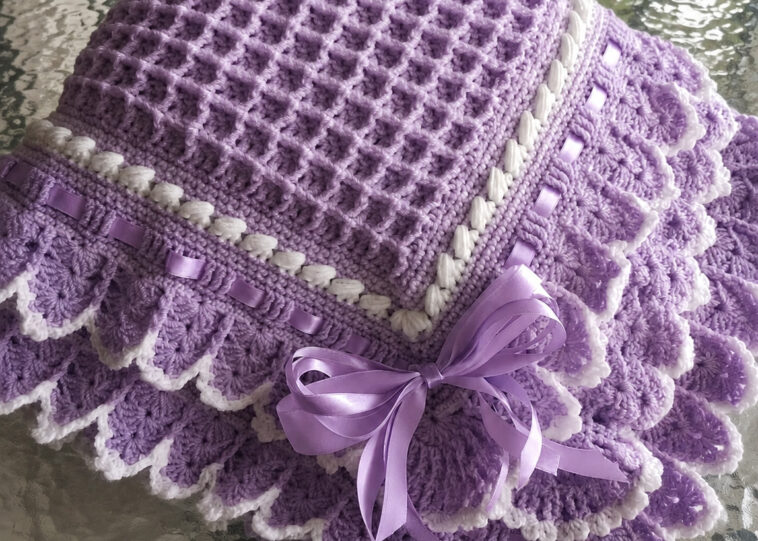
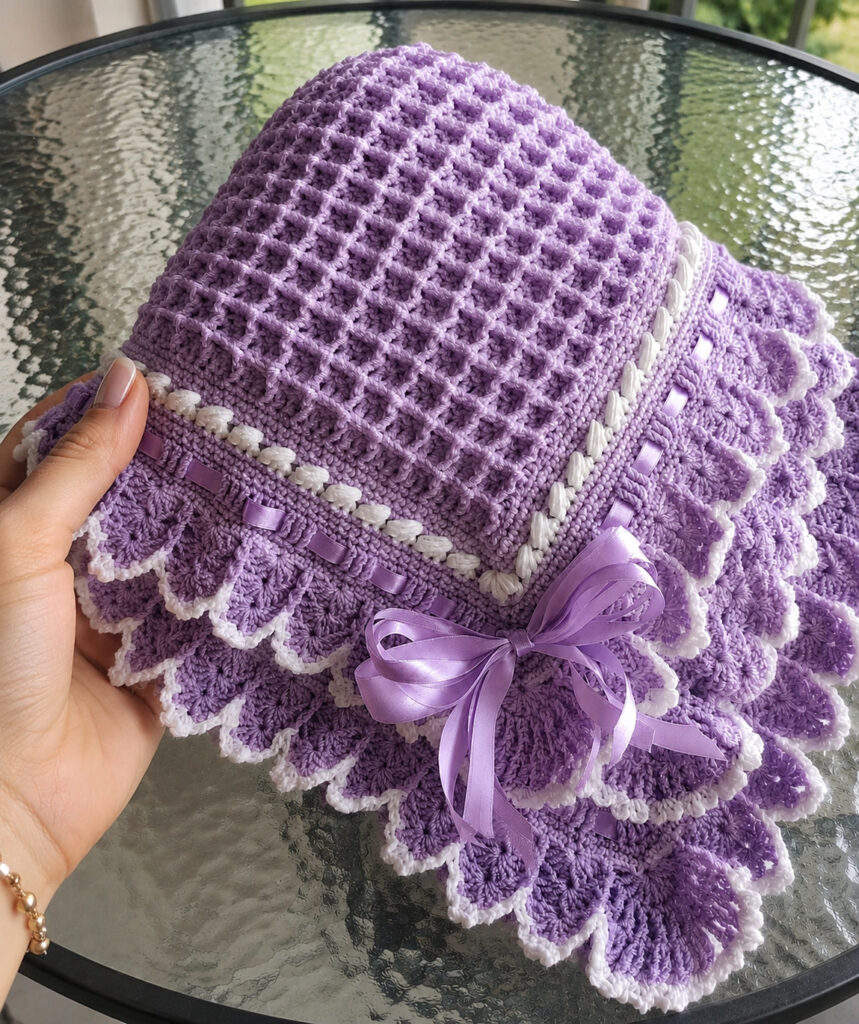
The Lavender Waffle Baby Blanket is a soft, textured crochet project designed for cozy naps, nursery décor, baby showers, and handmade gifts. The waffle stitch creates a beautifully raised, three-dimensional surface that looks intricate while being made with simple crochet techniques.
Worked in a gentle lavender shade with a delicate white border, this blanket has a sweet, classic appearance. The texture is especially lovely in baby yarn because the raised waffle squares create warmth and visual interest without requiring complicated colorwork.
Whether you are making a first baby blanket or looking for a relaxing project to crochet while watching television, this pattern is a wonderful choice.
Why You’ll Love the Lavender Waffle Baby Blanket
The waffle stitch is one of those crochet textures that looks much more complicated than it actually is. The design is created by combining regular double crochet stitches with front- and back-post double crochet stitches.
Here are a few reasons to try this pattern:
- Beautiful three-dimensional texture
- Beginner-friendly once post stitches are understood
- Easy to customize in size
- Perfect for baby showers and newborn gifts
- Works beautifully in solid colors
- Lavender and white create a soft nursery-inspired palette
- The pattern can be adapted for larger blankets
- The finished blanket has a cozy, substantial feel
The raised waffle texture also makes the blanket especially attractive when photographed, making it a lovely project for crochet blogs, handmade shops, and gift inspiration.
Finished Blanket Size
The sample is designed as a small baby blanket, approximately:
Finished size: 30 × 36 inches (76 × 91 cm)
The size can easily be adjusted by changing the starting chain.
For a larger blanket, simply continue the pattern until the desired length is reached.
Materials
Yarn
- Approximately 900–1,100 yards of medium-weight yarn
- Main color: lavender
- Border color: white or cream
- Choose a soft, washable yarn suitable for babies
A soft acrylic, cotton-acrylic blend, or baby-weight yarn can work beautifully.
When making a baby blanket, washable yarn is especially practical because parents can easily clean the finished blanket when needed.
Crochet Hook
Use a crochet hook appropriate for your yarn.
For medium-weight yarn, a 5.0 mm crochet hook is a good starting point. Check your yarn label and make a small gauge swatch before beginning.
Other Supplies
- Yarn needle
- Scissors
- Stitch markers
- Measuring tape
Optional:
- Satin ribbon for decoration
- Decorative buttons, if desired
For a baby blanket, avoid loose embellishments that could become detached. If you add ribbon or other decorative details, make sure everything is securely attached and appropriate for the intended use.
Crochet Abbreviations
US crochet terminology:
- ch – chain
- st – stitch
- sl st – slip stitch
- sc – single crochet
- dc – double crochet
- FPDC – front post double crochet
- BPDC – back post double crochet
- rep – repeat
- sk – skip
- yo – yarn over
Understanding the Waffle Stitch
The waffle stitch is made by working post stitches around the posts of stitches from previous rows.
A regular double crochet is worked through the top loops of a stitch. A front post double crochet, on the other hand, is worked around the vertical post of the stitch from the front.
A back post double crochet is worked around the post from the back.
These stitches push certain areas of the fabric forward while other areas remain recessed. The result is a grid-like texture resembling the squares of a waffle.
If you have never worked post stitches before, practice on a small swatch first.
Gauge
Gauge is not extremely important for a blanket, but it will affect the finished size and yarn quantity.
Make a small waffle-stitch swatch before starting.
A useful starting gauge is approximately:
13–15 stitches = 4 inches
and
8–10 rows = 4 inches
Your exact gauge will depend on your yarn, hook size, and tension.
If your fabric feels too stiff, move up one hook size. If it feels too loose, try a smaller hook.
For a baby blanket, aim for fabric that is soft and flexible rather than extremely tight.
Lavender Waffle Baby Blanket Pattern
Step 1: Foundation Chain
With lavender yarn, chain a multiple of 3 plus 2.
For the sample size, you can begin with:
ch 92
This creates a starting width of approximately 30 inches, depending on your yarn and tension.
You can make the blanket wider by adding chains in multiples of three.
For example:
- 92 chains – approximately 30 inches
- 122 chains – approximately 40 inches
- 152 chains – approximately 50 inches
Always measure your actual foundation chain because yarn weight and tension can change the finished dimensions.

Step 2: First Row
Chain 3.
The beginning chain counts as the first double crochet.
Work 1 dc in the fourth chain from the hook.
Continue working 1 dc in each chain across.
At the end of the row, you should have a full row of double crochet stitches.
Turn.

Step 3: Second Row
Chain 2.
Work 1 dc in each stitch across.
The second row establishes the base needed for the waffle texture.
Turn.
Step 4: First Waffle Row
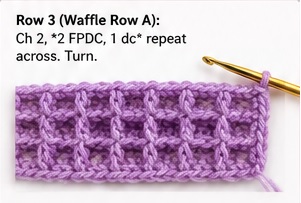
Chain 2.
Work the waffle pattern across the row by alternating raised post stitches and regular double crochets.
A simple repeat is:
2 FPDC, 1 dc
Repeat this sequence across the row.
When you reach the final stitches, adjust the ending slightly if necessary so that the row remains even.
Turn.
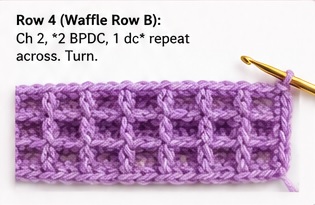
You should begin to see raised vertical columns developing.
Step 5: Reverse the Texture
Chain 2.
Work:
2 BPDC, 1 dc
Repeat across the row.
The back-post stitches create the recessed portions of the waffle design while the regular double crochets maintain the raised squares.
Turn.
Step 6: Continue the Waffle Pattern
Continue alternating the post-stitch rows.
A simple sequence is:
Row A: 2 FPDC, 1 dc across.
Row B: 2 BPDC, 1 dc across.
Repeat these rows until the blanket reaches your desired length.
As you continue, the raised squares will become more pronounced.
Important Waffle Stitch Tip
Pay attention to where your post stitches are placed.
The goal is to keep the front-post stitches aligned with the raised columns and the back-post stitches aligned with the recessed columns.
After completing several rows, the stitch pattern becomes much easier to recognize.
If the texture does not look like a grid, check whether your FPDC and BPDC stitches are being worked around the correct posts.
Creating the Lavender and White Color Scheme
The soft lavender color gives this blanket its delicate appearance.
For a classic baby look, use lavender throughout the main body and finish with a white border.
You can also experiment with other combinations:
Lavender and Cream
Use warm cream instead of bright white for a softer vintage appearance.
Lavender and Blush Pink
A small amount of dusty pink creates a romantic nursery palette.
Lavender and Gray
Light gray gives the blanket a modern and gender-neutral appearance.
Lavender and Sage Green
Sage green adds a natural, contemporary touch.
You can also make the waffle squares entirely lavender and reserve the contrasting color for the border.
Decorative Border
Once the waffle body reaches the desired length, finish the final row and weave in the lavender yarn tail.
A simple white border can beautifully frame the textured center.
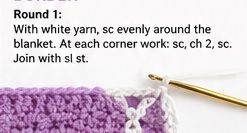
Round 1 – White Border
Attach white yarn to any corner.
Chain 1.
Work single crochet stitches evenly around the entire blanket.
At each corner, work:
sc, ch 2, sc
This helps create clean, square corners.
Join with a slip stitch.
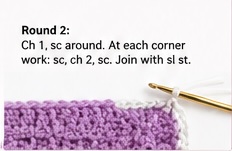
Round 2
Chain 1.
Work single crochet around the blanket.
At each corner, work:
sc, ch 2, sc
Join with a slip stitch.
This creates a neat foundation for a decorative edging.
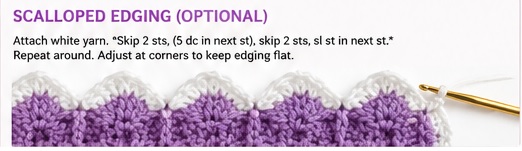
Optional Scalloped Edge
For a more decorative finish inspired by traditional baby blankets, add a simple scalloped edge.
Attach white yarn to the border.
A basic shell repeat can be created by working several stitches into the same stitch.
For example:
Skip 2 stitches, 5 dc in the next stitch, skip 2 stitches, sl st in the next stitch.
Repeat around the blanket.
The shells create soft rounded waves along the edge.
At each corner, adjust the spacing slightly so the border lies flat.
If the edge begins to curl, increase the spacing between shells. If it looks too loose, reduce the spacing.
Optional Ribbon Detail
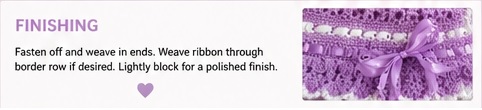
For an extra decorative touch, a narrow satin ribbon can be woven through a border row.
Choose a ribbon in:
- Lavender
- White
- Pale pink
- Silver
- Cream
Use a narrow ribbon and secure it carefully.
For baby items, avoid leaving long loose ribbon tails or unsecured decorative pieces. The blanket should remain safe and practical for its intended use.
Finishing the Blanket
Once the final border is complete, fasten off your yarn.
Use a yarn needle to weave the ends securely through the wrong side of the blanket.
Because the waffle stitch is highly textured, there are many places where yarn ends can be hidden.
Trim excess yarn only after the ends are securely woven in.
Blocking
Blocking is optional, but it can make the blanket look more polished.
Lightly dampen the finished blanket and gently shape it to the desired dimensions.
Do not stretch it aggressively.
Allow it to dry completely before removing it from the blocking surface.
For baby blankets, always follow the washing and care instructions for the specific yarn you used.
How to Make the Blanket Larger
The waffle stitch is easy to resize.
Simply begin with a foundation chain using the same stitch multiple required by the pattern.
To make a larger blanket:
- Increase the foundation chain in multiples of three.
- Work the same waffle-stitch rows.
- Continue until the blanket reaches the desired length.
- Add the same border around the outside.
This makes the design suitable for:
- Baby blankets
- Toddler blankets
- Crib blankets
- Lap blankets
- Throw blankets
- Bed runners
Baby Blanket Size Ideas
Here are some approximate dimensions:
Receiving blanket: 28 × 34 inches
Small baby blanket: 30 × 36 inches
Crib blanket: 36 × 50 inches
Toddler blanket: 40 × 50 inches
Lap blanket: 45 × 55 inches
These dimensions are only guidelines. Crochet blankets can be customized to almost any size.
Tips for Perfect Waffle Stitch
Keep Your Tension Consistent
Post stitches can sometimes become tighter than regular double crochets.
Try to keep your tension relaxed.
Check the Texture Frequently
After every few rows, look at the front of the blanket.
The raised columns should remain aligned.
Count Your Stitches
Waffle stitch can make it slightly difficult to see individual stitches.
Counting at the end of each row helps prevent the blanket from becoming wider or narrower.
Use Stitch Markers
Place a stitch marker in each corner when working the border.
This makes it much easier to identify where increases need to be made.
Choose Soft Yarn
Texture is the star of this blanket, so choose yarn that feels pleasant against the skin.
A yarn that is too stiff may make the waffle pattern uncomfortable.
Common Problems and Solutions
My Blanket Is Curling
A little curling can happen during the first few rows.
If the fabric continues curling significantly, check your tension. Post stitches may be too tight.
Try using a larger hook.
My Waffle Squares Don’t Look Even
Make sure the FPDC stitches are being worked around the correct posts and the BPDC stitches are worked from the correct side.
Keeping the post stitches aligned is the key to a consistent waffle pattern.
The Blanket Is Getting Wider
You may accidentally be adding stitches at the ends of rows.
Count your stitches regularly and make sure you are not placing an extra double crochet into the turning chain unless the pattern specifically calls for it.
The Fabric Feels Too Stiff
Try a larger crochet hook or a softer yarn.
Waffle stitch naturally creates a thicker fabric, so a slightly larger hook can help produce a softer drape.
Care Instructions
Always follow the manufacturer’s instructions on your yarn label.
For washable yarn, gently wash the blanket using the recommended water temperature.
Avoid excessive heat unless the yarn specifically allows it.
Lay the blanket flat or reshape it gently while drying.
Store it in a clean, dry place.
Perfect for Handmade Baby Gifts
The Lavender Waffle Baby Blanket makes a thoughtful handmade present for a new baby.
You can pair it with:
- A handmade baby hat
- Crochet booties
- A small stuffed animal
- A matching baby pillow
- A handmade card
- A soft nursery basket
For a coordinated gift set, use the same lavender and white color palette across several crochet accessories.
The raised waffle texture also gives the finished blanket a handmade heirloom appearance that can be treasured for years.
Final Thoughts
The Lavender Waffle Baby Blanket combines a classic crochet texture with a soft, elegant color palette. The waffle stitch creates beautiful raised squares that give the blanket warmth, dimension, and plenty of visual interest.
Despite its detailed appearance, the stitch pattern relies on a simple combination of double crochet, front-post double crochet, and back-post double crochet stitches. Once you understand the placement of the post stitches, the pattern becomes rhythmic and enjoyable to work.
Add a crisp white border for a traditional baby-blanket finish, or personalize the edging with scallops, shells, or another favorite crochet border.
Most importantly, take your time, enjoy the texture as it develops, and make the blanket your own. A handmade crochet blanket is more than a useful baby accessory—it is a thoughtful keepsake made stitch by stitch with care and creativity.

