
 soofha
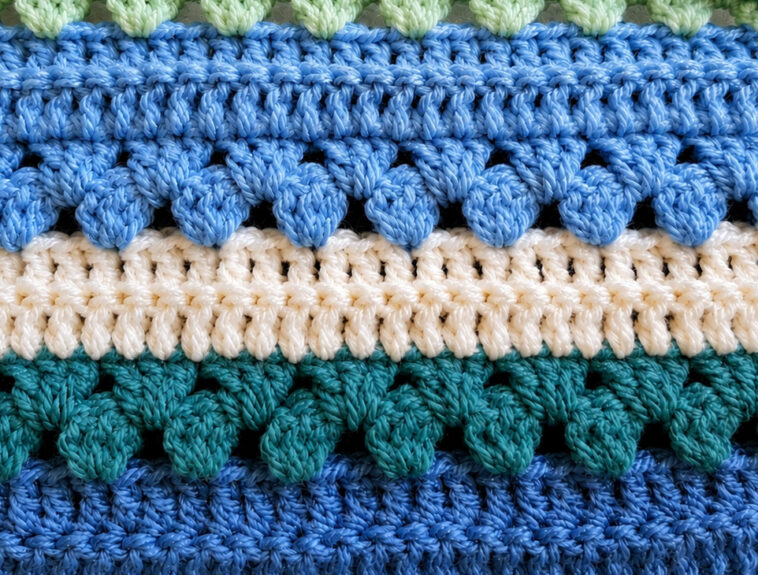
If you love colorful crochet blankets with beautiful texture but don’t want a complicated stitch pattern, the Cosy Stripe Blanket is a wonderful project to add to your crochet list. With simple rows, relaxing repetition, and plenty of opportunities to play with color, this blanket creates a warm and cheerful handmade look that works beautifully on a sofa, bed, reading chair, or nursery.
The classic Cosy Stripe Blanket was designed by Lucy of Attic24 and is known for its uncomplicated construction and colorful striped effect. The original design uses a repeating combination of treble crochet and groups of treble stitches, creating a gently textured surface without requiring complicated stitch work.
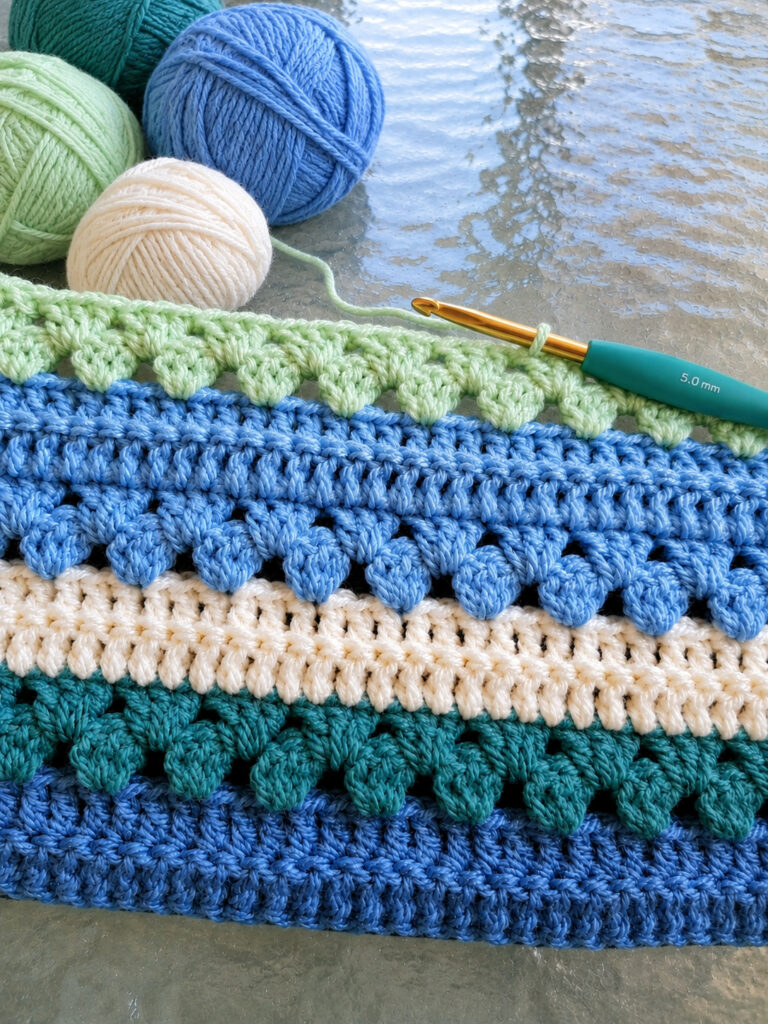
The blanket pictured above uses a fresh palette of blue, mint green, cream, and deep teal, giving it a cool coastal feel. You can easily create your own version with completely different colors.
Why You’ll Love the Cosy Stripe Blanket
There is something especially satisfying about a striped crochet blanket. Each completed row adds another splash of color, while the simple stitch pattern means you can concentrate on enjoying the process rather than constantly reading complicated instructions.
This design is particularly appealing because:
- The stitch pattern is beginner-friendly.
- The stripes create plenty of visual interest.
- You can customize the size easily.
- Almost any coordinated color palette can be used.
- The repetitive construction makes it relaxing to crochet.
- It works beautifully as a sofa throw, baby blanket, lap blanket, or bedspread.
- It is an excellent project for using a carefully planned collection of yarn colors.
The original Cosy Stripe design was specifically created as an easy, relaxing project with very little counting or pattern reading.
Materials You’ll Need
For a blanket inspired by the classic design, gather:
- DK/light worsted-weight yarn
- Crochet hook appropriate for your yarn and tension
- Yarn needle
- Scissors
- Measuring tape
- Stitch markers, optional
The original Attic24 version uses 15 × 100 g balls of Stylecraft Special DK with a 4 mm crochet hook for a single-bed blanket measuring approximately 120 × 180 cm (4 × 6 ft).
Yarn Colors for This Version
For the color inspiration shown in the photograph, consider a palette such as:
- Cream – for soft neutral stripes
- Sky Blue – for bright, cheerful sections
- Mint Green – for a fresh contrast
- Deep Teal – for rich darker stripes
You don’t have to reproduce these colors exactly. The beauty of a striped blanket is that you can make it completely personal.
Choosing Your Yarn
DK yarn is an excellent choice for this type of blanket because it provides a good balance between warmth, drape, and stitch definition.
Acrylic yarn is particularly practical because it is generally affordable, available in many colors, and easy to care for. The original pattern uses Stylecraft Special DK, a 100% acrylic DK yarn.
You can also experiment with:
- Cotton blends
- Wool blends
- Premium acrylic
- Bamboo blends
- Other DK-weight yarns
Always make a gauge swatch if you substitute yarn, because different fibers and brands can produce noticeably different blanket sizes.
Crochet Terminology
One important detail is that the original Cosy Stripe Blanket is written using UK crochet terminology. In that terminology, a UK treble crochet (tr) corresponds to a US double crochet (dc).
UK Treble Crochet
To work a UK treble:
- Yarn over.
- Insert your hook into the indicated stitch.
- Yarn over and pull up a loop.
- You now have three loops on your hook.
- Yarn over and pull through two loops.
- Yarn over again and pull through the remaining two loops.
This produces the tall stitch that forms the main structure of the blanket.
US crocheters: Remember that the UK treble used in the original pattern is equivalent to a US double crochet.
Understanding the Stripe Structure
One of the most attractive features of this blanket is the alternating stripe arrangement.
The classic pattern combines sections of solid treble crochet with rows made from groups of three trebles. This creates a subtle difference in texture and gives the stripes their characteristic appearance.
The basic rhythm is easy to remember:
Solid row → solid row → textured stripe rows → solid row → solid row → repeat
The original pattern uses two rows per color in much of the design, allowing the colors to remain clearly defined while still creating a pleasing rhythm across the blanket.
Starting the Blanket
For the original single-bed size, the foundation chain is 198 chains, producing a starting width of approximately 120 cm when the correct tension is achieved. The foundation chain should be a multiple of 3 when adjusting the blanket size.
If you want a smaller or larger blanket, simply adjust the foundation chain while maintaining the required multiple.
Size Ideas
You could create:
Baby blanket:
Use a shorter foundation chain and fewer stripe repeats.
Lap blanket:
Create a medium-width foundation chain and work enough rows to produce a comfortable lap-sized throw.
Sofa throw:
Increase both the width and number of rows.
Single-bed blanket:
Follow the approximate original dimensions of 120 × 180 cm.
Large bedspread:
Increase the foundation chain and purchase additional yarn.
Remember that changing the width also changes the amount of yarn required.
Simple Pattern Construction
Rather than making every row complicated, the blanket relies on a small number of repeating techniques.
Foundation
Begin with a foundation chain in the desired width, keeping the stitch count as a multiple of three.
Work the first rows in treble crochet to establish the foundation.
Textured Stripe
For the textured section, groups of three treble stitches are worked into spaces created across the previous row.
The repeated groups create the little raised clusters visible throughout the blanket.
Solid Stripe
The solid sections are worked with treble crochet across the row.
These smoother rows provide a lovely contrast to the more textured grouped sections.
Repeating
Continue alternating the different row sections while changing colors according to your chosen stripe sequence.
The result is a rhythmic fabric with horizontal bands of color and subtle changes in texture.
Color Planning
Color selection can completely transform this blanket.
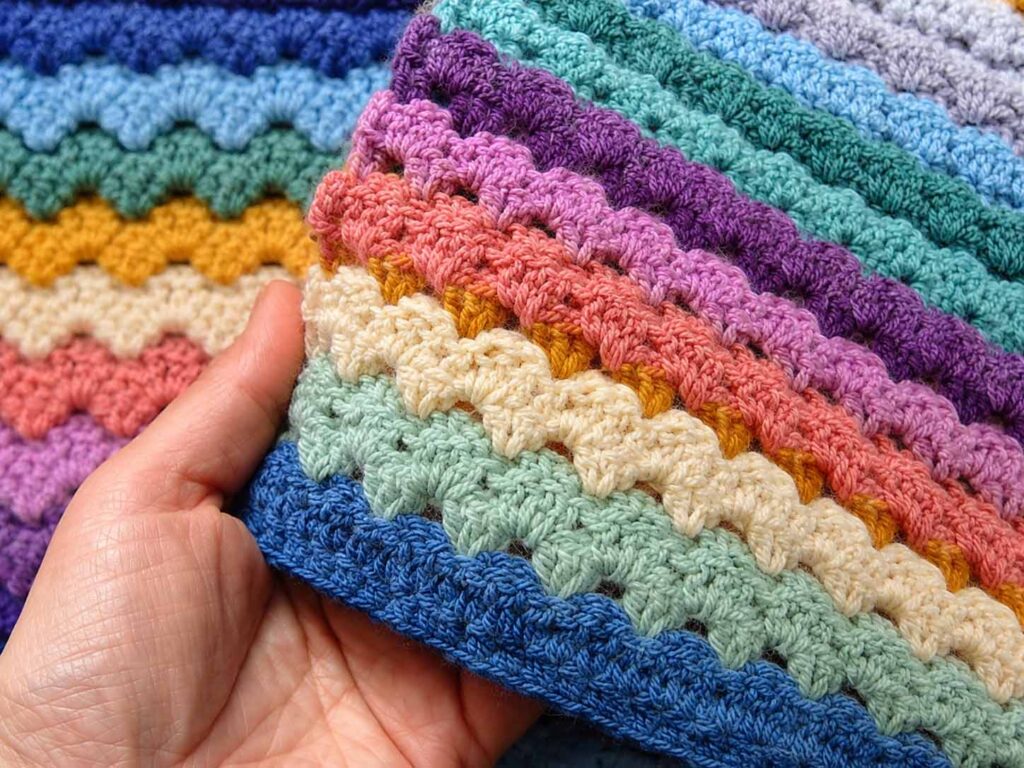
The photograph’s combination of sky blue, mint, cream, and deep teal gives the design a calm and modern appearance. If you want a similar look, place your colors so that the darker teal sections are separated by lighter cream and blue rows.
For a softer blanket, try:
- Powder blue
- Pale mint
- Ivory
- Soft gray
- White
For a warmer look:
- Mustard
- Rust
- Cream
- Terracotta
- Chocolate brown
For a modern neutral blanket:
- Beige
- Oatmeal
- Cream
- Taupe
- Charcoal
For a bright children’s blanket:
- Aqua
- Pink
- Yellow
- Purple
- White
A useful trick is to lay your yarn balls next to each other before starting. This lets you see whether the colors have enough contrast and whether the sequence feels balanced.
Tips for Better Tension
Keeping your tension consistent is important when making a large blanket.
Try not to crochet extremely tightly. Tight stitches can make the blanket stiff and reduce the finished size.
If your foundation chain feels considerably shorter than the intended width, try a slightly larger hook for the foundation chain or adjust your chain count.
The original pattern notes that crocheters with loose tension may need to adjust the number of starting chains and may require additional yarn.
Make a Small Swatch
Before committing to a large blanket, crochet a small sample.
Check:
- Width
- Stitch appearance
- Fabric drape
- Yarn thickness
- Hook size
- Color combination
A few minutes spent testing can save a lot of frustration later.
How to Change Colors Neatly
When working a striped blanket, neat color changes make a huge difference.
Complete the final stitch of the current color, then introduce the next color as you finish the stitch. Keep the new yarn tension comfortable rather than pulling it tightly.
Leave reasonable yarn tails when fastening off. These can be woven into the back of the blanket later.
Because a striped blanket can involve many color changes, consider weaving in ends regularly rather than leaving them all until the end.
Finishing Your Blanket
Once you reach your desired length, fasten off securely and weave in all loose ends using a yarn needle.
You can then add a simple border if desired.
A border can:
- Frame the stripes
- Stabilize the edges
- Give the blanket a finished appearance
- Add another opportunity for color
- Help coordinate the blanket with your home décor
For a classic look, use one of the main colors from the blanket for the border.
For a more dramatic finish, choose a contrasting dark color.
Cosy Stripe Blanket
Blocking
Blocking isn’t always necessary for acrylic blankets, but it can help improve the overall shape.
If your blanket has slightly uneven edges, gently shaping it after washing can help create a more polished appearance.
Always follow the care instructions for your particular yarn.
How to Make the Blanket Bigger
The Cosy Stripe construction is particularly flexible.
To make a wider blanket, increase the foundation chain while maintaining the required stitch multiple.
To make it longer, simply continue repeating the stripe sequence until you reach your preferred length.
Keep in mind that a larger blanket requires more yarn.
If you are planning a double or king-size version, purchase additional yarn rather than assuming the original 15-ball quantity will be enough.
Common Mistakes to Avoid
Missing the Last Stitch
When working rows of treble crochet, the final stitch can be easy to overlook, particularly when it is worked into the top of the turning chain.
Count your stitches periodically.
Incorrect Foundation Chain
When changing the width, remember to maintain the correct multiple for the pattern.
Uneven Tension
Try to keep your stitches relaxed and consistent.
Forgetting the Color Sequence
Write your color sequence down before beginning. A small note beside your project can prevent mistakes after you’ve completed several rows.
Leaving All the Ends Until the End
Weave in ends as you go whenever possible. This makes finishing much less overwhelming.
Is This Blanket Suitable for Beginners?
Yes. The Cosy Stripe style is an excellent choice for crocheters who have mastered the basic stitches and want to move into their first large blanket project.
You should be comfortable with:
- Chain stitch
- Treble crochet
- Turning chains
- Changing yarn colors
- Working into stitches and spaces
- Fastening off
- Weaving in ends
The repetitive nature of the pattern makes it especially suitable for practicing tension and color changes.
Frequently Asked Questions
How much yarn does the original Cosy Stripe Blanket use?
The original single-bed version uses 15 × 100 g balls of Stylecraft Special DK and is approximately 120 × 180 cm.
What crochet hook size is recommended?
The original design specifies a 4 mm hook. The photograph above shows a 5 mm hook, so if you are following the original pattern, use the specified 4 mm hook or make a gauge swatch when using a different hook size.
Can I use different yarn?
Yes. DK-weight yarn from another brand can be substituted, but your gauge, drape, and yarn requirements may change.
Can I make a baby blanket?
Absolutely. Reduce the foundation chain and work fewer stripe repeats to create a smaller version.
Can I make the blanket in only three colors?
Yes. Three carefully selected colors can create a beautiful modern stripe effect.
Is the pattern free?
The original Cosy Stripe Blanket pattern and tutorial are available free from Attic24.
Final Thoughts
The Cosy Stripe Blanket is a wonderful example of how simple crochet techniques can create something remarkably beautiful. The combination of easy-to-repeat stitches, colorful stripes, and gentle texture makes it a project that can be enjoyed by beginners and experienced crocheters alike.
The blue, mint, cream, and teal palette shown here is especially lovely for a fresh, calming home aesthetic, but don’t be afraid to experiment with your own favorite colors.
Whether you’re making a small baby blanket, a cozy sofa throw, or a full-sized bedspread, this design gives you plenty of freedom to customize the finished project.
Grab your favorite DK yarn, choose your color sequence, make yourself a cup of tea, and settle in for some relaxing crochet time. Before long, you’ll have a beautiful handmade blanket made one colorful stripe at a time.
Official Free Pattern
For the complete original pattern and step-by-step photo tutorial by Lucy of Attic24, visit the Cosy Stripe Blanket tutorial.

