 soofha
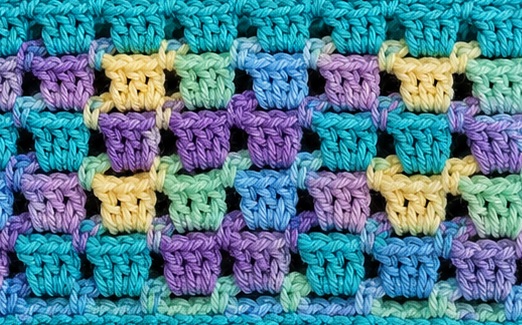
The Block Stitch is a beautiful crochet technique that creates neat, colorful blocks with a lovely textured appearance. It is an excellent stitch for blankets, scarves, baby projects, cushions, bags, and many other crochet creations. Although the finished design looks detailed, the stitch is surprisingly simple once you understand the basic sequence.
Welcome, dear crochet friends! If you are looking for a relaxing and beginner-friendly crochet project, this easy Block Stitch tutorial is a wonderful place to start. With just a few basic crochet stitches and a simple repeating pattern, you can create a fabric that looks impressive and beautifully structured.
Why You Will Love the Block Stitch
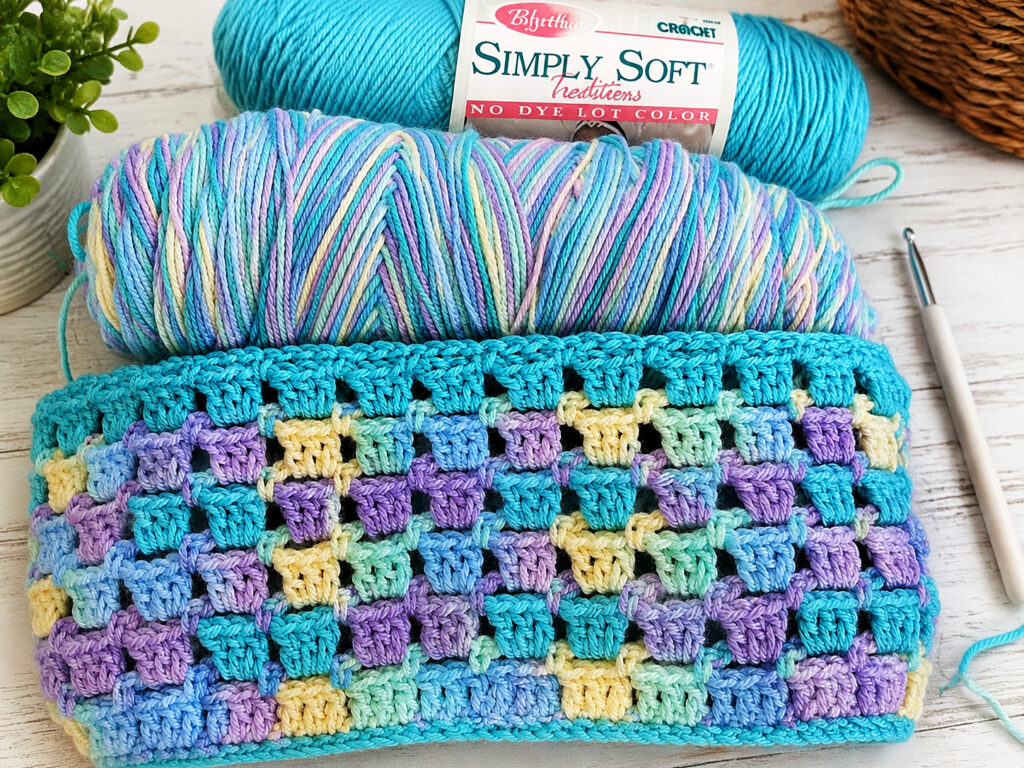
One of the best things about the Block Stitch is its versatility. You can make it using just two colors or experiment with several shades to create a colorful striped effect.
The stitch works particularly well when you want to add visual interest without using complicated techniques. The small blocks create a lovely geometric pattern, while the spaces between the stitches give the finished fabric a light and airy appearance.
This pattern is also a great opportunity for beginners to practice working consistently across rows and learning how color changes can transform a simple crochet stitch.
Materials You Will Need
For a basic Block Stitch project, gather:
- Medium-weight yarn in two or more colors
- Crochet hook appropriate for your yarn
- Scissors
- Yarn needle
- Measuring tape, if you are making a specific-sized project
You can use almost any yarn weight with this stitch. However, medium-weight yarn is particularly easy to work with when you are learning the pattern.
Basic Crochet Stitches Used
Before starting, it is helpful to be comfortable with these stitches:
- Chain stitch (ch)
- Single crochet (sc)
- Double crochet (dc)
- Slip stitch (sl st)
If you are still learning these stitches, practice each one separately before beginning the Block Stitch.
Block Stitch Pattern
The exact number of chains depends on the size of your project, but the stitch is generally worked over a multiple of 3 stitches, plus an additional chain for turning.
Choose your first color and make your foundation chain.
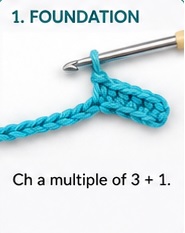
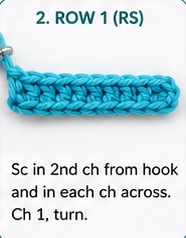
Row 1
Work single crochet stitches across the foundation chain.
Chain 1 and turn.
This first row creates a simple base for the colorful block pattern that follows.
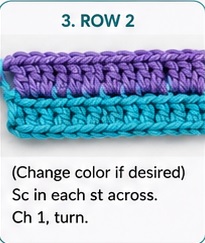
Row 2
Continue with your first color or introduce your second color according to your preferred color arrangement.
Work your stitches across the row while maintaining an even tension.
The key to a neat Block Stitch is keeping your stitches consistent. Try not to make some chains extremely loose and others very tight.
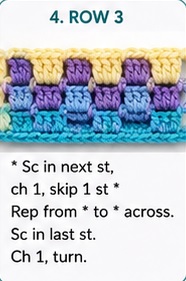
Row 3
Begin creating the characteristic blocks.
Work single crochet stitches in the appropriate spaces, followed by chain spaces where required by the pattern. The double crochet stitches from the following rows will be worked into these spaces.
Continue the same sequence across the row.
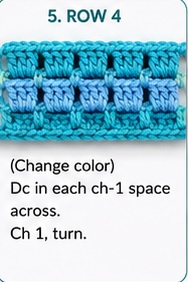
Row 4
Change colors if desired.
Work the stitches into the chain spaces created in the previous row. These stitches form the small vertical blocks that give the pattern its distinctive appearance.
Repeat the stitch sequence across the row.
Continue Repeating
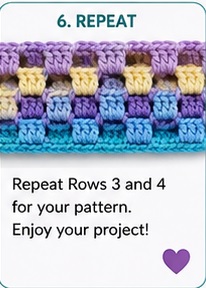
Continue alternating the rows and colors to build the Block Stitch pattern.
The beauty of this design is that once you understand where the stitches and chain spaces are placed, the pattern becomes very repetitive and relaxing.
How to Change Colors
Color changes are one of the most attractive features of the Block Stitch.
You can change colors at the end of a row to create horizontal stripes, or introduce several colors for a more playful design.
For a simple two-color project, try:
Color A → Color B → Color A → Color B
For a rainbow-inspired project, you could use several shades and change colors every one or two rows.
When changing colors, try to keep the unused yarn neatly positioned along the edge or weave the ends in later. This will help keep the back of your project tidy.
Tips for Beginners
If this is your first time making the Block Stitch, don’t worry if your first few rows don’t look perfect. Crochet tension often becomes more consistent as you continue working.
Here are some helpful tips:
1. Count Your Stitches
Counting your stitches at the end of each row can prevent the pattern from becoming uneven.
2. Keep Your Tension Consistent
Try to hold the yarn comfortably. Pulling the yarn too tightly can make the fabric stiff, while very loose stitches can make the blocks difficult to recognize.
3. Use Stitch Markers
If you find it difficult to identify the chain spaces, place stitch markers in important sections of the pattern.
4. Practice With a Small Swatch
Before beginning a large blanket, make a small sample. This lets you practice the stitch and decide whether you like your chosen yarn and colors.
5. Don’t Compare Your Work
Every crocheter has a different tension and style. Two people can follow exactly the same instructions and still create slightly different-looking pieces.
Your crochet project does not need to look identical to a photograph. What matters most is learning, practicing, and enjoying the process.
Beautiful Color Combinations
The Block Stitch looks wonderful in almost any color palette.
For a soft and elegant project, try:
- Cream and dusty pink
- White and light blue
- Beige and sage green
- Lavender and white
For a brighter design, consider:
- Turquoise and yellow
- Coral and white
- Blue and green
- Pink and purple
For a classic blanket, neutral shades such as cream, gray, beige, and soft brown can create a timeless look.
Project Ideas for the Block Stitch
Once you become comfortable with this stitch, you can use it for many different projects.
Block Stitch Blanket
A blanket is probably one of the most popular ways to use this pattern. The repeating blocks create a beautiful decorative surface without requiring complicated stitch combinations.
Baby Blanket
Choose soft pastel colors for a delicate baby blanket. Blue, pink, cream, mint, lavender, and yellow all work beautifully.
Scarf
A smaller project such as a scarf is perfect for practicing the stitch before committing to a large blanket.
Crochet Pillow Cover
Use the Block Stitch to create a decorative pillow cover. Choose colors that coordinate with your home décor.
Crochet Bag
The geometric appearance of the stitch can also work beautifully for tote bags, market bags, and small crochet purses.
Troubleshooting Common Problems
My Blocks Don’t Line Up
If your blocks appear uneven, check that you haven’t accidentally skipped or added a stitch or chain space.
My Crochet Is Getting Wider
This usually means additional stitches are being accidentally added at the edges. Count your stitches regularly and pay particular attention to the first and last stitch of each row.
My Fabric Looks Too Tight
Try using a slightly larger crochet hook or relaxing your grip on the yarn.
My Fabric Looks Too Loose
A smaller hook may help create a firmer fabric. You can also work on maintaining a more consistent tension.
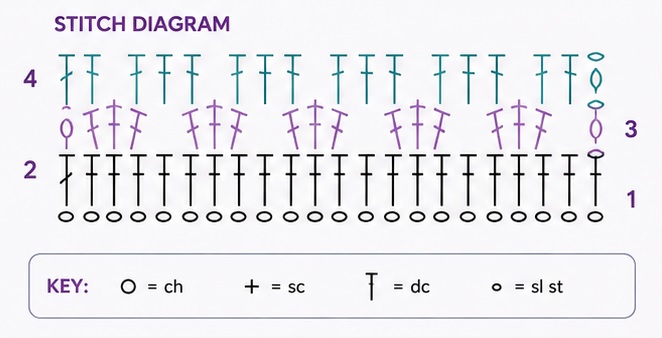
Stitch Diagram
Finishing Your Project
When your project reaches the desired length, fasten off your yarn and leave a small tail.
Use a yarn needle to weave the remaining ends securely through the stitches on the wrong side of the project.
If you have used multiple colors, you may have several yarn ends to secure. Take your time with this step because properly woven ends will help your finished project remain neat and durable.
If you are making a blanket, you can also add a simple border around the edges. A single crochet border is an easy choice and gives the project a clean finished appearance.
Final Thoughts
The Block Stitch Easy Crochet Pattern is a wonderful technique for crocheters of many skill levels. Beginners can use it to practice fundamental stitches, while experienced crocheters can experiment with colors, yarn weights, and different project sizes.
Remember that crochet is not about creating a perfect copy of someone else’s work. Your tension, color choices, and personal style are what make your project unique.
Take your time, enjoy each row, and don’t be afraid to experiment. With practice, your Block Stitch will become smoother and more consistent, and you may soon find yourself using this beautiful technique for blankets, scarves, baby projects, home décor, and gifts.
Most importantly, enjoy your crochet journey. Every completed row is another opportunity to learn something new, and every handmade project carries a little piece of the creativity and care of the person who made it.
Happy crocheting, and enjoy creating your beautiful Block Stitch project!
Frequently Asked Questions
Is the Block Stitch good for beginners?
Yes. Once you understand the basic stitch sequence and color changes, the Block Stitch is quite repetitive and beginner-friendly.
What yarn is best for Block Stitch?
Medium-weight yarn is an excellent choice for learning. However, the stitch can be adapted to different yarn weights.
Can I make a Block Stitch blanket?
Absolutely. The stitch works especially well for blankets because the repeating blocks create a beautiful geometric design.
Can I use more than two colors?
Yes. Using three, four, or even more colors can create a colorful striped or rainbow effect.
How can I make my Block Stitch look neater?
Focus on maintaining consistent tension, counting your stitches, and keeping the edges straight. Making a small practice swatch before starting your main project can also help.
What projects can I make with Block Stitch?
You can use this stitch for blankets, baby blankets, scarves, shawls, pillow covers, bags, wraps, and many other crochet projects.
Happy crocheting! 🧶

