 soofha
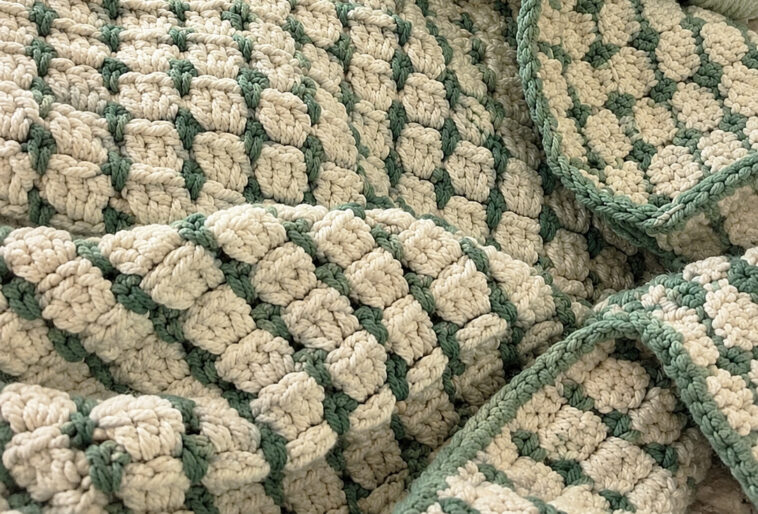
Crocheters are always searching for stitches that are both enjoyable to make and beautiful enough to transform simple yarn into something special. The Crochet Block Stitch is a wonderful example. With its neat geometric appearance, subtle texture, and endless color possibilities, this stitch can be used for everything from cozy blankets to stylish accessories and home décor.
The best part is that the Block Stitch relies on familiar crochet techniques, making it approachable for beginners while still offering plenty of room for creativity. Once you understand the basic repeat, you can easily adapt the pattern to different project sizes, yarn weights, and color combinations.
What Is the Crochet Block Stitch?
The Crochet Block Stitch creates a distinctive grid-like design by combining rows of double crochet (DC) with rows of single crochet (SC) and chain spaces.
The double-crochet groups form the individual “blocks,” while the single-crochet rows help separate them and give the finished fabric its characteristic geometric appearance.
A common foundation for this stitch follows a multiple of 3 plus 2 stitches. This repeat makes it easy to increase or decrease the width of your project while keeping the design properly aligned.
Why the Block Stitch Is So Popular
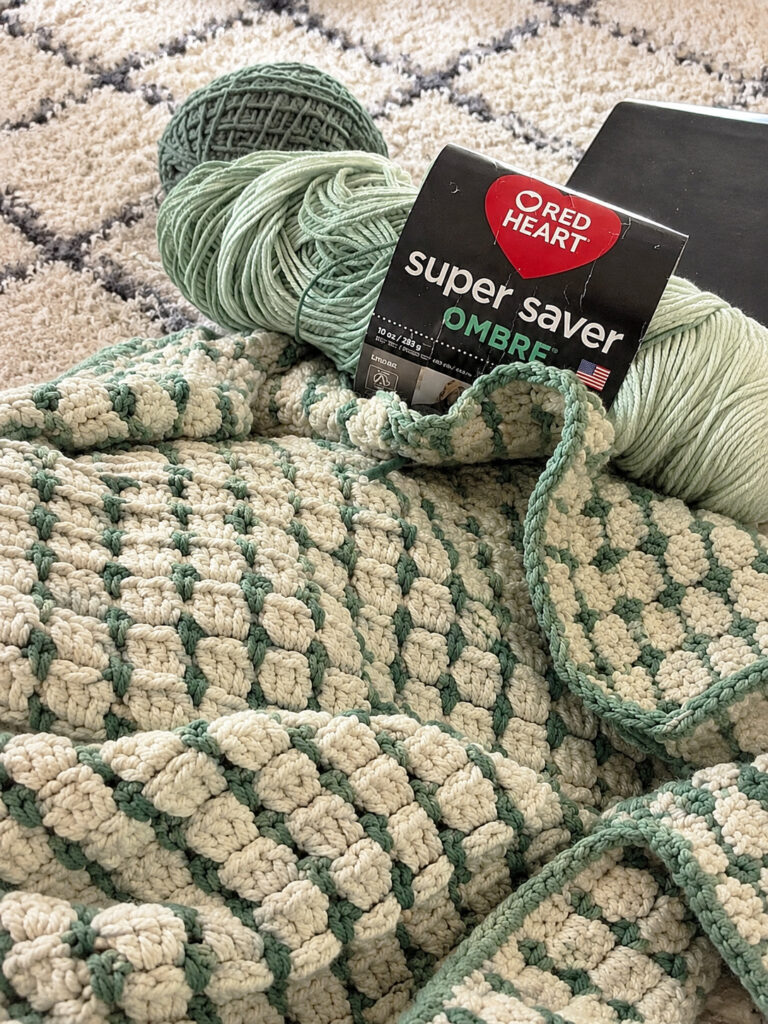
One of the biggest advantages of this stitch is its versatility. You can make the exact same stitch look completely different simply by changing the yarn colors.
Try working it in a single shade for a subtle textured effect, two contrasting colors for bold stripes, or several coordinating colors for a playful design. Gradient yarns can also produce beautiful transitions without requiring frequent color changes.
The stitch can also be worked to virtually any length, making it suitable for both small and large crochet projects.
Creative Projects for the Block Stitch
There are countless ways to incorporate this stitch into your crochet collection.
Crochet Blankets and Afghans
The Block Stitch is particularly well suited to blankets. Its repeating geometric pattern adds visual interest without making the project overly complicated.
Changing colors every one or two rows can create attractive stripes, while carefully selected shades can produce a sophisticated gradient or color-block effect.
Scarves and Shawls
The textured fabric created by this stitch makes lovely scarves and shawls. Choose a soft yarn for a comfortable accessory that provides warmth while showcasing the stitch pattern.
Crochet Bags and Totes
Block Stitch fabric can also be used to create attractive bags and totes. Experiment with sturdy yarn and add handles, a lining, or a simple border to turn the stitch pattern into a practical everyday accessory.
Home Décor
Bring handmade style into your home with Block Stitch cushions, pillow covers, table runners, placemats, and other decorative pieces.
The clean geometric design can complement many decorating styles, from colorful and playful to simple and modern.
Hats, Cowls, and Other Accessories
The stitch can also be adapted for smaller wearable projects such as cowls, hats, mittens, and other accessories. Using thicker yarn can create a particularly warm and cozy fabric.
Materials
To practice the Crochet Block Stitch, you will need:
- Yarn of your choice
- A suitable crochet hook
- Scissors
- Yarn needle
- Measuring tape, if needed
For beginners, a smooth medium-weight yarn is recommended because the stitches and spaces are easy to see.
Crochet Abbreviations
The pattern uses standard US crochet terminology:
- Ch: Chain
- SC: Single Crochet
- DC: Double Crochet
- Rep: Repeat
- St: Stitch
- Ch-sp: Chain Space
Crochet Block Stitch Pattern
Pattern repeat: Multiple of 3 + 2
Before beginning, decide how wide you want your project to be and create a foundation chain that follows the required stitch multiple.
Foundation Row
Begin with your desired foundation chain.
Work a double crochet into the 5th chain from the hook.
Continue working one double crochet into each chain across the foundation row.
If you are using multiple colors, change to your next color at the end of the row.
Row 2
Turn your work. No turning chain is needed according to this version of the pattern.
Work a single crochet into the first stitch.
Then work a single crochet in the space between the appropriate double-crochet stitches from the previous row.
Next, chain 2 and skip the next 3 stitches.
Work a single crochet into the space between the next pair of double crochets.
Repeat the sequence across the row:
SC in space, Ch 2, skip 3 stitches, SC in next space.
Continue until you reach the end.
Finish the row with a single crochet in the turning chain.
Change colors here if desired.
Row 3
Turn your work and chain 3, which counts as the first double crochet.
Work 3 double crochets into the next chain-2 space.
Continue placing 3 DC into each chain-2 space across the row.
At the end, finish with a double crochet in the final stitch or turning chain as required by the edge of your work.
Change colors if desired.
Row 4
Turn your work without adding a turning chain.
Work a single crochet into the first stitch.
Work another single crochet into the appropriate space between the double-crochet groups below.
Then chain 2, skip the next 3 stitches, and work a single crochet into the following space.
Repeat this sequence across the row.
Finish with a single crochet in the turning chain.
Change colors if you are creating a striped design.
Continue the Pattern
Continue repeating Rows 3 and 4 until your project reaches the desired length.
For a simple two-color design, change colors at the end of each row or every two rows. For a more colorful project, rotate through several shades to create stripes or a gradient effect.
When you have finished, fasten off your yarn and weave in all loose ends with a yarn needle.
Tips for a Beautiful Block Stitch
Although this is a relatively simple stitch, a few techniques can help you achieve a cleaner result.
Keep Your Tension Even
Consistent tension is especially important when working the chain spaces. If your tension changes significantly from row to row, the blocks may become uneven.
Count the Foundation Chain
Make sure your starting chain follows the multiple of 3 plus 2 repeat. This will help keep the pattern aligned and prevent problems at the edges.
Watch Your Chain Spaces
The chain-2 spaces are where the groups of double crochet are created on the following row. Be careful not to miss a space or accidentally work into the wrong stitch.
Count Your Blocks
If your project begins to look uneven, count the blocks across the row. Finding an extra or missing block early is much easier than correcting several rows later.
Try Different Color Combinations
The Block Stitch is an excellent pattern for experimenting with color. Soft neutrals can create an elegant look, while bright contrasting shades can make the geometric design stand out.
Block Stitch Color Inspiration
Here are a few combinations to try:
Soft and Natural
- Cream
- Sage green
- Beige
- Warm white
Cool and Calm
- Sky blue
- White
- Soft gray
- Dusty blue
Warm and Cozy
- Terracotta
- Cream
- Mustard
- Rust
Bright and Playful
- Pink
- Yellow
- Turquoise
- Purple
You can also use leftover yarn from previous projects to create a cheerful scrap-yarn Block Stitch blanket.
Crochet Block Stitch Diagram
A stitch diagram can be helpful when learning where each stitch and chain space belongs. When reading the chart, pay close attention to the chain spaces and the placement of the groups of double crochet.
For beginners, it can be useful to follow the written instructions while referring to the diagram until the repeat becomes familiar.
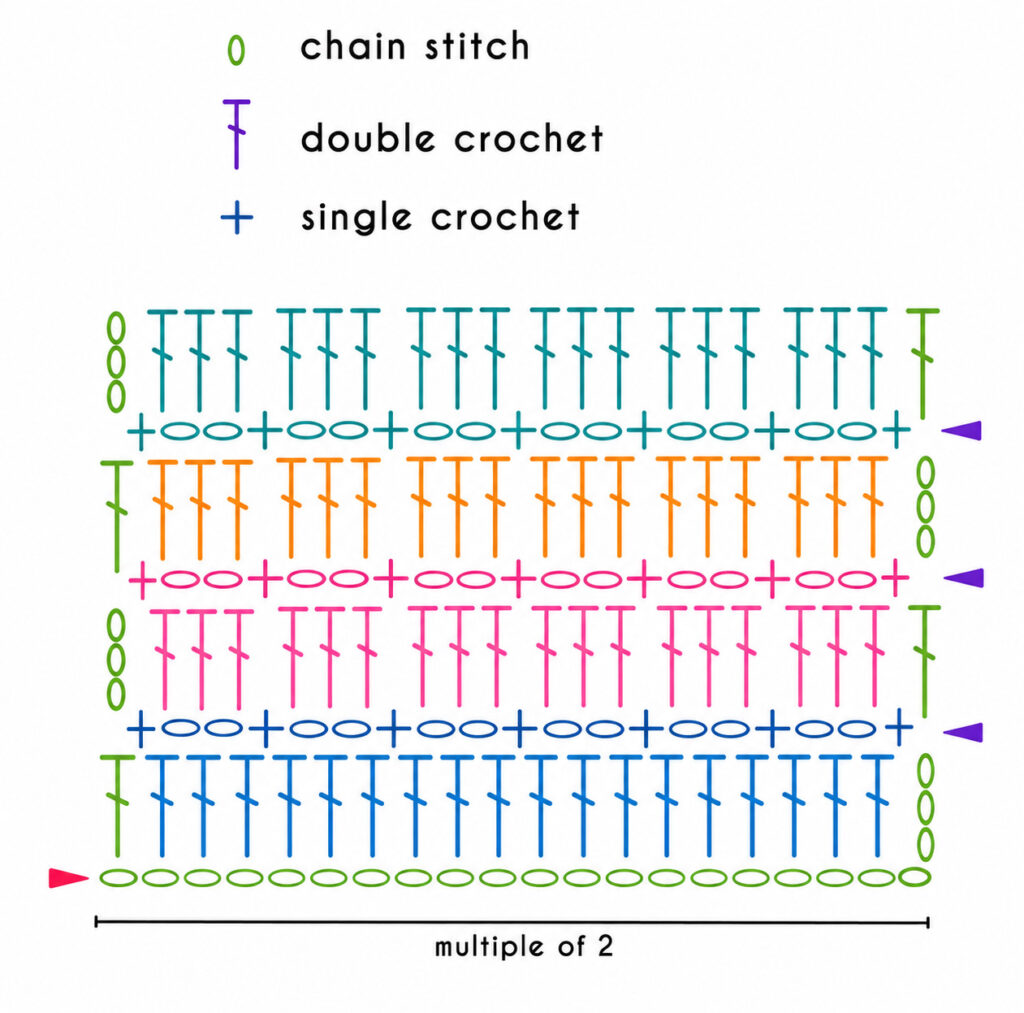
Crochet Block Stitch Diagram
Video Tutorial
If you learn best by watching someone demonstrate each step, a video tutorial can be a useful companion to the written instructions.
A visual tutorial from Lanas y Ovillos in English can help demonstrate the stitch placement, color changes, and repeating rows. Watching the technique worked in real time can make the relationship between the chain spaces and double-crochet blocks much easier to understand.
Final Thoughts
The Crochet Block Stitch is a simple yet remarkably versatile crochet technique. Its combination of double-crochet blocks, single crochet, and chain spaces creates a distinctive geometric texture that can be customized in countless ways.
Whether you’re making your first crochet blanket, designing a colorful scarf, creating a practical tote, or adding handmade accents to your home, this stitch provides an easy foundation for creative projects.
Experiment with different yarns, colors, and project sizes to discover your favorite version of the pattern. Once you become comfortable with the repeat, you can let your creativity take over and create beautiful handmade pieces with your own personal style.
Grab your favorite hook and yarn, and give the Crochet Block Stitch a try—you may soon find yourself using this versatile pattern again and again!

