

 soofha
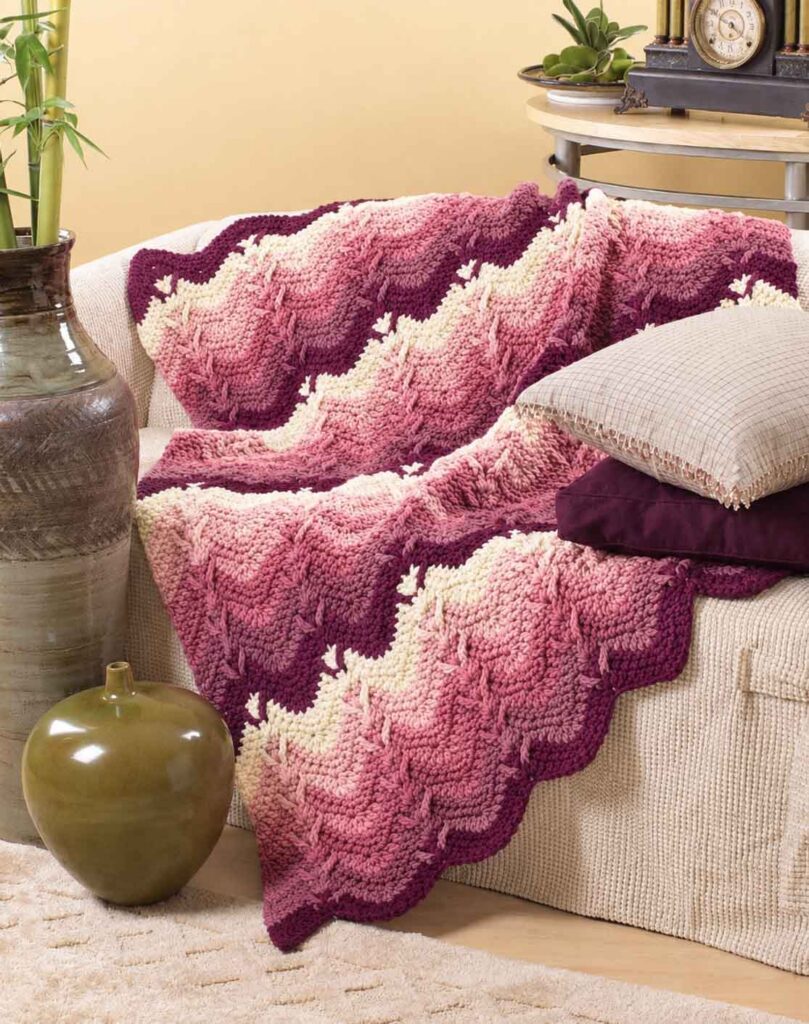
There’s something special about a crochet blanket made with the colors of nature. The deep greens, soft sage shades, and frosty tones of the Mountain Forests Afghan bring to mind quiet woodland trails, evergreen trees, and cool mornings in the mountains. It’s the kind of blanket that looks right at home draped over a sofa or folded at the end of a bed.
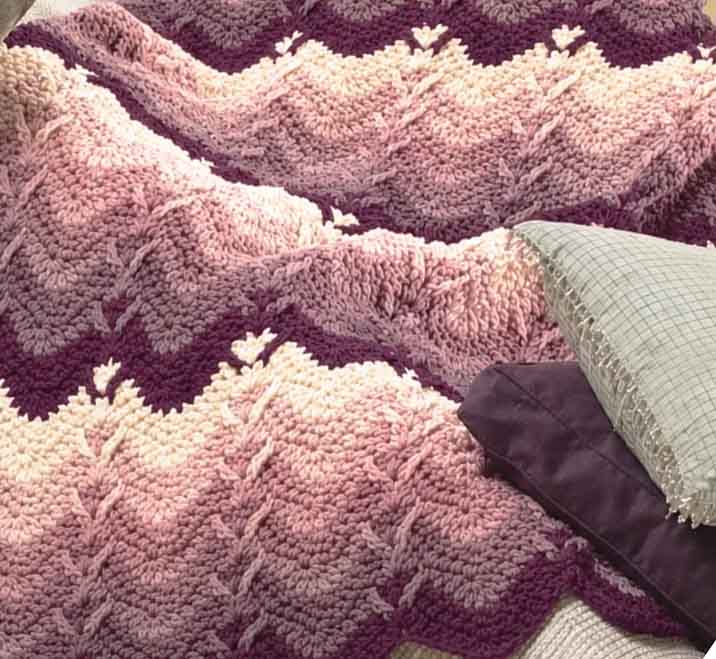
This afghan combines a simple ripple-style design with a beautiful mix of earthy colors. The changing shades give the blanket plenty of visual interest, while the textured stitches create a thick, comfortable fabric that’s lovely to curl up under on a chilly evening.
The pattern uses Red Heart Super Saver worsted-weight yarn, with two strands held together throughout the project. This technique gives the finished blanket extra body and warmth while allowing the different shades of green to stand out.
Whether you’re making a blanket for your own home or preparing a thoughtful handmade gift, the Mountain Forests Afghan is a wonderful project for anyone who appreciates classic crochet and nature-inspired colors.
Mountain Forests Afghan Pattern Details
- Project: Crochet afghan or throw blanket
- Style: Ripple-inspired, woodland color design
- Finished size: Approximately 48 inches wide by 64 inches long
- Yarn weight: Medium (worsted weight)
- Hook: US size N/15 (10 mm), or the size needed to obtain gauge
- Technique: Double crochet, double crochet decreases, and front post treble crochet
- Construction: Worked in rows with two strands of yarn held together
Finished Measurements
The completed Mountain Forests Afghan measures approximately 48 inches wide and 64 inches long.
This size works well as a cozy sofa blanket, a decorative bed throw, or an extra layer of warmth during the colder months. If you would like to adjust the dimensions, remember that changing the starting chain or the number of rows may also affect the ripple pattern and yarn requirements.
Materials You’ll Need
Gather your yarn and tools before beginning so you can concentrate on the stitch pattern and color changes.
Yarn
Use Red Heart Super Saver medium-weight yarn, holding two strands together throughout the afghan.
- Color A – Black (#312): 11 oz
- Color B – Dark Sage (#633): 9 oz
- Color C – Medium Sage (#632): 9 oz
- Color D – Light Sage (#631): 9 oz
- Color E – Frosty Green (#661): 9 oz
- Color F – Eggnog (#329): 9 oz
The combination of dark and light greens creates a woodland effect, while Black adds contrast and Eggnog introduces a softer, warmer shade.
Additional Supplies
- US N/15 (10 mm) crochet hook
- Yarn needle for weaving in loose ends
- Scissors
- Measuring tape
Check Your Gauge Before Starting
Gauge is important when making a blanket that needs to reach a particular size. Before beginning the full project, work a small sample using two strands of yarn held together.
The recommended gauge is:
- 4 stitches = 2 inches
- 2 rows of double crochet = 2.5 inches
If your sample is too small, try a larger hook. If it is too large, use a smaller hook. Keep in mind that changing the hook size can also affect the thickness and drape of the finished fabric.
Crochet Abbreviations
The pattern uses standard US crochet terminology.
- ch: Chain
- dc: Double crochet
- dc dec: Double crochet decrease
- fptr: Front post treble crochet
- sl st: Slip stitch
- st(s): Stitch(es)
- sp: Space
- rep: Repeat
- yo: Yarn over
Special Stitches
Double Crochet Decrease (dc dec)
A double crochet decrease joins two stitches into one, helping shape the peaks and valleys of the ripple pattern.
- Yarn over and insert your hook into the indicated stitch.
- Yarn over and pull up a loop. Yarn over and pull through two loops.
- Yarn over and insert your hook into the next stitch.
- Yarn over and pull up a loop, then yarn over and pull through two loops.
- Yarn over and pull through all three remaining loops.
You have now completed one double crochet decrease over two stitches.
Front Post Treble Crochet (fptr)
This stitch creates a raised line across the front of the fabric.
- Yarn over twice.
- Insert your hook from front to back and then to the front again around the post of the indicated stitch.
- Yarn over and pull up a loop.
- Yarn over and pull through two loops, three times.
The resulting stitch sits in front of the fabric and adds definition to the pattern.
Before You Begin
The Mountain Forests Afghan is worked back and forth in rows. Use two strands of the same color together for the entire project.
The beginning chain-3 in Row 2 does not count as a stitch. Unless otherwise specified, fasten off at the end of the indicated color section and join the next color where the instructions call for it.
Take a moment to identify the chain spaces and the stitches immediately before and after them. These points help establish the repeating ripple pattern, so keeping track of them will make the later rows easier to follow.
Mountain Forests Afghan Crochet Instructions
Row 1 – Foundation Row
With two strands of Color A (Black), chain 115.
Work a double crochet decrease over the 4th and 5th chains from the hook. Double crochet in each of the next 5 chains.
In the next chain, work (2 dc, ch 1, 2 dc) to form the increase section of the ripple.
Double crochet in each of the next 5 chains, then repeat the established pattern across the row, following the original sequence of decreases, straight sections, and increase groups.
Finish with the specified double crochet decrease at the end of the row and turn.
The original pattern lists 106 stitches and 7 chain spaces for this row. Because the decrease and increase placements determine the final stitch count, check your work against the original stitch sequence as you go.
Row 2 – Establishing the Ripple
Chain 3. Remember that this beginning chain does not count as a stitch.
Work a double crochet decrease over the next 2 stitches, then double crochet in each of the next 5 stitches.
In the next chain-1 space, work (2 dc, ch 1, 2 dc).
Double crochet in each of the next 5 stitches, then continue repeating the ripple sequence across the row.
Finish with the specified decrease at the end of the row. Turn and fasten off.
As you work, check that the chain spaces remain aligned with the increase groups. These spaces form the foundation for the repeating pattern.
Row 3 – Adding Texture
Join two strands of Color B (Dark Sage) with a slip stitch in the first stitch. Chain 3.
Work a double crochet decrease over the next 2 stitches, then double crochet in each of the next 3 stitches.
Work a front post treble crochet around the designated stitch from the row below, followed by a double crochet in the next stitch of the current row.
In the next chain-1 space, work (2 dc, ch 1, 2 dc). Double crochet in the next stitch, then work a front post treble crochet around the corresponding stitch on the previous row.
Continue with the specified straight sections and decreases, repeating the pattern across the row as directed in the original instructions.
Finish with the final decrease, turn, and prepare for the next row.
Helpful tip: Row 3 contains special stitch placements that depend on the previous rows. If you are following a chart or a published version of the original pattern, keep it beside you so you can confirm the exact repeat boundaries and stitch counts.
Rows 4–50 – Continue the Pattern
Continue alternating Rows 2 and 3, following the color sequence below.
| Color | Shade |
|---|---|
| A | Black |
| B | Dark Sage |
| C | Medium Sage |
| D | Light Sage |
| E | Frosty Green |
| F | Eggnog |
The original pattern specifies the sequence C, D, E, F, A, and B, with the final row worked in Color A using the Row 2 instructions.
Follow the published color-change points carefully to reproduce the intended woodland effect. The alternating greens create depth, while the darker and lighter shades give the blanket its distinctive forest-inspired appearance.
Important pattern note: The supplied instructions for Row 3 refer to repeated sections and stitch counts that are not fully defined in the text provided. Confirm those repeats against the original published pattern before treating this rewrite as a complete, independently verified row-by-row pattern.
Mountain Forests Afghan Crochet Pattern
Finishing Your Afghan
Once you have completed the final row, fasten off and leave a tail long enough to weave in securely.
Thread the yarn needle and weave each loose end through several stitches on the wrong side of the blanket. Change direction at least once to help keep the ends secure.
Lay the afghan flat and check the edges. If needed, gently block it according to the care instructions for your yarn. Avoid excessive heat, which can damage acrylic fibers.
After the blanket has dried completely, fold it over a sofa arm or spread it across your favorite chair. The combination of sage green, frosty green, black, and Eggnog gives it a natural look that works beautifully with neutral and rustic interiors.
Tips for a Neat, Beautiful Result
Keep Your Tension Consistent
Because you are holding two strands together, try to keep both strands moving evenly as you crochet. Uneven tension can make some sections look thicker than others and may change the finished measurements.
Pay Attention to the Ripple Shape
The decreases and increase groups are what create the repeating wave effect. Count your stitches regularly and check that the chain spaces line up from one row to the next.
Make Color Changes Carefully
Changing colors at the end of a row gives the blanket a tidy appearance. Weave in the ends as you go if you prefer not to have a large finishing task at the end.
Check the Blanket as It Grows
Every few rows, lay your work on a flat surface. This makes it easier to spot uneven edges, missed decreases, or chain spaces that have shifted out of position.
Take Your Time with Finishing
A little care at the end makes a noticeable difference. Secure loose ends, straighten the edges, and allow the blanket to relax before measuring it.
Frequently Asked Questions
Is the Mountain Forests Afghan suitable for beginners?
Crocheters who are comfortable with double crochet and basic stitch counting should find the repeating rows manageable. The double crochet decrease and front post treble crochet may take a little practice if you have not used them before.
Why are two strands of yarn held together?
Using two strands creates a thicker, warmer fabric and gives the blanket a substantial feel. It also means you will use yarn more quickly than you would with a single strand.
Can I use different colors?
Absolutely. You can substitute other shades of green, blue, gray, cream, or brown to create your own landscape-inspired palette. Just keep the yarn weight consistent and check your gauge before starting.
Can I make the afghan larger?
You can adjust the dimensions, but changing the starting chain may affect the ripple repeat. To preserve the design, confirm the pattern multiple before adding chains, and expect to need additional yarn if you increase the width or length.
How should I care for the finished blanket?
Follow the care instructions on the yarn label. Red Heart Super Saver is commonly used for practical, everyday crochet projects, but the label on your specific yarn is the best guide for washing and drying.
FREE CROCHET HERE
A Cozy Blanket Inspired by the Forest
The Mountain Forests Afghan brings together the simple pleasure of crochet and the calming colors of the outdoors. Its combination of dark black, soft sage, frosty green, and Eggnog creates a versatile blanket that feels right at home in a cozy living room or a quiet bedroom.
Take your time with the color changes, enjoy watching the ripple pattern develop, and give the finishing touches the same care as the stitches themselves. The result is a handmade blanket with a warm, natural character that you can enjoy for years.
Looking for the free crochet pattern? Use the original pattern source to verify the complete row repeats and stitch counts before beginning, as some of the detailed instructions supplied here need clarification.
Happy crocheting!

