 soofha
The moss stitch is one of those timeless crochet techniques that looks beautifully intricate while being surprisingly simple to make. Also called the granite stitch or linen stitch, this classic pattern creates a softly textured fabric with a neat, woven appearance.
Because it combines basic single crochet stitches with chain spaces, the moss stitch is an excellent choice for both beginners and experienced crocheters. It works beautifully for blankets, scarves, shawls, baby projects, home décor, bags, and many other handmade creations.
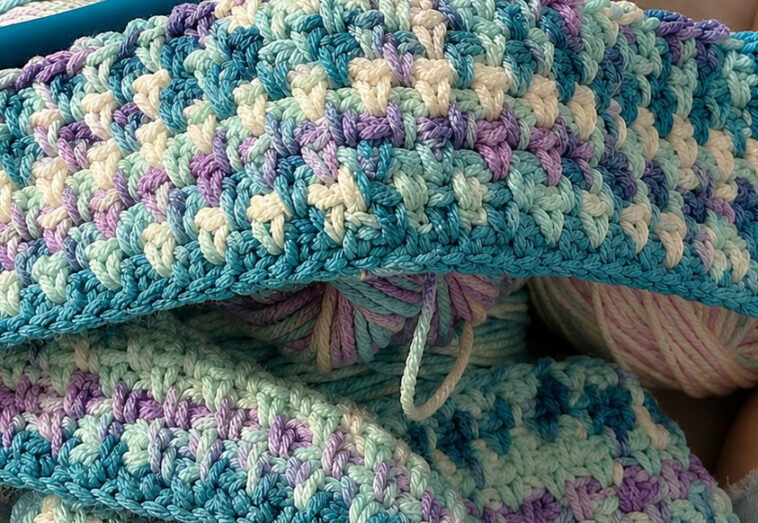
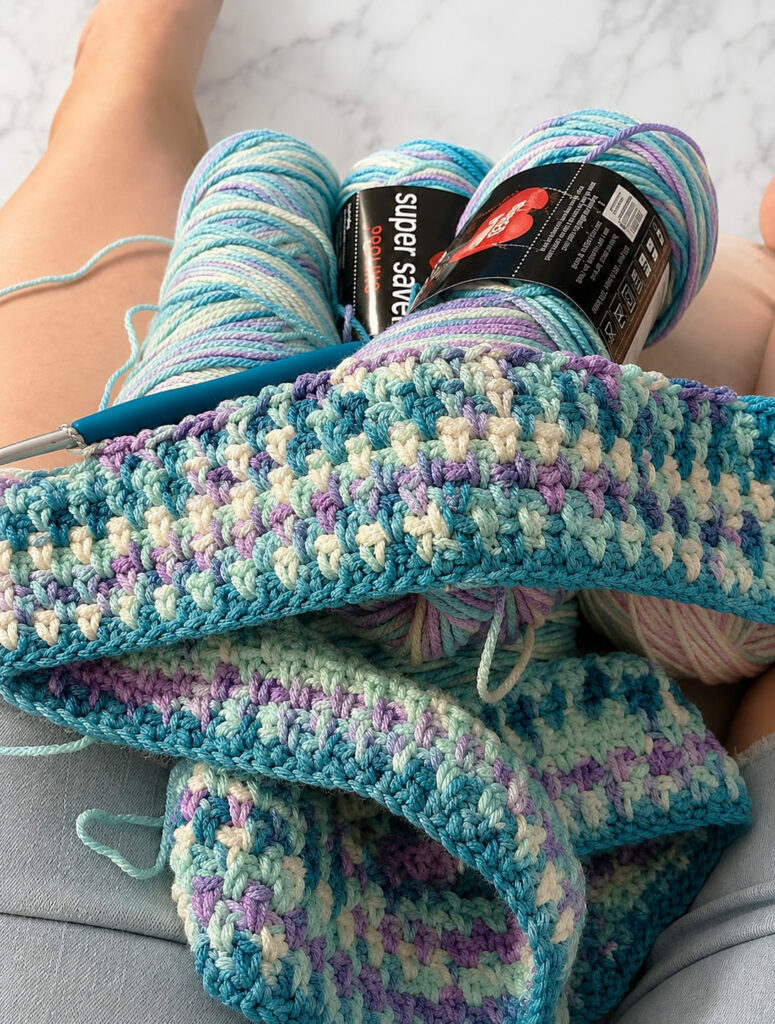
With its subtle texture and attractive drape, the moss stitch is also a wonderful way to showcase variegated or self-striping yarn. The beautiful shades in the pictured project create a soft combination of aqua, turquoise, mint, cream, and lavender.
Why You’ll Love the Moss Stitch
There are plenty of reasons to add this stitch to your crochet collection:
- Easy enough for beginners
- Uses simple crochet stitches
- Creates a lovely woven texture
- Works well with solid or multicolored yarn
- Suitable for blankets, scarves, and accessories
- Produces a fabric with a comfortable drape
- Easy to customize for different project sizes
- Looks beautiful in both subtle and vibrant color combinations
The stitch has a delicate appearance, but the finished fabric is sturdy enough for many everyday projects.
Materials You’ll Need
Before beginning your moss stitch project, gather the following supplies.
Yarn
Choose a yarn appropriate for the project you are making. A soft medium-weight yarn is a great all-purpose option for blankets, throws, scarves, and home accessories.
For a lightweight scarf or delicate accessory, you can choose a finer yarn. For a thick and cozy blanket, bulky yarn can create a warmer and more substantial fabric.
Self-striping or variegated yarn is particularly attractive with moss stitch because the simple texture allows the color changes to stand out without overwhelming the pattern.
Crochet Hook
Use a crochet hook suitable for your chosen yarn. Check the yarn label for the manufacturer’s recommended hook size, and adjust if necessary to achieve the fabric texture and drape you prefer.
Other Supplies
- Scissors
- Yarn needle
- Measuring tape
- Stitch markers, if desired
Crochet Abbreviations — US Terminology
- ch — chain
- sc — single crochet
- st — stitch
- ch-sp — chain space
- sk — skip
Note: In UK terminology, the US single crochet (sc) is called a double crochet (dc).
How to Crochet the Moss Stitch
The moss stitch is created by alternating single crochet stitches and chain spaces. Once the first few rows are established, the repeating pattern becomes very easy to recognize.
Begin with a foundation chain using an even number of chains.
Foundation Chain
Chain an even number of stitches according to the desired width of your project.
For a small sample, you can begin with 20 chains. For a blanket or larger project, simply continue adding chains until you reach your desired width.
Keep your foundation chain relatively loose so that the bottom edge does not become tighter than the rest of the project.
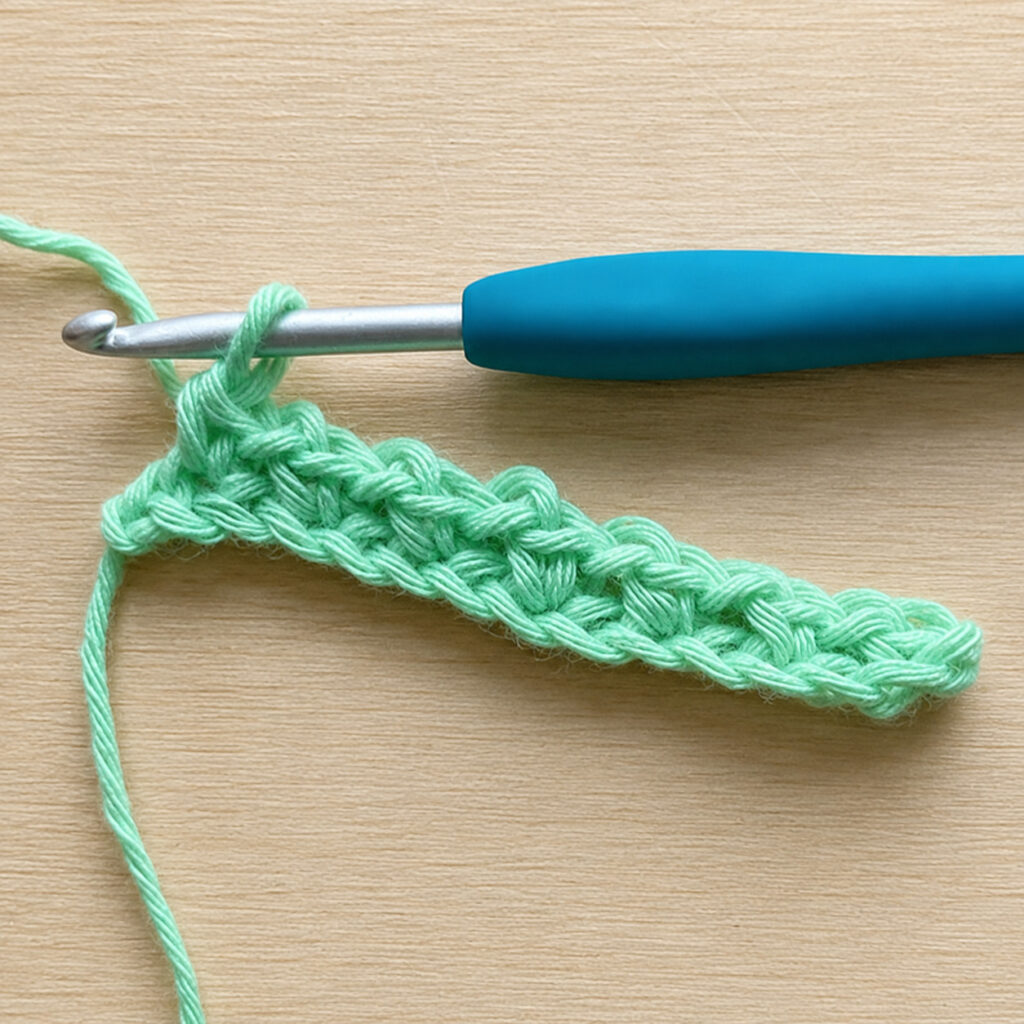
Row 1
Make 1 sc in the second chain from the hook.
Chain 1, skip the next chain, and make 1 sc in the following chain.
Continue working:
sc, ch 1, skip 1
across the foundation chain.
Turn your work at the end of the row.
This first row establishes the alternating spaces that will form the characteristic moss stitch texture.
Row 2
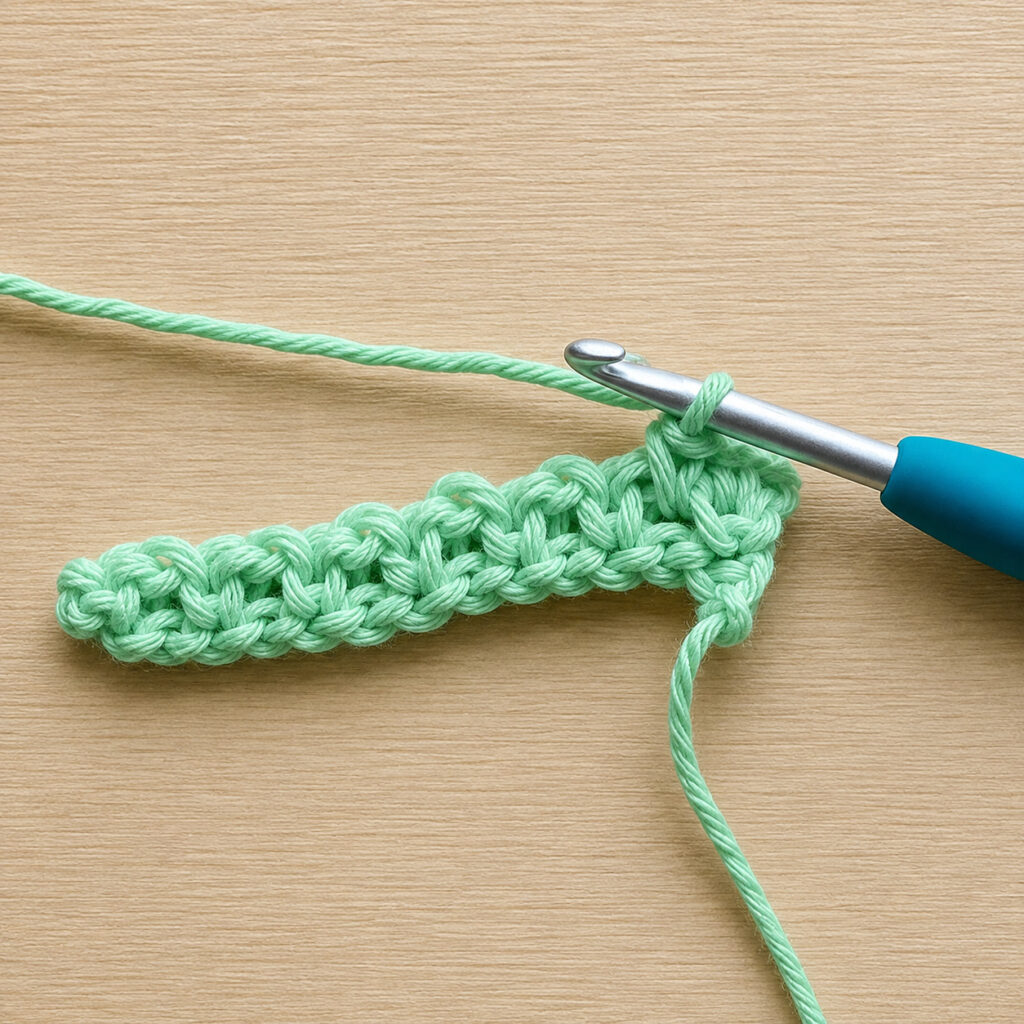
Chain 1. This turning chain does not count as a stitch.
Make 1 sc in the first stitch.
Then make 1 sc into the next chain space.
Chain 1, skip the next sc, and make 1 sc into the following chain space.
Continue working across the row by placing your single crochet stitches into the chain spaces and separating them with chain stitches.
When you reach the final stitch, work 1 sc into the last stitch.
Turn.
Row 3
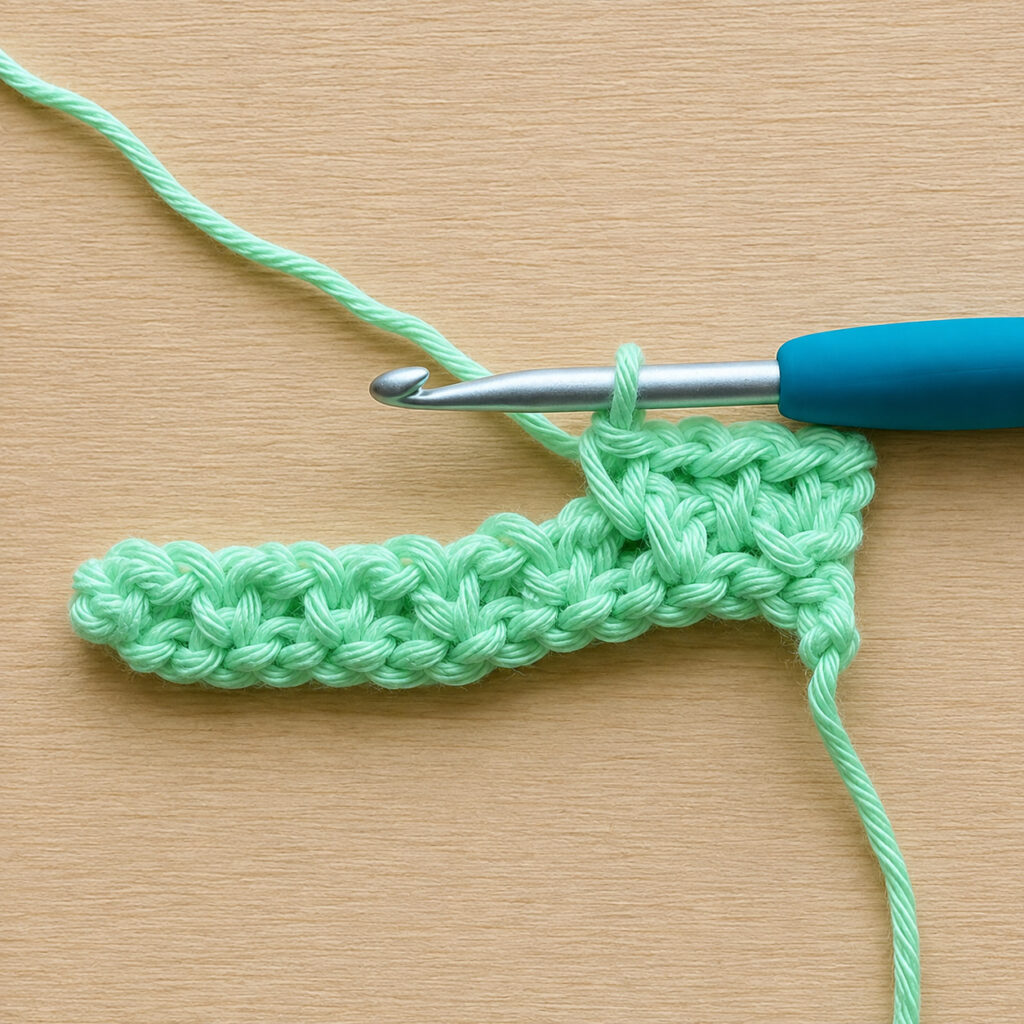
Chain 1. The turning chain does not count as a stitch.
Make 1 sc in the first stitch.
Chain 1 and skip the next sc.
Make 1 sc in the following chain space.
Continue repeating:
ch 1, skip 1 sc, sc in next ch-sp
across the row.
At the end of the row, chain 1, skip the appropriate stitch, and make 1 sc in the final stitch.
Turn.
Continue the Pattern
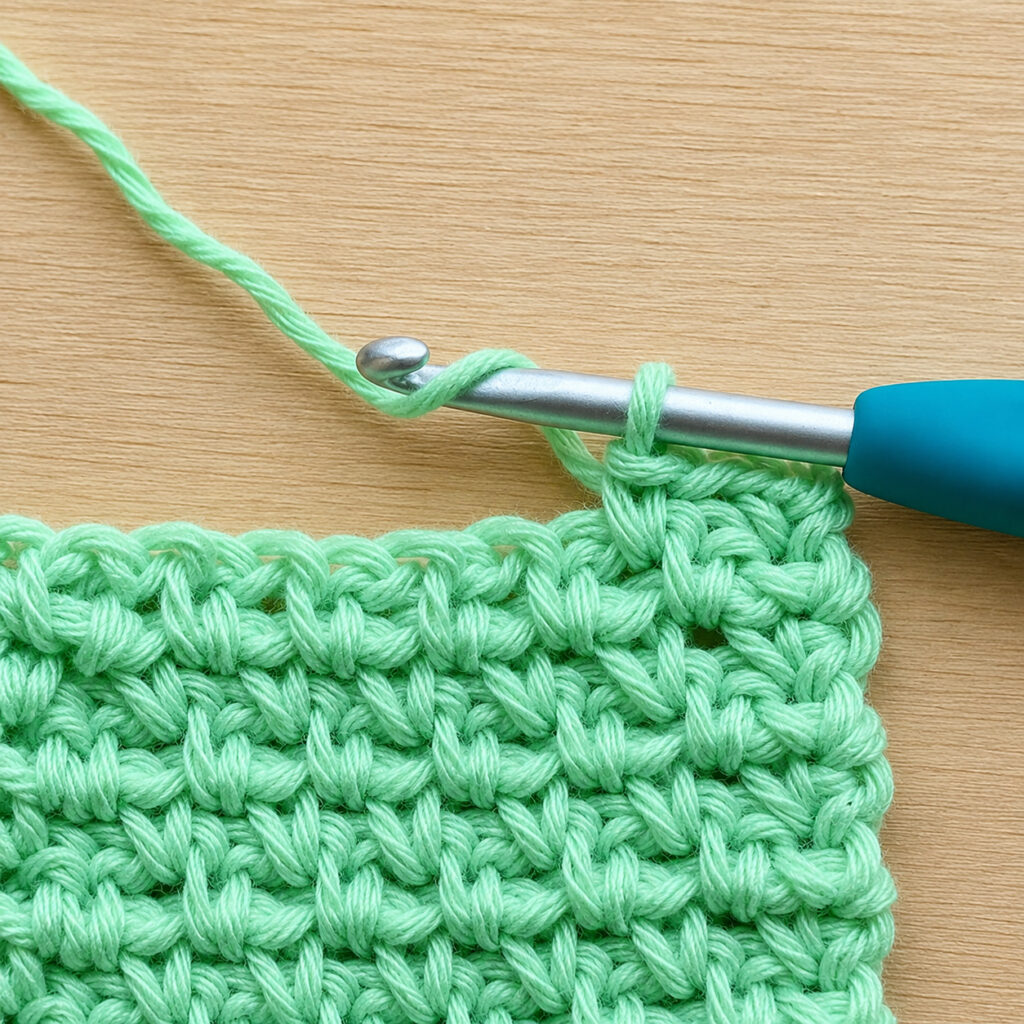
Repeat Rows 2 and 3 until your project reaches the desired length.
As you work, you’ll notice the single crochet stitches begin to sit between the stitches from the previous row. This creates the characteristic staggered appearance of the moss stitch.
The resulting fabric has a beautiful combination of texture, flexibility, and visual movement.
Helpful Tips for Perfect Moss Stitch
Keep Your Tension Consistent
Try to maintain even tension throughout your project. If your chain stitches are very tight while your single crochet stitches are loose, the fabric may become uneven.
Work Into the Chain Spaces
One of the easiest ways to keep your moss stitch neat is to make your single crochet stitches into the chain spaces rather than trying to insert your hook into the individual chain stitches.
Count Your Stitches
Although the moss stitch is repetitive, counting your stitches occasionally can help prevent accidental increases or decreases.
If the edges begin to slant, check that you are working into the first and last stitches correctly.
Use Stitch Markers
For larger projects, placing a stitch marker in the first and last stitch of each row can make it easier to identify the edges.
Experiment With Color
The moss stitch is fantastic for colorwork. You can use one color throughout the project for a classic appearance or change colors every few rows.
Alternating two or more shades can create attractive stripes without requiring a complicated stitch pattern.
Moss Stitch Blanket
A moss stitch blanket is a wonderful project for beginners because the repetitive pattern allows you to crochet while relaxing or watching television.
For a classic blanket, choose a soft worsted-weight yarn and work the moss stitch in one color.
For a more colorful design, try combining shades such as:
- Turquoise
- Aqua
- Mint green
- Soft lavender
- Cream
- Pale blue
The result is a calm, modern color palette similar to the beautiful project shown above.
You can also use a self-striping yarn to create naturally changing bands of color without having to weave in multiple yarn ends.
Moss Stitch Scarf
The moss stitch produces a fabric that is lightweight enough for a comfortable scarf while still providing plenty of texture.
Choose a soft yarn and create a foundation chain corresponding to your preferred scarf width. Continue the moss stitch until you reach your desired length.
Finish the scarf with a simple border, fringe, or tassels.
Moss Stitch Baby Blanket
The stitch is also perfect for baby blankets.
For a baby-friendly design, choose soft yarn in gentle shades such as cream, mint, pale blue, lavender, blush, or light gray.
A simple moss stitch baby blanket can be finished with a neat single crochet border or a decorative edging.
Moss Stitch Headband
For a quick project, try making a moss stitch headband.
Crochet a long narrow rectangle using the moss stitch and join the short ends together. This creates a simple accessory that can be customized for different sizes.
Add a button, bow, flower, or other decorative detail if desired.
Moss Stitch Dishcloth
The dense texture of moss stitch makes it suitable for practical home projects too.
A small cotton moss stitch square can be turned into a reusable dishcloth or washcloth. Cotton yarn is especially useful for these projects because it is durable and easy to care for.
Moss Stitch Color Ideas
One of the best features of this stitch is how well it works with different color combinations.
For a soft pastel look, try:
Mint + Lavender + Cream + Aqua
For a coastal-inspired palette:
Turquoise + Seafoam + White + Pale Blue
For a modern neutral project:
Cream + Beige + Taupe + Gray
For a cheerful design:
Pink + Yellow + Aqua + Lavender
Don’t be afraid to experiment. The simple structure of moss stitch gives you plenty of freedom to play with color.
How to Finish Your Project
Once you’ve reached the desired length, fasten off your yarn and leave a small tail.
Use a yarn needle to weave the loose end securely through the stitches on the wrong side of your work.
If you have changed colors throughout the project, make sure all yarn tails are woven in securely.
For blankets and other larger projects, you may also want to add a border to give the edges a polished finish.
A simple single crochet border is an excellent choice, but you can also experiment with scallops, shells, picots, or other decorative edging.
Blocking the Moss Stitch
Blocking can help your finished crochet project look more even and professional.
Gently shape the piece to the desired measurements and allow it to dry according to the type of yarn you have used.
Always check the yarn manufacturer’s care instructions before wet blocking or using heat.
Blocking is particularly useful for blankets, scarves, shawls, and pieces where you want straight, clean edges.
Frequently Asked Questions
Is moss stitch easy for beginners?
Yes. Moss stitch is considered a beginner-friendly crochet technique because it uses basic single crochet and chain stitches. Once you understand where to place your hook, the repeating pattern is straightforward.
Is moss stitch the same as linen stitch?
In crochet, the terms moss stitch, granite stitch, and linen stitch are often used to describe the same or very similar stitch pattern. Naming can vary between designers and regions.
What yarn is best for moss stitch?
Almost any yarn can be used. Medium-weight yarn is an excellent starting point, while cotton, acrylic, wool, and blended yarns can all produce attractive results.
Can I use variegated yarn?
Absolutely. Variegated and self-striping yarns work particularly well because the simple stitch pattern allows the changing colors to remain the main visual feature.
Can I make a moss stitch blanket?
Yes. Moss stitch is an excellent choice for blankets. Simply create a foundation chain that matches your desired width and repeat the stitch pattern until the blanket reaches the preferred length.
Does moss stitch use a lot of yarn?
Moss stitch creates a fairly compact fabric, so it may use more yarn than some very open crochet patterns. The exact amount depends on yarn weight, hook size, tension, and project dimensions.
Video Tutorial
If you prefer learning crochet stitches visually, watching a video tutorial can be especially helpful. A video allows you to see exactly where the hook should be inserted and how the chain spaces are formed.
A tutorial from the Bella Coco crochet channel can be a useful visual reference for learning the technique. Following along with a video while practicing the written instructions can make the stitch much easier to understand.
Final Thoughts
The moss stitch is a beautiful crochet technique that combines simplicity with elegant texture. Its repeating combination of single crochet stitches and chain spaces creates a fabric that looks sophisticated without requiring complicated techniques.
Whether you’re making a cozy blanket, colorful scarf, baby project, headband, or practical home accessory, moss stitch gives you a versatile foundation for countless creative ideas.
Try experimenting with different yarn weights, colors, borders, and project sizes to make the stitch your own. The soft woven texture also makes it an excellent choice for showcasing beautiful multicolored yarns.
Once you’ve mastered the basic pattern, you’ll have a dependable stitch that can be used again and again for handmade projects.
Grab your favorite yarn and crochet hook, and give the moss stitch a try—you may quickly find it becoming one of your favorite everyday crochet patterns!

