 soofha
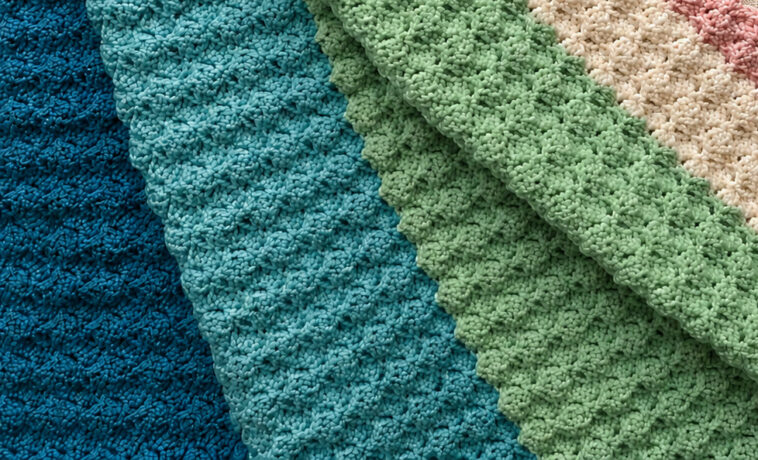
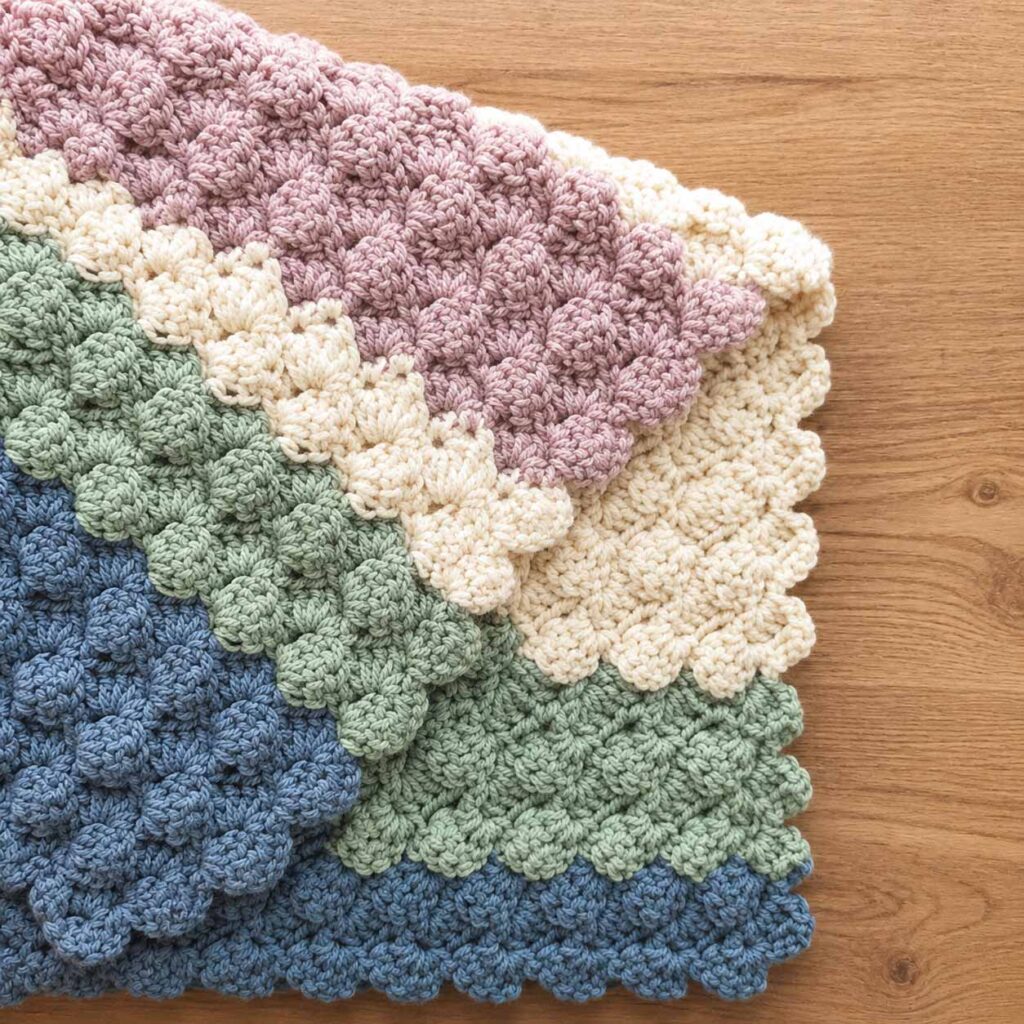
The Sedge Stitch Blanket is a beautifully textured crochet project that combines simplicity with a wonderfully squishy, dimensional fabric. The stitch creates little clusters of single crochet, half double crochet, and double crochet that sit closely together, giving the blanket its soft, pebbled appearance.
The pastel combination shown here—deep blue, aqua, mint green, ivory, and blush pink—makes the pattern especially lovely for a baby blanket, nursery throw, or cozy handmade gift.
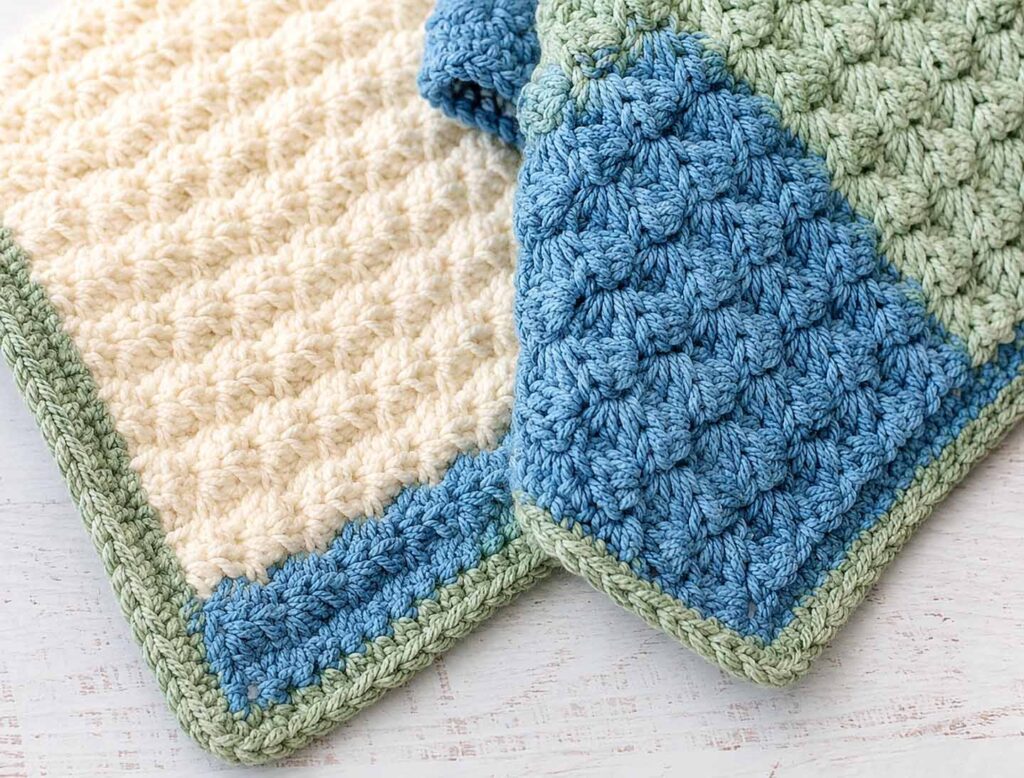
Sedge Stitch Blanket Pattern
This pattern uses a straightforward repeat, making it suitable for crocheters who know the basic stitches but want to create a more interesting texture.
The fabric is dense without being stiff, and the combination of stitch heights creates subtle waves and raised clusters across the surface.
Skill Level
Easy to Intermediate
You should be comfortable with:
- Chain stitch
- Single crochet (SC)
- Half double crochet (HDC)
- Double crochet (DC)
- Working into previous rows
- Changing colors
- Weaving in ends
Materials
For a baby-sized blanket, approximately 36 × 42 inches, you will need:
- Worsted-weight yarn, approximately 1,500–1,800 yards
- 5.0 mm crochet hook
- Yarn needle
- Scissors
- Stitch markers, optional
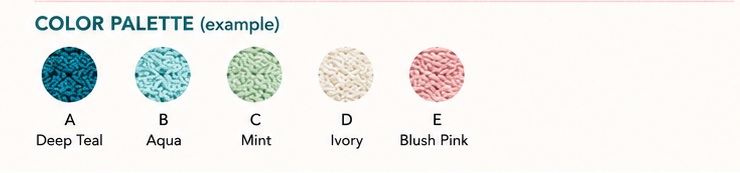
Suggested Color Palette
For a soft pastel version similar to the inspiration image:
- Color A: Deep teal blue
- Color B: Aqua
- Color C: Mint green
- Color D: Ivory or cream
- Color E: Dusty blush pink
"use strict";
var adace_load_6ad1a20591c5f = function(){
var viewport = $(window).width();
var tabletStart = 601;
var landscapeStart = 801;
var tabletEnd = 961;
var content = '%3Cdiv%20class%3D%22adace_adsense_6ad1a20591c3f%22%3E%3Cscript%20async%20src%3D%22%2F%2Fpagead2.googlesyndication.com%2Fpagead%2Fjs%2Fadsbygoogle.js%22%3E%3C%2Fscript%3E%0A%09%09%3Cins%20class%3D%22adsbygoogle%22%0A%09%09style%3D%22display%3Ablock%3B%22%0A%09%09data-ad-client%3D%22ca-pub-2805240993257385%22%0A%09%09data-ad-slot%3D%223220898588%22%0A%09%09data-ad-format%3D%22auto%22%0A%09%09%3E%3C%2Fins%3E%0A%09%09%3Cscript%3E%28adsbygoogle%20%3D%20window.adsbygoogle%20%7C%7C%20%5B%5D%29.push%28%7B%7D%29%3B%3C%2Fscript%3E%3C%2Fdiv%3E';
var unpack = true;
if(viewport
})(jQuery);
You can use five colors in equal-width stripes or adjust the stripe sizes to create your own color sequence.
Crochet Abbreviations
US crochet terminology:
| Abbreviation | Meaning |
|---|---|
| CH | Chain |
| SC | Single Crochet |
| HDC | Half Double Crochet |
| DC | Double Crochet |
| ST | Stitch |
| SK | Skip |
| REP | Repeat |
| SL ST | Slip Stitch |
Understanding the Sedge Stitch
The signature Sedge Stitch cluster is made by working:
1 SC + 1 HDC + 1 DC in the same stitch.
This combination of three different stitch heights creates the distinctive textured surface.
The basic cluster can be written as:
(SC, HDC, DC) in same stitch
Once you understand this cluster, the entire blanket becomes much easier to work.
Sedge Stitch Blanket Foundation Chain
Choose the width you want for your blanket.
For this pattern, chain a multiple of 3 + 1.
Example
For a baby blanket:
CH 151
This gives you a foundation suitable for approximately a 36–40 inch wide blanket, depending on your yarn, hook size, and tension.
For a wider blanket, simply increase the foundation chain while maintaining the multiple of 3 + 1 structure.
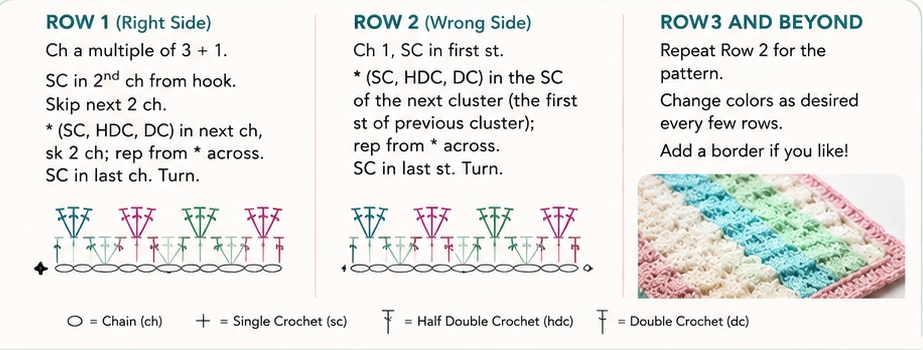
Row 1
With your first color:
SC in the 2nd CH from hook.
Skip the next 2 chains.
Work:
(SC, HDC, DC)
into the next chain.
Continue repeating:
SK 2 CH, (SC, HDC, DC) in next CH
across the foundation chain.
When you reach the end, work SC in the final chain.
Turn.
Row 1 Repeat
SC, [SK 2, (SC, HDC, DC) in next ST] across, SC in final ST.
You should begin to see small raised clusters forming along the row.
Row 2
Chain 1 and turn.
Work SC in the first stitch.
Now look at the cluster from the previous row.
You will work the next Sedge Stitch cluster into the SC of the previous cluster.
Work:
(SC, HDC, DC) in the SC stitch of the next cluster.
Repeat across the row.
Finish with SC in the final stitch.
Row 2
CH 1, SC in first ST, [(SC, HDC, DC) in next SC] across, SC in final ST.
Turn.
Rows 3 and Beyond
Repeat Row 2.
The basic repeat is wonderfully simple:
CH 1, SC in first ST, (SC, HDC, DC) in each SC stitch across, SC in final ST.
Continue until your blanket reaches the desired length.
The clusters gradually build upon one another and create the dense, textured appearance characteristic of the Sedge Stitch.
How to Change Colors
Color changes are a great way to make this blanket more visually interesting.
For the five-color version, you could use a sequence such as:
- Deep Blue – 12 rows
- Aqua – 12 rows
- Mint – 12 rows
- Ivory – 12 rows
- Blush Pink – 8 rows
Then repeat the sequence or reverse the colors.
For a softer striped effect, use fewer rows per color.
For larger blocks of color, work 15–20 rows before changing.
Clean Color Changes
For the neatest color change, make the final stitch of the old color and stop before completing the last yarn-over.
Use the new color to complete the stitch.
Then continue with the new yarn.
This creates a much cleaner transition between stripes.
Creating the Pastel Sedge Stitch Look
One of the prettiest features of this blanket is the contrast between the dense texture and soft colors.
The combination of:
deep teal → aqua → mint → ivory → blush
creates a gentle gradient effect while still providing enough contrast for the stitch pattern to remain visible.
You can also create a monochromatic Sedge Stitch Blanket using different shades of the same color.
For example:
- Pale blue
- Sky blue
- Aqua
- Teal
- Deep blue
Or try:
- Cream
- Beige
- Taupe
- Caramel
- Warm brown
Blanket Border
A simple border works beautifully because the Sedge Stitch already provides plenty of texture.
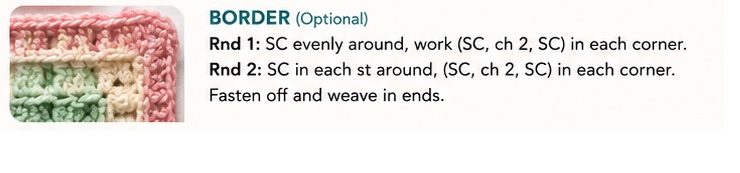
Round 1
Join your border color in any corner.
Work SC evenly around the entire blanket.
At each corner, work:
SC, CH 2, SC
Continue around.
Join with a SL ST.
Round 2
CH 1.
Work SC in each stitch around.
In each corner space, work:
SC, CH 2, SC
Join with a SL ST.
Fasten off and weave in your ends.
For a more decorative finish, add a round of reverse single crochet (crab stitch) around the edge.
Tips for Crocheting the Sedge Stitch
1. Don’t crochet too tightly
The Sedge Stitch naturally creates a dense fabric. If your tension is very tight, the finished blanket can become stiff.
Try to keep your stitches relaxed.
2. Find the correct SC
When beginning the next row, identify the single crochet at the beginning of each previous cluster.
This is where the next cluster is worked.
3. Check your stitch count
The first and final SC help keep the edges straight.
If your blanket begins to get wider or narrower, check that you haven’t accidentally worked a cluster into the wrong stitch.
4. Make a swatch first
Before beginning a large blanket, crochet a small sample.
This allows you to check:
- Stitch appearance
- Yarn texture
- Hook size
- Gauge
- Color combination
- Fabric drape
Adjusting the Blanket Size
The Sedge Stitch is easy to customize.
Always begin with a foundation chain that follows the required stitch multiple.
Small Baby Blanket
Approximately:
120–135 chains
Standard Baby Blanket
Approximately:
150–160 chains
Lap Blanket
Approximately:
180–200 chains
Large Throw
Approximately:
210–240 chains
The exact finished dimensions depend on yarn weight, hook size, and individual tension.
For a completely custom size, crochet a foundation chain approximately as wide as you want the finished blanket to be, while maintaining the required stitch multiple.
Yarn Suggestions
The Sedge Stitch looks particularly beautiful with yarns that have good stitch definition.
Look for:
- Worsted-weight acrylic
- Acrylic/wool blends
- Cotton blends
- Soft washable yarn
- Baby-friendly yarn
For a baby blanket, machine-washable yarn is especially practical.
Avoid extremely fuzzy yarn if you want the individual Sedge Stitch clusters to remain clearly visible.
Why You’ll Love This Crochet Blanket
There are several reasons the Sedge Stitch makes an excellent blanket pattern.
Beautiful Texture
The combination of SC, HDC, and DC creates a richly textured surface without requiring complicated stitch techniques.
Easy Repetition
Once the first few rows are complete, the pattern becomes rhythmic and relaxing.
Great for Color Changes
The textured rows provide natural horizontal stripes, making this stitch particularly attractive for multicolor blankets.
Beginner Friendly
Although the finished fabric looks complicated, the stitch itself uses only basic crochet stitches.
Excellent for Gifts
A handmade Sedge Stitch Blanket makes a thoughtful gift for:
- Baby showers
- Birthdays
- Housewarmings
- Christmas
- Mother’s Day
- Nursery décor
- Cozy winter gifts
Sedge Stitch Blanket Color Ideas
If you’re looking for alternatives to the pastel palette, try these combinations.
Coastal
- Navy
- Turquoise
- Aqua
- White
- Pale Gray
Baby Girl
- Blush
- Rose
- Cream
- Soft Peach
- Pale Pink
Baby Boy
- Powder Blue
- Aqua
- Sage
- Cream
- Denim
Neutral
- Ivory
- Beige
- Oatmeal
- Taupe
- Mocha
Rainbow
Use seven colors and work approximately 8–12 rows of each shade.
Frequently Asked Questions
Is the Sedge Stitch good for blankets?
Yes. The stitch produces a dense, textured fabric that works especially well for blankets, throws, baby blankets, scarves, and cushions.
Is Sedge Stitch difficult?
No. It is relatively easy once you understand that the main cluster consists of a single crochet, half double crochet, and double crochet worked into the same stitch.
How much yarn do I need?
A baby blanket can require approximately 1,500–1,800 yards of worsted-weight yarn, although the actual amount depends on the finished dimensions, yarn weight, hook size, and tension.
Can I use different yarn weights?
Yes. You can make the pattern with DK, worsted, or bulky yarn. Adjust your crochet hook accordingly and make a gauge swatch before starting the blanket.
Can I make the Sedge Stitch Blanket larger?
Absolutely. Simply increase your starting chain while maintaining the appropriate stitch multiple, then continue working rows until you reach your desired length.
Does Sedge Stitch use a lot of yarn?
Because it creates a relatively dense and textured fabric, it can use more yarn than a very open stitch pattern. Keep this in mind when purchasing yarn for a large blanket.
Final Thoughts
The Sedge Stitch Blanket is a wonderful project when you want something that looks intricate but is actually based on a simple repeating stitch. The combination of SC, HDC, and DC clusters gives the blanket a soft, dimensional texture, while alternating colors creates beautiful stripes.
For the look shown in the inspiration image, try deep teal, aqua, mint green, ivory, and blush pink. The result is a soft, modern blanket with plenty of handmade charm.
Whether you’re making a cozy throw for your living room or a special baby blanket, the Sedge Stitch is a versatile pattern you’ll likely want to use again and again. 🧶


One Comment
Leave a ReplyOne Ping
Pingback:Ripple Ridges Blanket – Free Crochet Pattern - Free Crochet Patterns