

 soofha
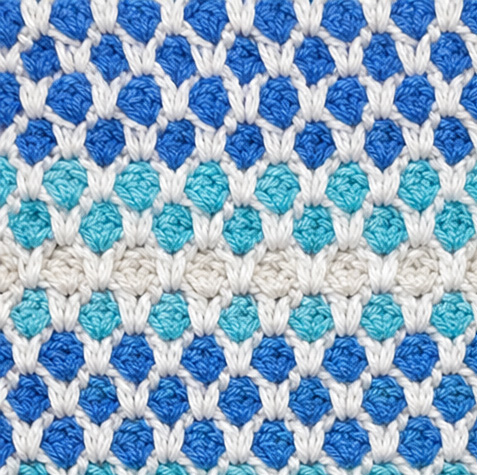
Hello, dear crochet friends! 💕 I’m so happy to have you here today. If you’re looking for a crochet stitch that looks intricate and decorative but is surprisingly approachable, you’re going to love the Moroccan Stitch.
This beautiful stitch creates a textured, geometric fabric that can add a special touch to all kinds of handmade projects. Once you understand the simple repeating structure, you can use it for blankets, scarves, shawls, cushions, bags, and many other crochet creations.
The Moroccan Stitch is especially fun to work when you combine two or more contrasting colors. Alternating the yarn colors helps highlight the layered V-stitch effect and gives the finished fabric an eye-catching appearance.
What Is the Moroccan Stitch?
The Moroccan Stitch is a decorative crochet technique built around repeated V stitches. Although the finished fabric can look quite complex, the basic construction is made with familiar stitches such as double crochet and chain stitches.
The beauty of this stitch comes from the way the rounds overlap and nest together. Each new round is positioned between the V stitches of the previous rounds, creating a distinctive woven appearance.
It is a wonderful technique for crocheters who want to move beyond basic stitch patterns without having to learn a complicated collection of new stitches.
Why You’ll Love This Crochet Stitch
There are plenty of reasons to add the Moroccan Stitch to your crochet library.
- It creates beautiful geometric texture.
- It works particularly well with multiple colors.
- The stitch can be adapted for many different projects.
- The repeating pattern makes it enjoyable once you get into the rhythm.
- It can be worked around a foundation made with different stitch techniques.
- The finished fabric has a decorative, dimensional appearance.
Whether you’re making a cozy blanket or a smaller accessory, this stitch can give your project a unique handmade character.
Moroccan Stitch Project Ideas
One of the best things about this stitch is its versatility. Once you’ve practiced the pattern, you can experiment with different project sizes and yarn combinations.
Blankets and Throws
A Moroccan Stitch blanket can make a beautiful statement piece. Try alternating two colors for a bold design or use several shades for a more colorful effect.
Shawls and Scarves
The textured appearance of the stitch works beautifully for scarves and shawls. Choose a soft yarn and a color palette that complements your wardrobe.
Crochet Cushions
Use the stitch to create a decorative pillow cover. A solid background combined with a contrasting accent color can really make the texture stand out.
Bags and Purses
The dense texture makes this stitch interesting for crochet accessories such as handbags, pouches, and small purses.
Home Décor
You can also experiment with table runners, baskets, wall hangings, and other decorative crochet projects.
Getting Started With the Moroccan Stitch
For this version of the stitch, the foundation can begin with any multiple of 3 stitches.
For example, you could use a foundation single crochet row, a chain, or another suitable foundation. The important part is making sure the total number of stitches is divisible by three.
When beginning a round, you can use either a Chainless Starting Double Crochet (CSDC) or a Standing Double Crochet (STDC). If you prefer a traditional method, you can substitute a chain 3.
The instructions below use US crochet terminology.
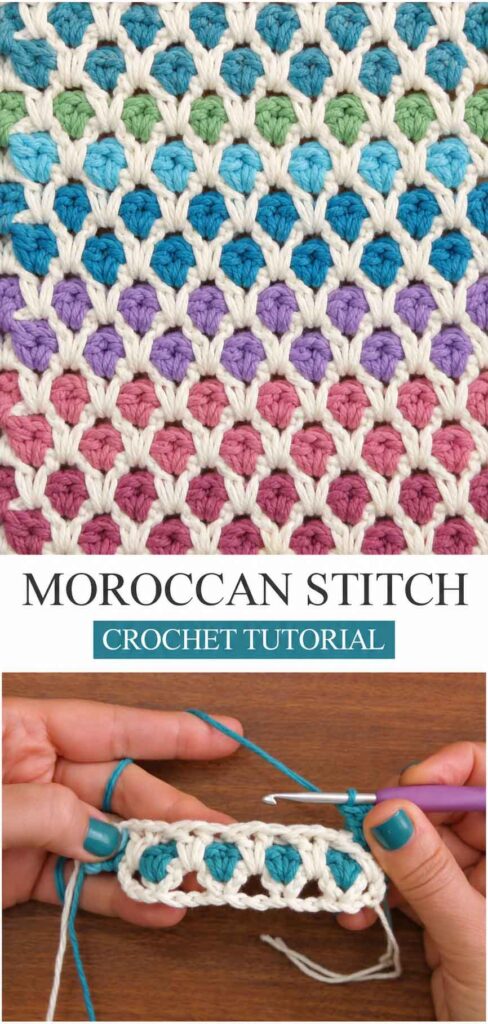
Materials
- Yarn: Your choice of yarn in two or more colors
- Crochet Hook: G/4.25 mm, or the hook size needed to obtain your desired gauge
- Stitch markers: Helpful for securing inactive yarn loops
- Scissors
- Yarn needle
Using contrasting colors is recommended when you’re first learning the stitch because it makes the individual rounds easier to see.
Crochet Abbreviations
US Crochet Terms
- ch – chain
- dc – double crochet
- sc – single crochet
- sl st – slip stitch
- ch-sp – chain space
- CSDC – chainless starting double crochet
- STDC – standing double crochet
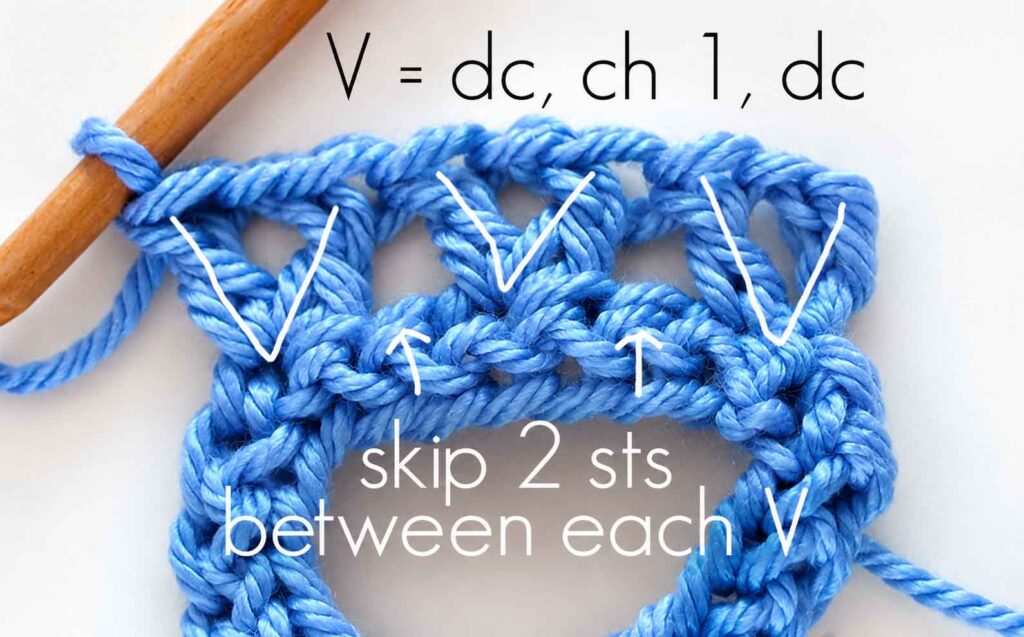
- V-stitch – double crochet, chain 1, double crochet
- * – repeat the instructions following the asterisk
Moroccan Stitch Crochet Instructions
Round 1 – Color A
Begin with Color A.
Start with a chain 3, or use your preferred starting double crochet method.
Chain 1, then work a double crochet into the first stitch. This creates the first V stitch.
Continue around the foundation:
Skip the next 2 stitches, then work (dc, ch 1, dc) in the following stitch.
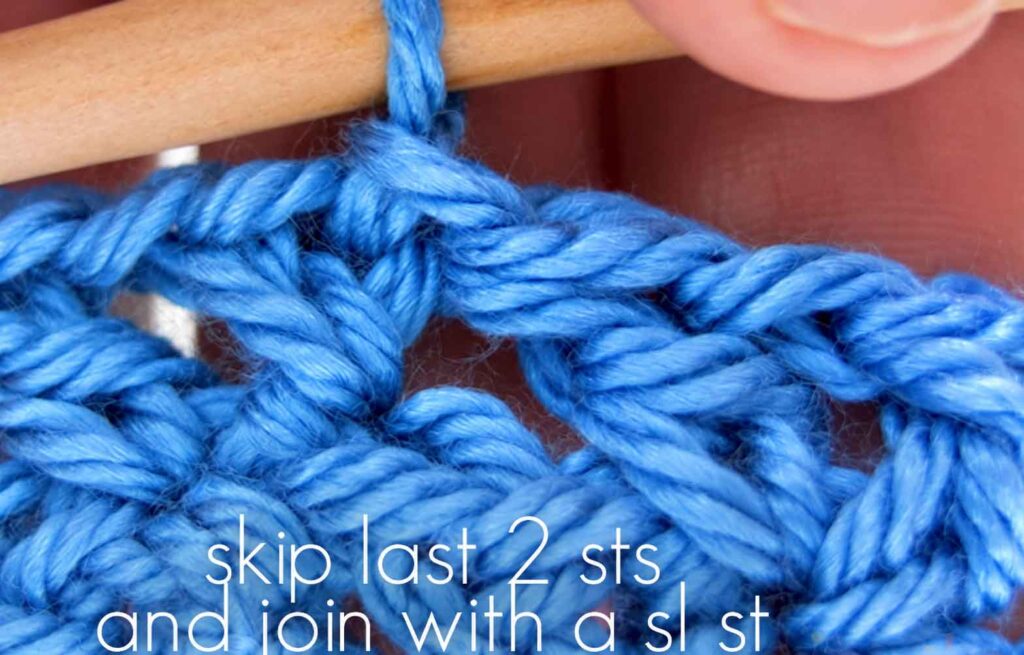
Repeat this sequence around the entire round until you reach the final two stitches.
Join the round with a slip stitch to the beginning chain 3 or the top of your starting double crochet.
Remove your hook carefully from the active loop and place a stitch marker through the loop. This keeps the working loop secure while you change colors.
Round 2 – Color B
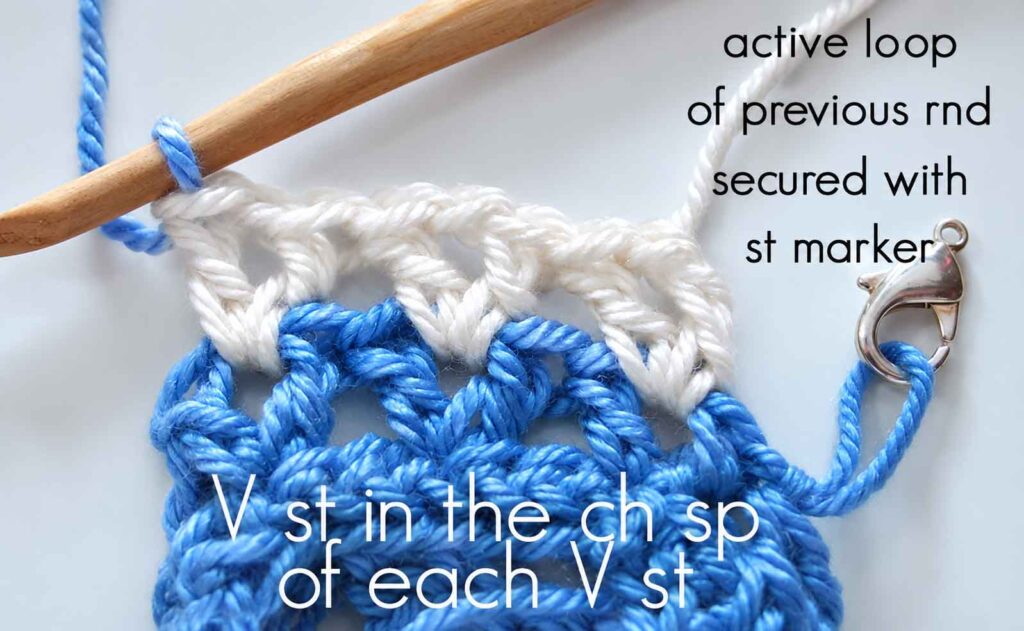
Attach Color B.
Work a standing double crochet into the chain space of the first V stitch from the previous round.
Chain 1, then make another double crochet in the same chain space.
You have now created another V stitch.
Continue around the round by working:
(dc, ch 1, dc) in each chain space.
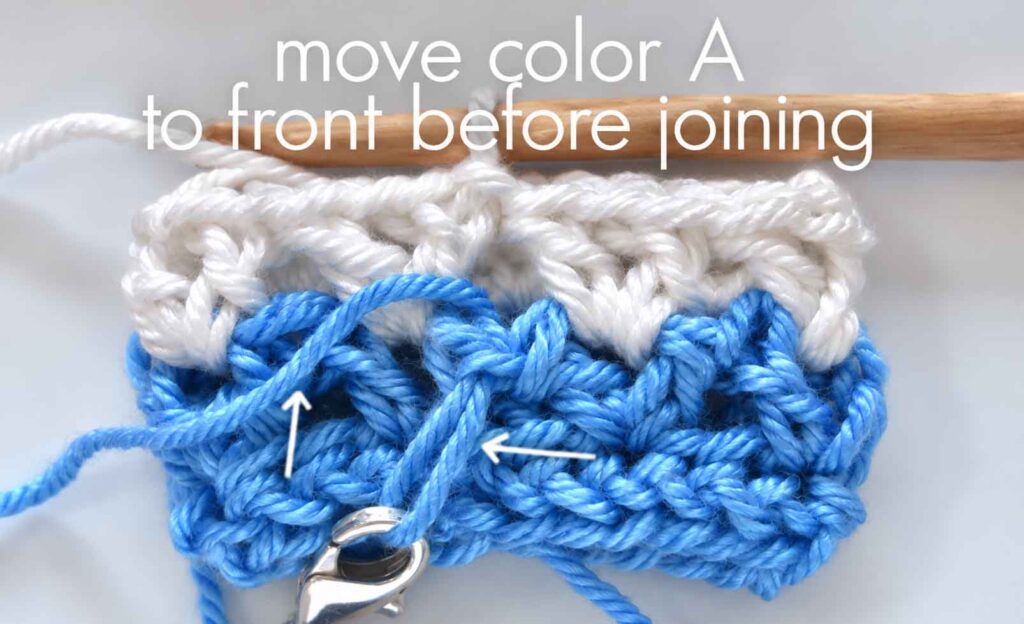
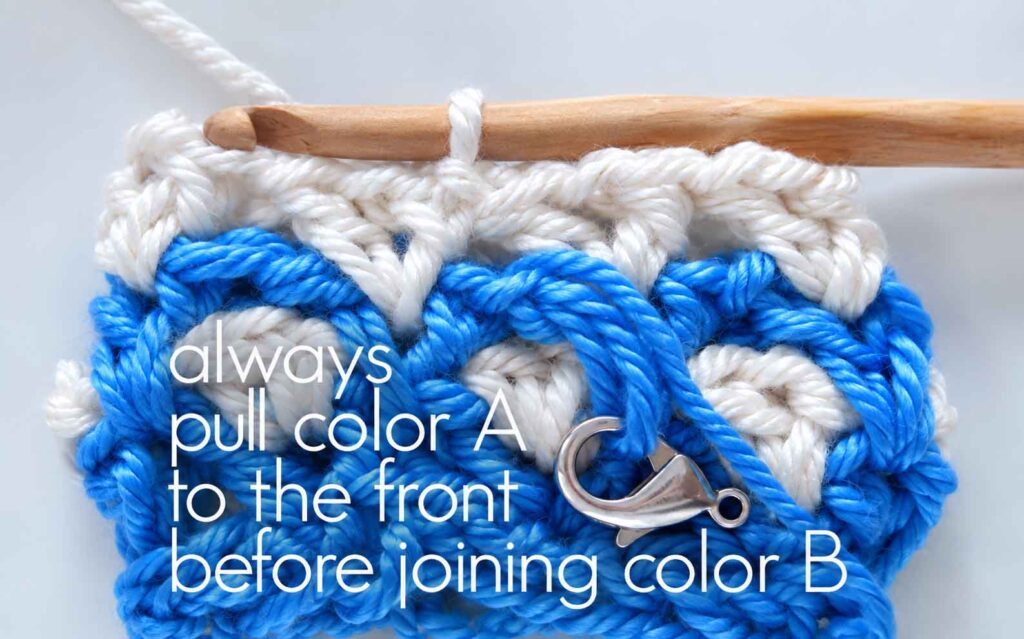
When you reach the end of the round, bring the active loop and working yarn of Color A toward the front of the fabric.
Join with a slip stitch to the standing double crochet, or to the top of the beginning chain 3 if you used that method.
Again, remove your hook from the active loop and secure it with a stitch marker.
Round 3 – Color A
Return to the active loop of Color A.
Insert your hook into the last stitch made with Color A, or into the appropriate chain space if you began with a chain 3.
Chain 1.
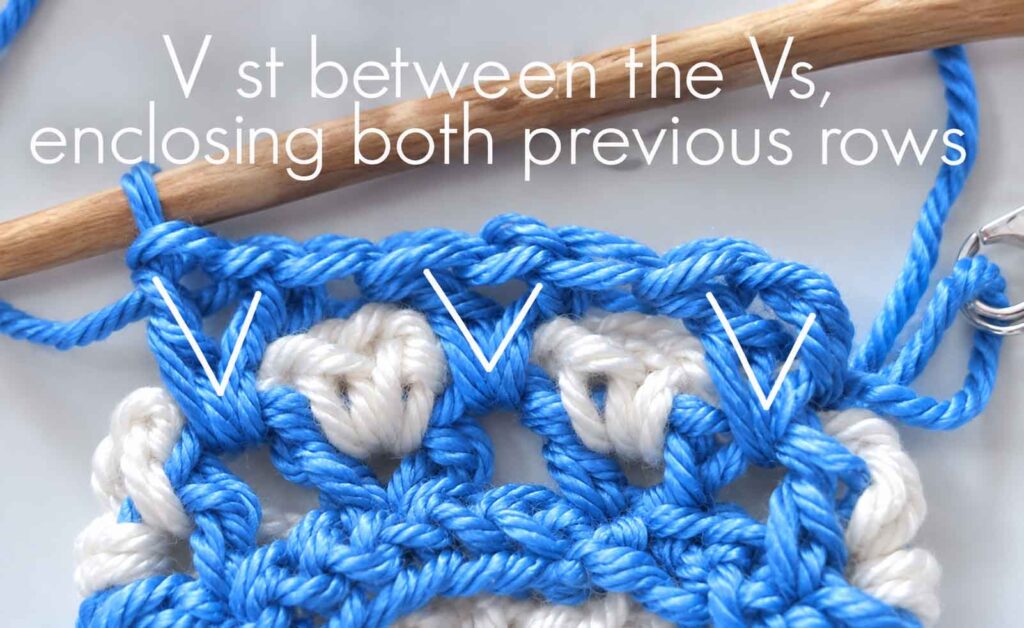
Next, work a double crochet between the first and last V stitches from the round before the previous round.
Pay particular attention here: the stitch should be worked between the V shapes rather than directly into the chain space.
Continue around by working:
(dc, ch 1, dc) in each V stitch from the previous round.
As you work, the new stitches will overlap and surround portions of the previous round, creating the characteristic Moroccan Stitch texture.
At the end of the round, leave the Color B loop and working yarn loose behind the fabric.
Join Color A with a slip stitch to the CSDC or beginning chain 3.
Remove the hook and place a stitch marker through the active loop.
Round 4 – Color B
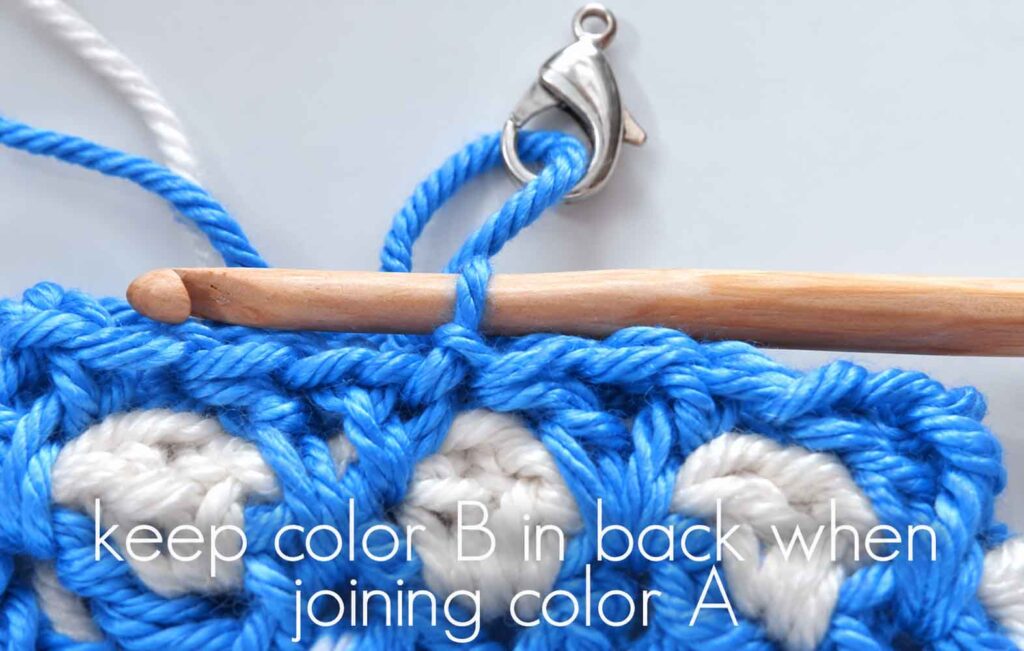
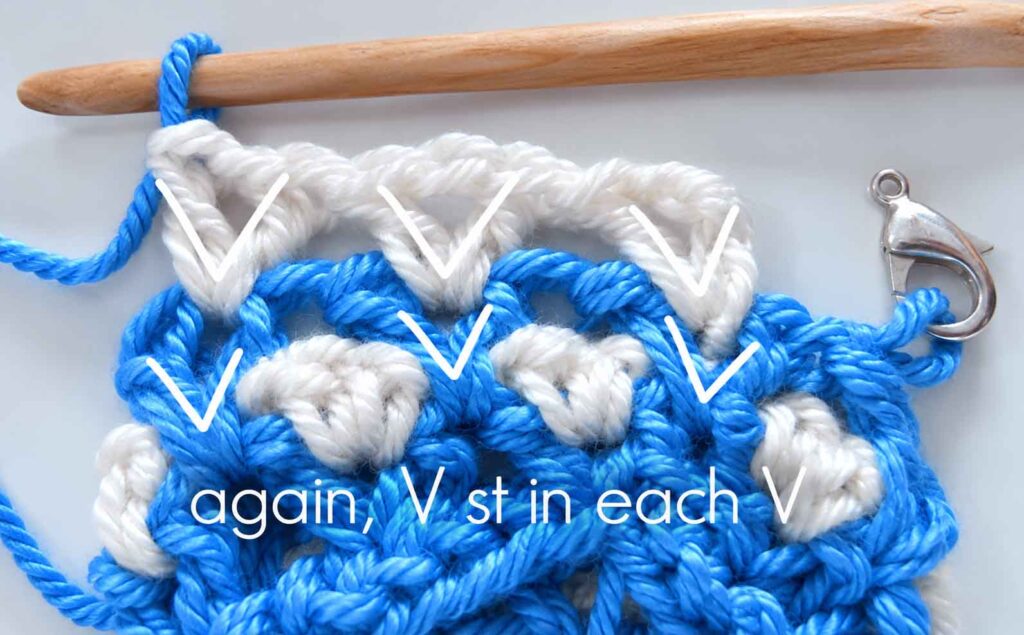
For the next round, insert your hook into the chain space of the first V stitch from the earlier round.
Pick up the active loop of Color B and pull it through the V stitch toward the front of the fabric.
Keep the working yarn behind your project.
Work a chainless starting double crochet.
Chain 1, then make a double crochet in the same chain space.
Continue around the project with:
(dc, ch 1, dc) in each chain space.
When you reach the end, bring the active loop and working yarn of Color A toward the front of the fabric.
Join with a slip stitch to the CSDC or beginning chain 3.
Remove the hook and secure the active loop with a stitch marker.
Repeating the Moroccan Stitch
Once you have completed Rounds 3 and 4, the main repeat is established.
Simply continue alternating:
Round 3 – Color A
Round 4 – Color B
Repeat these two rounds until your project reaches the desired size.
For this version of the pattern, finish after an odd-numbered round.
The alternating colors and overlapping V stitches gradually build the distinctive Moroccan-inspired texture.
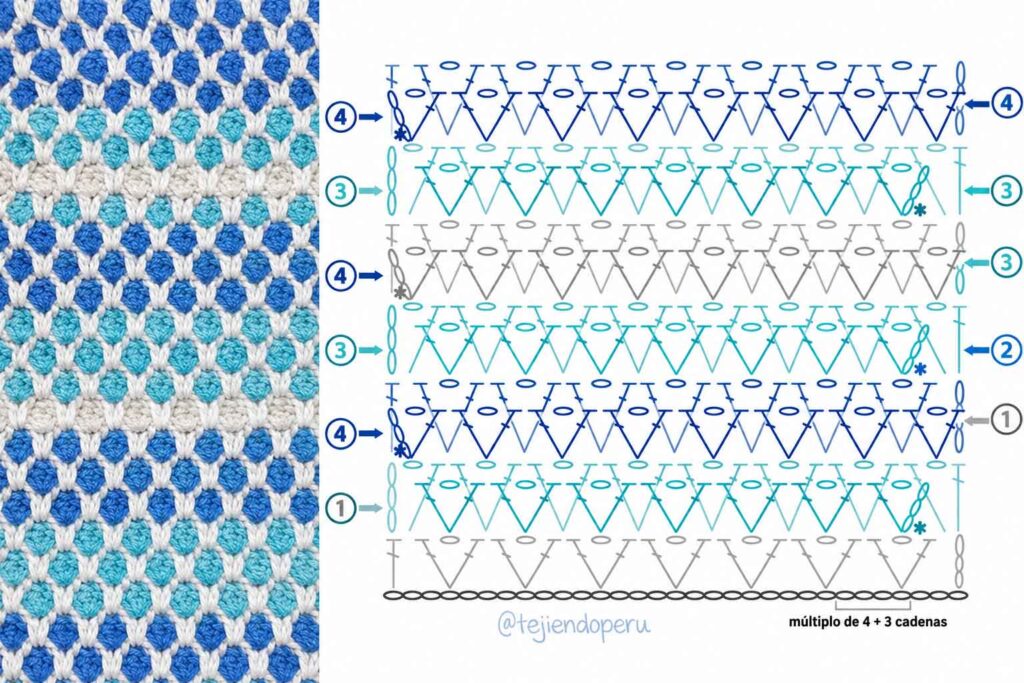
CHART
Tips for a Beautiful Moroccan Stitch
Keep Your Tension Consistent
Try to maintain an even tension throughout your project. If your stitches become too tight or too loose, the overlapping sections may not sit correctly.
Use Contrasting Colors
When learning the stitch, choose two colors with noticeable contrast. This makes it much easier to identify where each round belongs.
Once you’re comfortable with the construction, experiment with coordinating shades, gradients, or several different colors.
Don’t Pull the Loops Too Tightly
When switching between colors, avoid tightening the inactive loop excessively. The yarn needs enough flexibility to be picked up again during the next round.
Use Stitch Markers
Stitch markers are particularly useful for this technique because the active loops are temporarily removed from the hook while switching colors.
Securing each loop helps prevent accidental unraveling.
Check Your Stitch Placement
The Moroccan Stitch relies on specific placement between V stitches and into chain spaces. Take your time during the first few rounds and check your work before continuing.
Once the pattern becomes familiar, the repetition becomes much easier to follow.
Understanding the Moroccan Stitch Structure
At first glance, this stitch may appear complicated because several rounds are visually layered together.
However, the basic concept is quite simple:
- Create a foundation with a multiple of 3 stitches.
- Establish a round of V stitches.
- Work another round of V stitches using a second color.
- Begin positioning the next color between the previous V stitches.
- Continue alternating the two main rounds.
- Allow the overlapping stitches to create the distinctive textured design.
This combination produces a fabric that looks much more complicated than the individual stitches used to create it.
Experiment With Color
Color selection can completely change the personality of your Moroccan Stitch project.
For a modern look, try black and cream, navy and white, or charcoal and silver.
For something warm and cozy, experiment with rust, ivory, mustard, caramel, and brown.
For a cheerful blanket, combine several bright shades.
You can also use a neutral main color with a single accent shade to create a more subtle design.
Moroccan Stitch Crochet Tutorial
A visual tutorial can be especially helpful when learning this stitch because the placement of the V stitches and color changes is easier to understand when you can see the technique being demonstrated.
A video tutorial from Tamara Kelly of Moogly can be used as a visual reference for working through the stitch step by step.
If you are following a video tutorial alongside these written instructions, pause after each round and compare your stitches before moving forward.
Moroccan Stitch Chart
A crochet chart can also be helpful once you understand the basic symbols. The chart provides a visual representation of the V stitches, chain spaces, and their placement from one round to the next.
For beginners, I recommend working through the written instructions first and then using the chart as a reference.
Final Thoughts
The Moroccan Stitch is a beautiful example of how simple crochet stitches can be combined to create something truly eye-catching.
The repeating V stitches, layered construction, and color changes give the finished fabric a rich geometric texture without requiring a huge collection of complicated stitches.
Once you’ve completed a few rounds, the pattern becomes much easier to recognize, and you’ll be able to see how each new round interacts with the previous one.
Don’t be afraid to experiment with different yarn colors, project sizes, and yarn weights. A simple change in color can give the same stitch a completely different appearance.
Whether you use it for a cozy blanket, elegant shawl, decorative cushion, or handmade bag, the Moroccan Stitch is a wonderful technique to add to your crochet repertoire.
So grab your favorite yarn, pick up your hook, and give this beautiful stitch a try. Happy crocheting! 🧶✨

