

 soofha
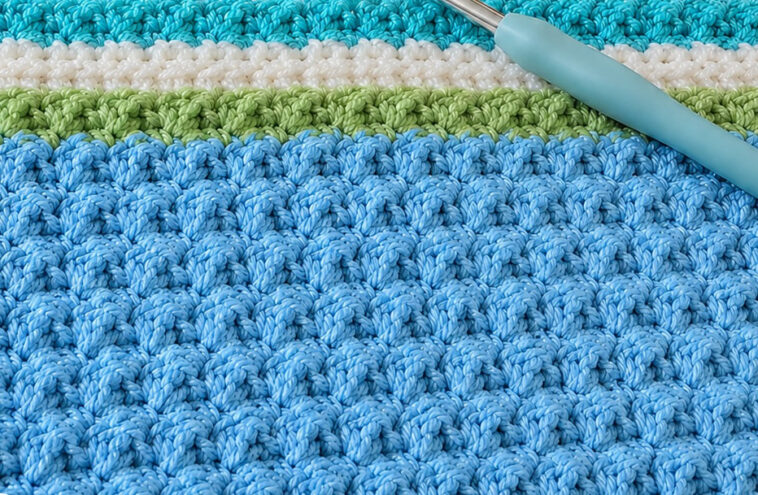
The Suzette Stitch Blanket is a beautiful crochet project for anyone who loves simple stitches, rich texture, and relaxing repetitive patterns. Despite its detailed appearance, the Suzette stitch is made with just two basic crochet stitches: single crochet (sc) and double crochet (dc).
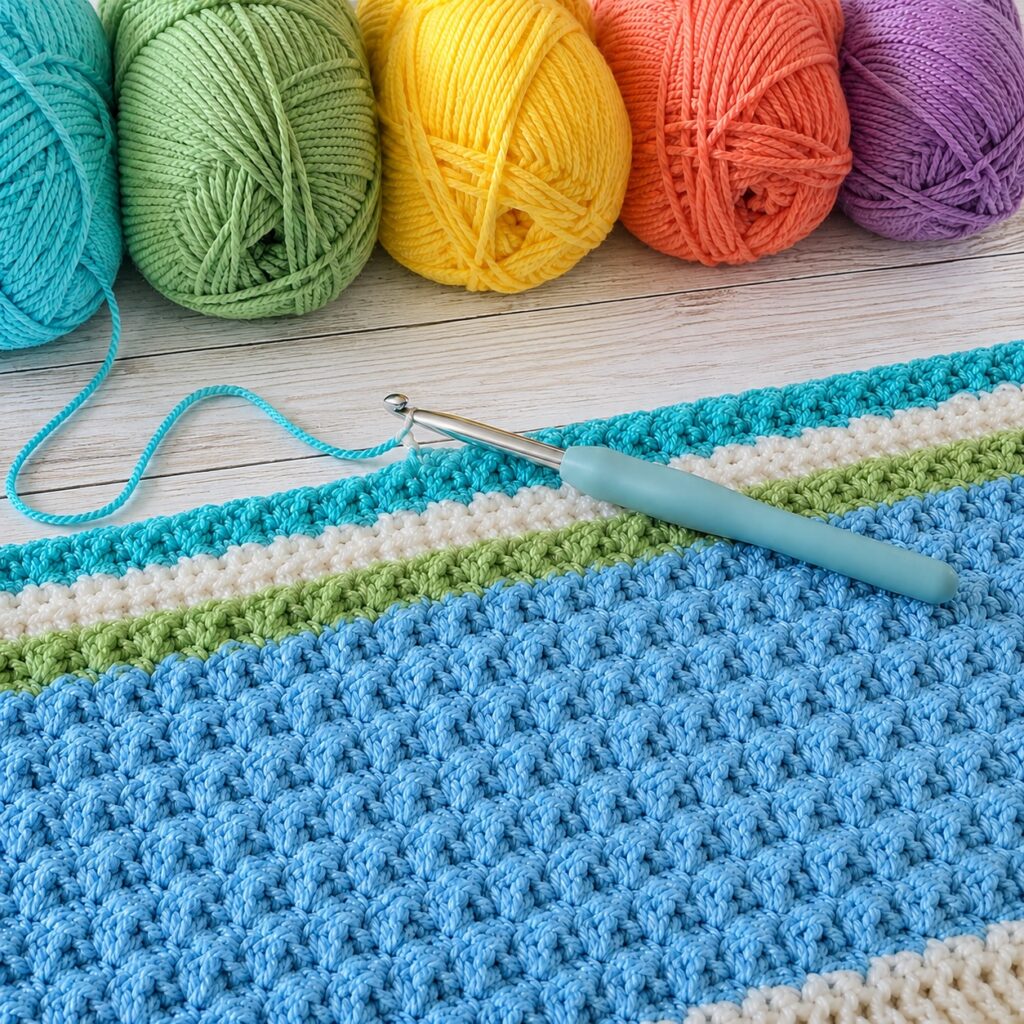
The blanket shown here features a gorgeous combination of soft blue, white, sage green, and turquoise, creating a fresh and calming color palette. The dense texture makes this stitch especially suitable for cozy blankets, baby blankets, lapghans, throws, scarves, and cushions.
The Suzette stitch is also beginner-friendly because the main pattern repeat is easy to memorize after only a few rows. The classic repeat places a single crochet and double crochet together in one stitch, followed by a skipped stitch.
What Is the Suzette Stitch?
The Suzette stitch is a textured crochet stitch created by working one single crochet and one double crochet into the same stitch, then skipping the following stitch.
The basic repeat is:
(sc, dc) in the same stitch, skip 1 stitch.
This creates small textured clusters that sit closely together, producing a fabric with very little open space. It is an excellent choice when you want a blanket that feels warm and substantial.
The stitch is sometimes also referred to as the Suzette stitch blanket stitch. It uses only basic crochet techniques, making it a particularly good pattern for beginners who want to move beyond simple rows of single crochet.
Why You’ll Love This Blanket
There are many reasons to add a Suzette Stitch Blanket to your crochet project list:
- Easy repeating stitch pattern
- Beginner-friendly
- Uses basic crochet stitches
- Beautiful texture without complicated techniques
- Works beautifully with solid colors or stripes
- Excellent for baby blankets
- Perfect for cozy lap blankets and throws
- Easy to resize
- Looks attractive from either side
- Great project for relaxing crochet sessions
The stitch’s dense construction makes it especially practical for blankets and other projects where you want a warm, sturdy fabric.
Materials You’ll Need
For a blanket similar to the one shown in the photo, you can use:
- Medium-weight #4 yarn
- 5.5 mm crochet hook
- Yarn needle
- Scissors
- Stitch markers, optional
Suggested Color Palette
For the look shown in the inspiration photo, try:
- Turquoise
- Soft white
- Sage green
- Light denim blue
You can use four colors in repeating stripes, or make the entire blanket in one color.
For a baby blanket, a soft washable acrylic or cotton-blend yarn is a practical choice.
Crochet Abbreviations
This pattern uses standard US crochet terminology.
| Abbreviation | Meaning |
|---|---|
| ch | Chain |
| sc | Single crochet |
| dc | Double crochet |
| st | Stitch |
| sl st | Slip stitch |
| rep | Repeat |
Suzette Stitch Blanket Pattern
Foundation Chain
Start by making an even number of chains.
For a small baby blanket, you might begin with approximately 100 chains. For a wider blanket, simply increase the number of chains while keeping the foundation count even.
The final size will depend on your yarn, hook size, tension, and number of foundation chains.
Row 1
Work 1 sc and 1 dc into the 2nd chain from the hook.
Skip the next chain.
In the following chain, work:
1 sc, 1 dc
Skip the next chain.
Continue across the row:
(sc, dc) in next stitch, skip next stitch.
When you reach the final chain, work 1 sc into the last chain.
Turn.
Row 2
Chain 1.
Work 1 sc and 1 dc into the first stitch.
Skip the next stitch.
Work 1 sc and 1 dc into the next stitch.
Continue repeating:
Skip 1 stitch, (sc, dc) in next stitch.
When you reach the final stitch, work 1 sc into the last stitch.
Turn.
Rows 3 and Beyond
Repeat Row 2 until your blanket reaches the desired length.
That’s the beauty of the classic Suzette stitch: after establishing the first row, the rest of the blanket is essentially a simple repeating row. Other tutorials also use this same basic construction of sc and dc clusters separated by skipped stitches.
How to Create the Striped Color Effect
The colorful blanket in the photo is a great example of how effective simple color changes can be.
You could try the following sequence:
Rows 1–8: Turquoise
Rows 9–12: White
Rows 13–18: Sage green
Rows 19–24: Light blue
Rows 25–32: Turquoise
Rows 33–36: White
Continue repeating the sequence until the blanket reaches your preferred length.
You don’t have to follow these exact row counts. Wider color bands will create a bold modern look, while narrower stripes create a more playful design.
Tip for Changing Colors
For a clean color change, finish the final stitch of the row with the new color. Fasten off the old color and weave in the ends later.
If you prefer fewer ends to weave in, you can carry the unused yarn carefully along the side when appropriate, then cover the edge with a border.
How to Make the Blanket Larger or Smaller
The Suzette stitch is wonderfully adaptable.
To change the width, adjust your foundation chain while keeping the number of chains even.
To change the length, simply work more or fewer repeat rows.
For example:
- Baby blanket: approximately 30 × 36 inches
- Small receiving blanket: approximately 32 × 40 inches
- Lap blanket: approximately 40 × 50 inches
- Throw blanket: approximately 50 × 60 inches
These are approximate sizes. Always measure your actual work because yarn weight, hook size, and crochet tension can significantly affect the finished dimensions.
Adding a Crochet Border
A simple border can give your Suzette blanket a polished finished edge.
Round 1
Join your border color at one corner.
Chain 1 and work single crochet evenly around the entire blanket.
Place 3 sc in each corner to help the blanket turn neatly.
Join with a slip stitch to the first single crochet.
Round 2
Chain 1.
Work single crochet around the blanket, placing 3 sc in each corner.
Join with a slip stitch.
Fasten off and weave in all remaining ends.
For the color palette shown in the photo, a white or turquoise border would create a clean finish.
Tips for Getting Even Stitches
Because the Suzette stitch creates a dense fabric, maintaining consistent tension is important.
1. Don’t crochet too tightly
If your stitches are extremely tight, the blanket can become stiff. Try relaxing your hands or moving up to a larger hook.
2. Make a gauge swatch
Before beginning a large blanket, crochet a small sample.
This lets you see:
- How the stitch looks with your yarn
- Whether your fabric is too tight
- Whether your hook creates the desired drape
- How much yarn your tension uses
3. Count your stitches occasionally
The skipped stitches can make beginners accidentally add or lose stitches.
At the end of each row, make sure your stitch count remains consistent.
4. Mark the first stitch
A stitch marker can help identify the first stitch, especially when working with dark or highly textured yarn.
Can Beginners Crochet This Blanket?
Absolutely.
The Suzette stitch requires only:
- Chain stitch
- Single crochet
- Double crochet
Once you understand the (sc, dc), skip 1 repeat, the pattern becomes very repetitive.
That makes this blanket an excellent project for a confident beginner who wants to practice maintaining an even tension and working consistent rows.
Suzette Stitch Blanket Video Tutorial
If you prefer learning visually, a video tutorial can make the stitch much easier to understand.
One useful video is “EASY! HOW TO CROCHET A SUZETTE STITCH BLANKET – Easy Step by step Tutorial – US TERMS” by Crochet by Nora. The tutorial demonstrates a Suzette stitch baby blanket and uses a 5 mm hook with DK/lightweight yarn.
Another helpful option is Crochet by Nora’s Mini Suzette Stitch tutorial, which demonstrates a smaller version of the stitch and explains how it can be used for blankets and other projects.
Common Suzette Stitch Mistakes
Forgetting to skip a stitch
The skipped stitch is essential to the pattern. If you work into every stitch, the texture and stitch count will change.
Working the double crochet into the wrong stitch
Remember that the single crochet and double crochet are worked into the same stitch.
Accidentally adding stitches
Pay special attention to the beginning and end of each row. The last single crochet helps maintain the straight edge.
Using the wrong foundation count
For the classic version, begin with an even number of chains.
Frequently Asked Questions
Is the Suzette stitch good for blankets?
Yes. Its dense texture makes it particularly suitable for warm blankets, throws, baby blankets, and lapghans.
Is Suzette stitch easy for beginners?
Yes. Once you know single crochet and double crochet, the repeating pattern is straightforward and easy to memorize.
How many chains do I need for a Suzette blanket?
Start with an even number of chains. The exact number depends on the desired width, yarn, hook, and your crochet tension.
Can I use different yarn weights?
Yes. You can make the Suzette stitch with different yarn weights. Adjust your crochet hook accordingly and make a gauge swatch before starting the blanket.
Can I make a Suzette stitch baby blanket?
Definitely. The stitch creates a soft, textured fabric that works especially well for baby blankets. Published Suzette baby blanket patterns demonstrate the stitch in this type of project.
Does the Suzette stitch use a lot of yarn?
Because it creates a relatively dense fabric, it can use more yarn than a very open crochet stitch. The exact amount depends on blanket size, yarn weight, hook size, and tension.
Final Thoughts
The Suzette Stitch Crochet Blanket is a wonderful combination of simplicity and texture. With only single crochet and double crochet stitches, you can create a fabric that looks much more complicated than it actually is.
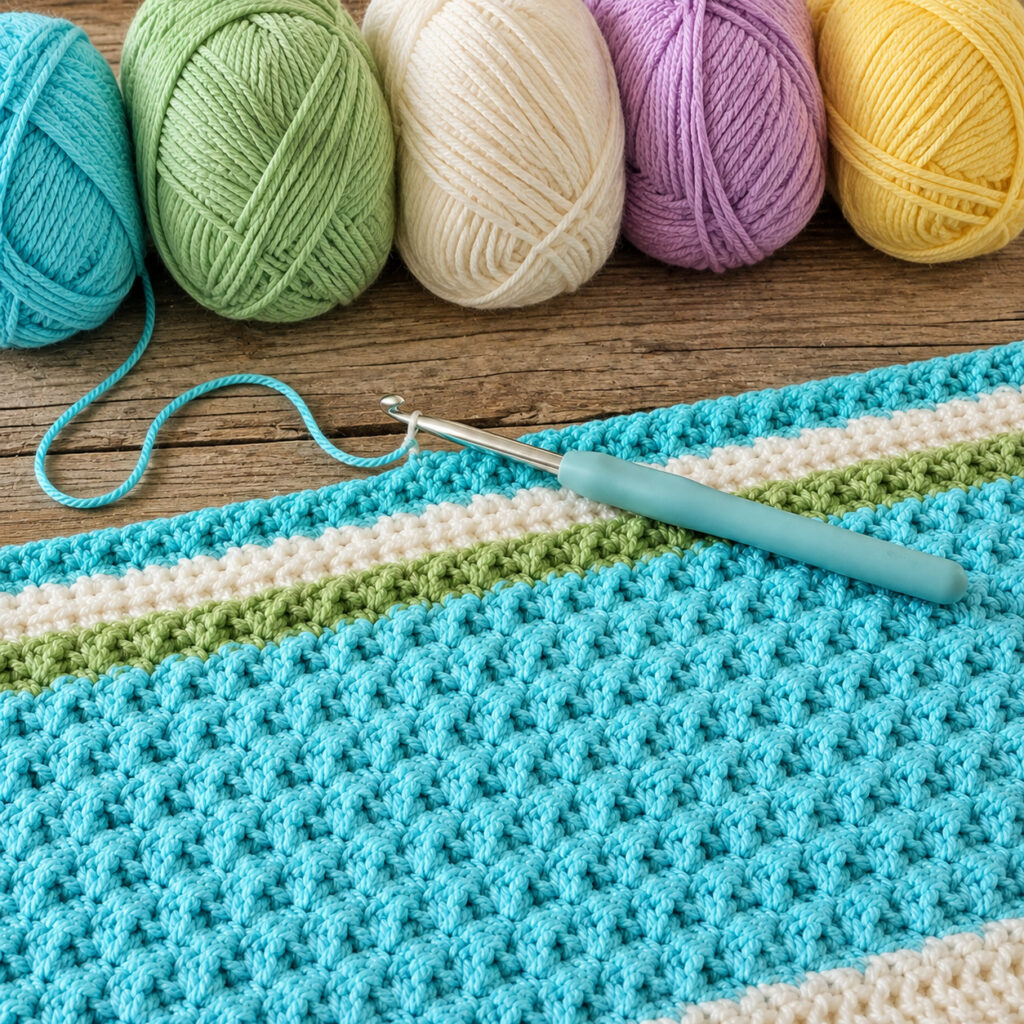
The stitch works beautifully with the turquoise, white, sage green, and blue palette shown in the inspiration photo, but it is equally attractive in neutrals, pastels, rainbow stripes, or a single solid shade.
Whether you’re making a baby blanket, lapghan, couch throw, or a handmade gift, this is a relaxing pattern that can easily be customized to your preferred size and colors.
Grab your favorite yarn, make your foundation chain, and start with the simple (sc, dc), skip 1 repeat. After a few rows, the beautiful Suzette texture will begin to appear.
Happy crocheting! 🧶💙

