

 soofha
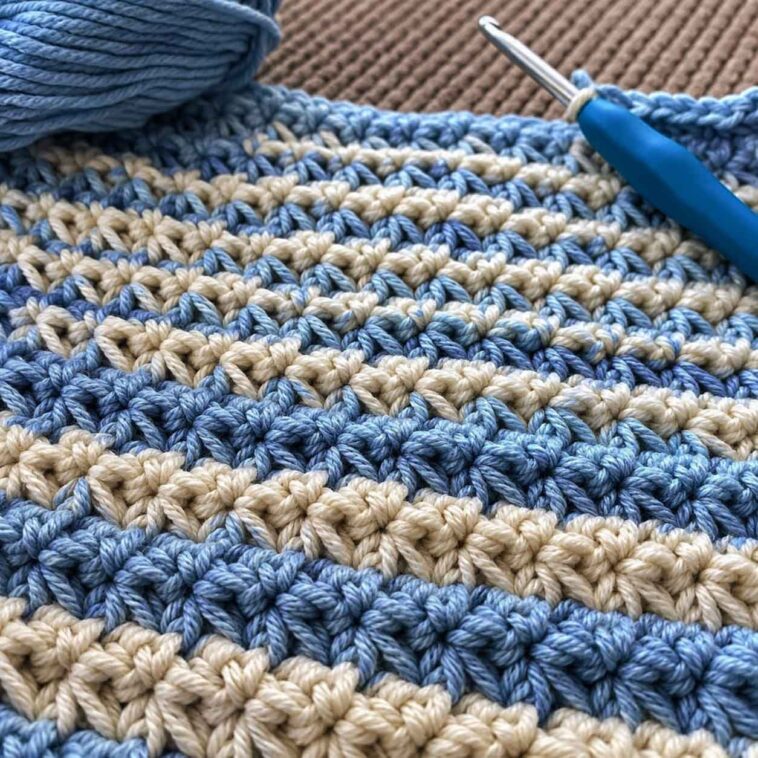
Welcome to Soofha! I’m so glad you’re here. Today, I’m excited to share a beautiful textured crochet stitch that looks intricate at first glance but is actually quite simple once you understand the repeat.
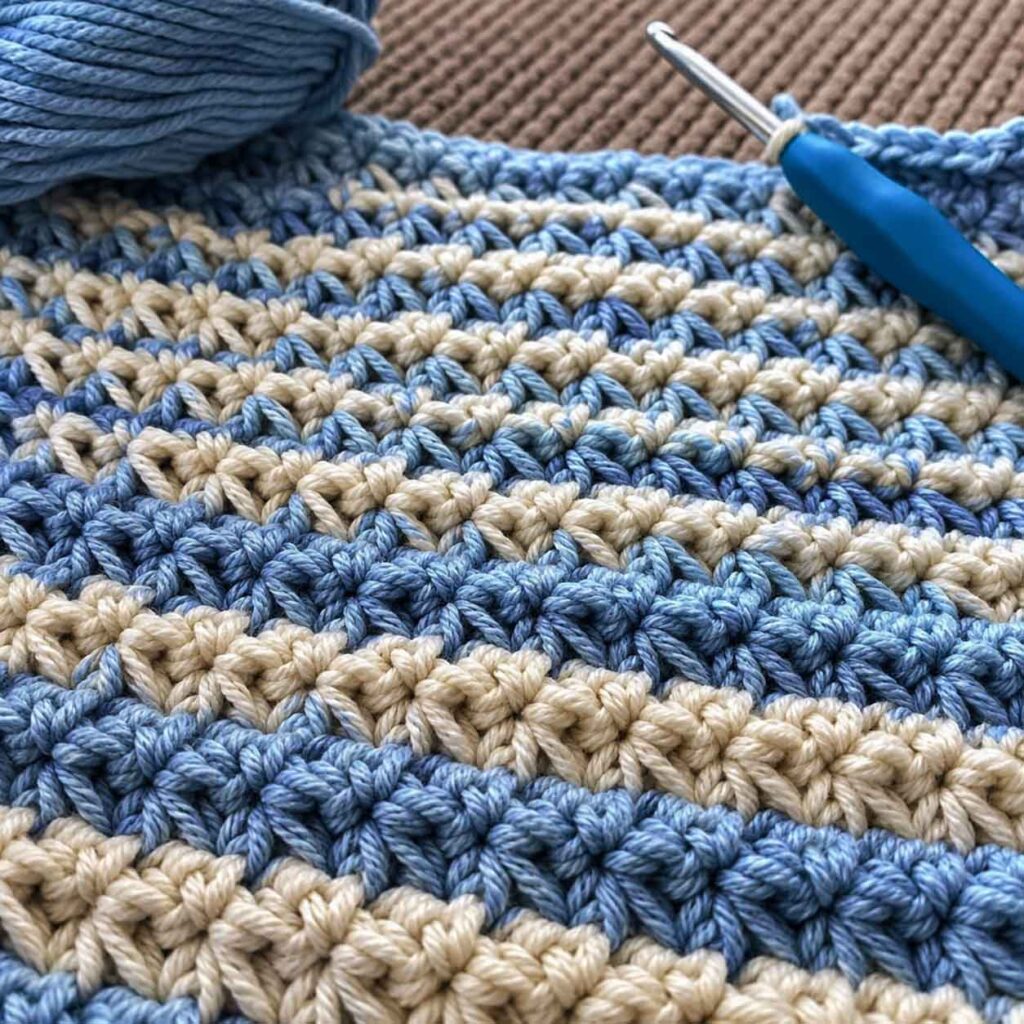
The Trinity Stitch creates a lovely raised texture that resembles tiny stars or little clusters scattered across the fabric. It has a wonderful combination of texture and simplicity, making it a great stitch to keep in your crochet collection.
What makes this stitch especially interesting is the way the single crochet 3 together (sc3tog) clusters overlap. Each new cluster begins in the same stitch where the previous cluster finished. This small detail creates the distinctive textured effect throughout the fabric.
Once you get comfortable with the movement, the stitch becomes wonderfully rhythmic and repetitive.
Why You’ll Love the Trinity Stitch
There is something special about a textured crochet stitch. Even a simple project can take on an entirely different look when you replace basic stitches with an interesting texture.
The Trinity Stitch is a great example. It creates plenty of visual interest without requiring complicated cables, post stitches, or a long series of rows to memorize.
I especially love how versatile it is.
You can use the Trinity Stitch for:
- Crochet blankets
- Scarves and cowls
- Bags and purses
- Pillows
- Washcloths
- Home décor
- Baby blankets
- Cozy accessories
- Textured panels within larger projects
The finished fabric tends to be fairly dense, which makes it wonderful for projects where you want a little structure. If you prefer a softer and more flexible fabric, simply experiment with a slightly larger crochet hook.
And if you already know how to crochet a single crochet, you are already halfway there. The main technique to practice is the sc3tog, and after the first row, the pattern becomes very repetitive.
What Is the Trinity Stitch?
The Trinity Stitch is a textured crochet pattern created using overlapping sc3tog clusters separated by chain spaces.
The clusters give the fabric its raised appearance, while the overlapping placement creates the distinctive little shapes that make the stitch so attractive.
The finished fabric has a dense, slightly raised texture and works particularly well when you want a project to have more dimension without using complicated techniques.
One of the nicest things about this stitch is its rhythm. You make one textured cluster, chain, begin the next cluster where the previous one ended, and continue working across the row.
After a little practice, the movement becomes much more natural.
Skill Level
Easy to Intermediate
If you are comfortable with single crochet and are willing to practice the sc3tog technique, you should be able to learn this stitch with a little patience.
Materials
You don’t need many supplies to practice the Trinity Stitch.
- Yarn of your choice
- Crochet hook appropriate for your yarn
- Scissors
- Yarn needle
A larger hook can be used if you want a looser, softer fabric with more drape.
For example, if you are making a scarf or blanket and find your fabric too firm, try moving up one or two hook sizes and make a small swatch to see how you like the result.
Crochet Abbreviations
- ch – chain
- sc – single crochet
- sc3tog – single crochet 3 together
- st/sts – stitch/stitches
- ch-sp – chain space
- yo – yarn over
Trinity Stitch Multiple
The Trinity Stitch begins with an even number of chains.
You can make your foundation chain as short or as long as you need depending on the project you are creating.
For a small practice swatch, start with a modest number of chains. For a blanket, continue chaining until your foundation reaches the approximate width you want.
Special Stitch: sc3tog
The most important technique to learn for the Trinity Stitch is the single crochet 3 together (sc3tog).
Unlike a traditional sc3tog, the Trinity Stitch uses an overlapping placement. The first leg of the next cluster begins in the same stitch where the previous cluster ended.
This overlapping movement is what creates the beautiful textured effect.
How to Work the sc3tog
- Insert your hook into the same stitch where the previous stitch or cluster ended.
- Yarn over and pull up a loop.
- Insert your hook into the next stitch.
- Yarn over and pull up a loop.
- Insert your hook into the following stitch.
- Yarn over and pull up a loop.
You should now have 4 loops on your hook.
- Yarn over.
- Pull the yarn through all 4 loops on your hook.
Your sc3tog is complete.
Don’t worry if this feels awkward the first few times. It can take a few clusters to get used to keeping the loops at an even height.
Trinity Crochet Stitch Pattern
Foundation Chain
Chain any even number of stitches.
Do not make your foundation chain too tight. A relaxed foundation chain will make it easier to work the first row and help prevent the bottom edge from pulling inward.
Row 1
Single crochet in the 2nd chain from your hook.
Next, work an sc3tog, beginning in the same chain where you just made the single crochet. Continue the remaining legs of the cluster across the next two chains.
Then:
Ch 1.
Begin the next sc3tog in the same chain where the previous cluster finished, then work the remaining legs of the cluster across the next two chains.
Continue across the row using the following basic rhythm:
Ch 1, sc3tog beginning in the same stitch where the previous cluster ended.
Repeat this sequence across the foundation chain.
When you reach the final cluster, work the sc3tog as established.
Do not chain 1 after the final sc3tog.
Instead, work a single crochet in the same chain where the final leg of the last sc3tog was made.
Turn your work.
That final single crochet is important because it helps create a neat, straight edge.
Row 2
Chain 1.
Single crochet in the first stitch.
Now begin an sc3tog in that same first stitch.
For the remaining legs of the cluster, work into the appropriate stitch positions from the previous row, including the top of the next sc3tog and the following chain-1 space.
Then:
Ch 1.
Continue working the overlapping sc3tog clusters across the row.
As you work, remember the most important part of the stitch:
Each new sc3tog begins in the same place where the previous sc3tog ended.
Continue this pattern across the row.
At the end of the row, work the final sc3tog as established.
Do not make a chain after the final cluster.
Finish with a single crochet in the same stitch where the final leg of the last sc3tog was worked.
Turn.
Row 3 and Beyond
Repeat Row 2 until your project reaches the desired length.
That’s really all there is to it!
Once your first row is established, the stitch becomes a simple repeating rhythm:
Single crochet → overlapping sc3tog → chain 1 → overlapping sc3tog → repeat → single crochet
The repetitive nature of this stitch makes it a relaxing choice for larger projects such as blankets and scarves.
Tips for Beautiful Trinity Stitch
A few small details can make a big difference when working this pattern.
Keep Your Loops Even
Try to pull up each loop to approximately the same height.
If your loops are too tight, the finished fabric may become stiff and difficult to work into. If they are excessively loose, the texture may look uneven.
Aim for a comfortable, consistent tension.
Watch the Edges
Pay close attention to the first and last stitches of each row.
The single crochet at both edges helps keep your project straight and gives the finished piece a cleaner appearance.
Remember the Overlap
The most important thing to remember is that the next sc3tog begins in the same stitch where the previous cluster ended.
This is what creates the overlapping texture.
If you lose your place, don’t panic. Look for the last stitch where the previous cluster finished and use that as the starting point for your next cluster.
Make a Practice Swatch
If this is your first time working the Trinity Stitch, make a small swatch before starting your main project.
A practice piece will help you become familiar with:
- The sc3tog movement
- The overlapping clusters
- Your stitch tension
- The correct hook size
- The appearance of the finished texture
Once your hands get used to the movement, the stitch becomes much easier.
How to Adjust the Size
One of the convenient things about the Trinity Stitch is that the foundation chain simply needs to contain an even number of chains.
This means you can easily customize the width of your project.
For a blanket, chain an even number of stitches until the foundation chain reaches approximately the width you want.
For a scarf, use fewer chains for a narrower design.
For a bag, pillow, or other smaller project, simply adjust the foundation chain according to the dimensions you need.
Always make a small swatch first if the exact finished measurements are important.
Remember that your yarn weight, hook size, tension, and stitch pattern can all affect the final dimensions.
Choosing Yarn and Colors
The Trinity Stitch is especially beautiful when worked in a solid color because the texture has plenty of opportunity to stand out.
Soft neutral shades such as cream, ivory, beige, and taupe can give the stitch a classic and elegant appearance.
If you prefer color, try shades such as:
- Dusty blue
- Sage green
- Blush pink
- Soft lavender
- Warm mustard
- Deep berry
- Teal
- Terracotta
You can also experiment with variegated or gradient yarns for a completely different effect.
For highly textured stitches like this one, yarn with good stitch definition can help the individual clusters stand out more clearly.
Trinity Stitch for Blankets
The Trinity Stitch makes a particularly cozy blanket fabric.
Because the stitch creates a relatively dense texture, it can give blankets a substantial and warm feel.
For a blanket, choose a yarn that feels comfortable against the skin and use a hook size that gives you the amount of drape you prefer.
If your blanket feels too stiff, try a larger hook.
If you want a firmer, more structured fabric, you may prefer to stay closer to the recommended hook size for your yarn.
Always make a swatch before committing to a large project.
Other Project Ideas
Don’t feel like you have to use the Trinity Stitch for an entire project.
Sometimes textured stitches look even more beautiful when combined with simpler crochet patterns.
Try using Trinity Stitch as:
- A textured stripe in a blanket
- A decorative section on a scarf
- A panel on a crochet bag
- The center of a pillow
- A border detail
- A textured baby blanket
- A section between rows of single or half-double crochet
Mixing textures can create a beautiful handmade design without making the entire project complicated.
VIDEO TUTORIAL
If you’re a visual learner, a video tutorial can be especially helpful when learning the Trinity Stitch.
Watching the sc3tog being worked makes it much easier to understand where the hook should go and, most importantly, where each new cluster begins.
I recommend practicing along with the tutorial on a small swatch until the overlapping movement feels comfortable.
Final Thoughts
The Trinity Stitch is one of those crochet techniques that looks complicated until you understand the simple movement behind it.
Once you learn the sc3tog and remember that each new cluster begins where the previous cluster ended, the rest becomes a relaxing and repetitive pattern.
I love how much texture this stitch creates without requiring a complicated stitch sequence. It is a wonderful option when you want a blanket, scarf, bag, or home décor project to have extra personality and dimension.
If you’re new to the Trinity Stitch, start with a small swatch and give yourself a little time to get comfortable with the clusters. After a few rows, you’ll likely find your hands naturally settling into the rhythm.
I hope you enjoy trying this beautiful crochet stitch and discovering all the projects you can create with it.
Thank you so much for spending some crochet time with me here at Soofha. Happy crocheting!

