
 soofha
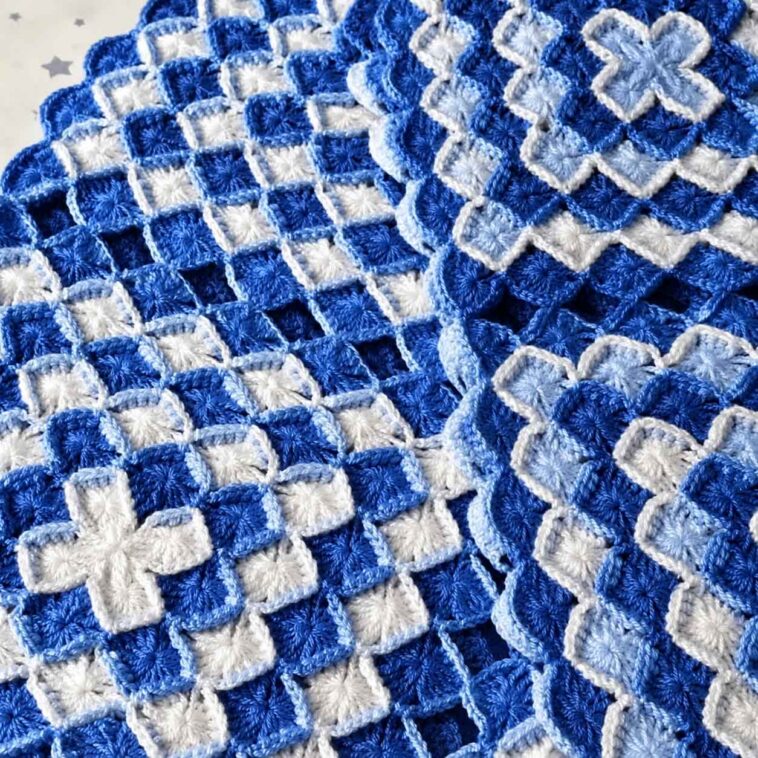
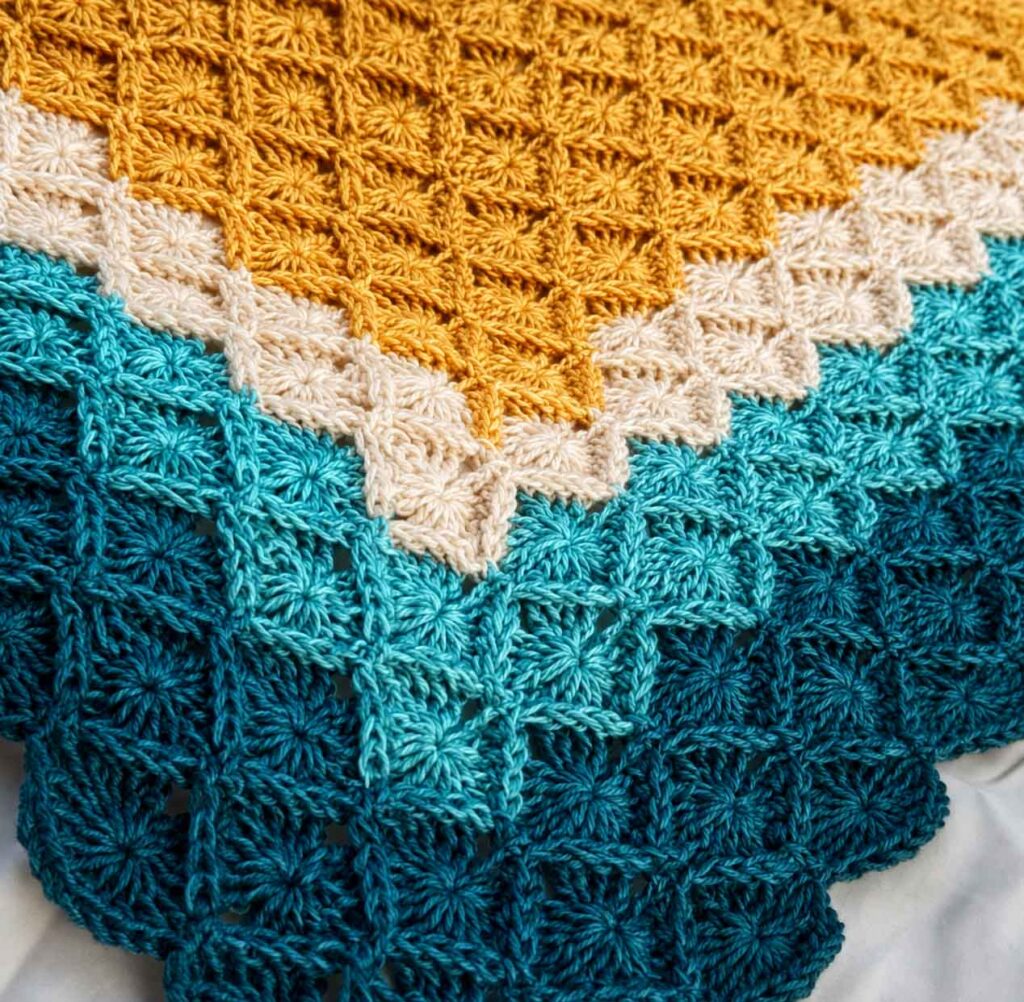
If you enjoy crochet blankets with lots of texture, the Bavarian stitch is definitely one to try. It creates a beautiful raised design that gives the finished blanket plenty of character without needing complicated colorwork.
This Bavarian Blanket Free Crochet Pattern is made from individual squares, so you can work on them one at a time and join everything together once all the pieces are finished. The pattern uses 20 squares arranged in a 4 x 5 layout.
One of my favorite things about this blanket is how easy it is to change the look simply by switching the colors. You can keep the palette soft and neutral, use bright contrasting shades, or make each square slightly different for a more colorful finish.
The Bavarian stitch gets its distinctive texture from clusters of treble crochets and back post treble stitches. The result is a thick, dimensional fabric that works especially well for cozy blankets.
So, grab your favorite yarn and crochet hook, and let’s get started.
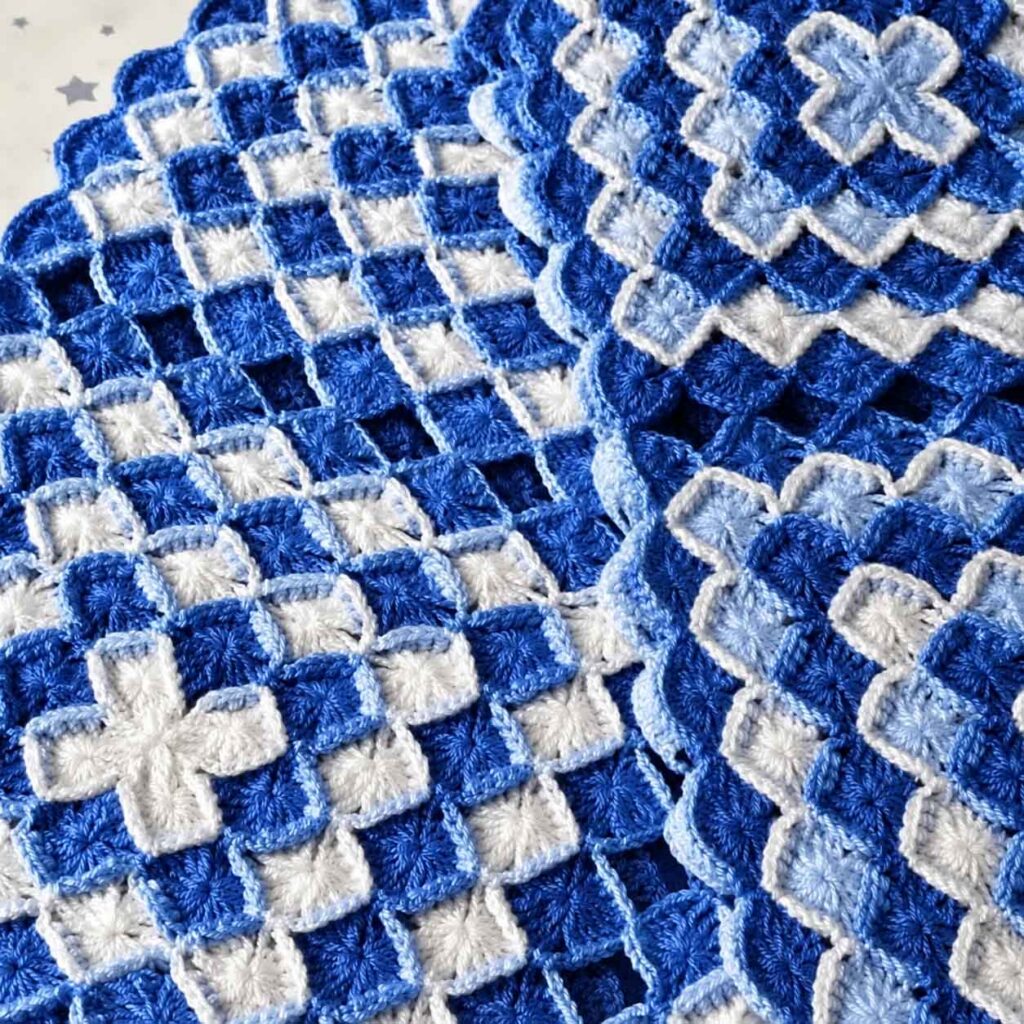
Suggested Color Combinations
Choosing colors for a Bavarian blanket can be just as fun as making the squares.
For a soft and traditional look, try cream, beige, taupe, and light brown. If you prefer something with more contrast, teal, mustard, and deep plum make an eye-catching combination.
For a softer blanket, consider lavender, mint, and blush pink. You can also work with different shades of the same color if you prefer a more coordinated look.
Some other combinations you could try include:
- Sage green and ivory
- Dusty blue and cream
- Terracotta, beige, and olive
- Navy, white, and light blue
- Pink, peach, and cream
There really isn’t a wrong color combination for this pattern. The textured stitches give the blanket plenty of visual interest, even when you use simple colors.
Materials
Before you begin, gather the following supplies:
- Worsted weight yarn in various colors
- Crochet hook suitable for your yarn
- Yarn needle
- Scissors
You can use as many or as few colors as you like. If you’re using several colors, it can be helpful to decide on your color sequence before starting all 20 squares.
Crochet Abbreviations
Here are the abbreviations used in this pattern:
- ch – chain
- ch-sp – chain space
- bptr4tog – four back post treble crochets worked together
- bptr8tog – eight back post treble crochets worked together
- hdc – half double crochet
- sc – single crochet
- sl st – slip stitch
- tr – treble crochet
- st/sts – stitch/stitches
Bavarian Blanket Free Crochet Pattern
The blanket is made from 20 individual squares. Once the squares are complete, arrange them in 4 columns and 5 rows.
You can make all the squares the same or change the colors from one square to the next.
Round 1
Using your first color, chain 6 and slip stitch into the first chain to form a ring.
Chain 5, work a cluster of 4 treble crochets together in the ring, chain 5, then slip stitch into the ring.
Repeat from * 3 more times.
Join with a slip stitch to the base of the beginning chain 5.
Fasten off.
You should have 4 clusters of 4 treble crochets.
Round 2
Choose your next color and attach it with a slip stitch in the center ring, covering the existing slip stitch.
Chain 2, work 12 treble crochets in the next 4-treble cluster, chain 2, then slip stitch into the ring.
Repeat from * 3 more times.
Join with a slip stitch to the base of the beginning chain 2.
Fasten off.
You should now have 4 groups of 12 treble crochets.
Round 3
With a new color, attach the yarn with a slip stitch between the 4th and 5th treble crochet of any 12-treble group.
Chain 5, work a cluster of 4 back post treble crochets together over the next 4 stitches. Chain 5 and slip stitch between the 8th and 9th treble crochet of the current 12-treble group.
Chain 5, then work a cluster of 8 back post treble crochets together over the next 8 stitches.
Chain 5 and slip stitch between the 4th and 5th treble crochet of the next 12-treble group.
Repeat from * 3 more times.
Do not fasten off.
At the end of this round, you should have 4 clusters of 4 back post treble crochets and 4 clusters of 8 back post treble crochets.
Continue the Pattern
Continue working the Bavarian stitch pattern through Round 20, changing colors as desired.
If you want all of your squares to match, repeat the same color sequence for each square. For a more relaxed, scrappy look, change the colors in different combinations as you go.
Make a total of 20 squares.
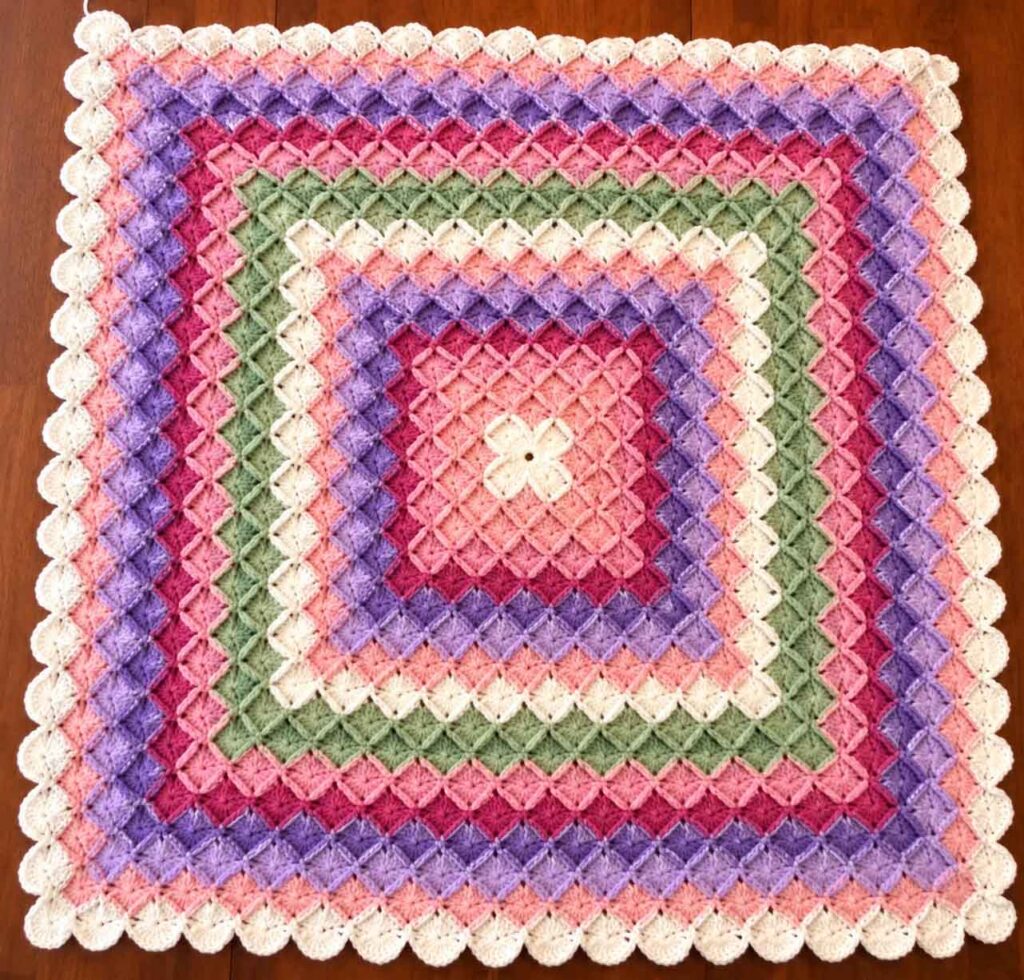
Once all the squares are finished, lay them out in a 4 x 5 arrangement before joining them. This makes it easier to move the colors around until you’re happy with the overall look.
Bavarian Blanket Free Crochet Pattern
Optional Crochet Blanket Border
A simple border can give your Bavarian blanket a neat finished edge.
Border Round 1
Using your main color, attach the yarn to any corner stitch with a slip stitch.
Chain 1 and work 3 single crochets in the same corner stitch.
Work 1 single crochet in each stitch until you reach the next corner stitch. Work 3 single crochets in the corner stitch.
Repeat from * around the blanket.
Close the round with a slip stitch to the first stitch.
Border Round 2
Slip stitch to the next corner stitch and chain 2.
Work 5 half double crochets in the corner stitch. Work 1 half double crochet in each stitch until you reach the next corner.
Repeat from * around the blanket.
Close with a slip stitch to the first stitch.
Fasten off.
You can leave the border at two rounds for a simple finish or add more rounds if you’d like a wider edge.
Finishing the Bavarian Blanket
Once you’ve completed the blanket, take some time to secure and weave in all of the loose yarn ends.
Blocking is also a good idea, especially if some of your squares aren’t sitting completely flat. Blocking can help even out the stitches and give the finished blanket a more uniform shape.
Let the blanket dry completely before using it.
The finished Bavarian blanket is thick, cozy, and full of texture. It makes a lovely addition to a living room or bedroom and would also make a thoughtful handmade gift.
Bavarian Blanket Video Tutorial
If you’re new to the Bavarian stitch or find the written instructions easier to follow with a visual demonstration, a video tutorial can be very helpful.
For a visual guide, check out the Bavarian crochet tutorial from It’s All in a Nutshell Crochet.
Watching the stitch being worked can make the back post clusters much easier to understand, especially when you’re making your first square.
Helpful Tips for Making This Blanket
Keep your tension consistent. The Bavarian stitch is quite textured, so changes in tension can affect the size and shape of your squares.
Make one complete square first. Before making all 20 squares, finish one from beginning to end. This gives you a chance to check the size and make sure you like your color combination.
Arrange your squares before joining. Lay all 20 pieces out on a flat surface and experiment with the placement. This is especially useful when you’re using several colors.
Don’t worry if the stitch looks unusual at first. The Bavarian stitch has several layers of clusters, and the design becomes much clearer as you work through the rounds.
Weave in ends as you go. If you’re changing colors frequently, dealing with the yarn tails after all 20 squares are finished can be a big job. Weaving in a few ends after each square can save time later.
Frequently Asked Questions
How many squares do I need for a Bavarian blanket?
This pattern uses 20 squares, arranged in a 4 x 5 layout.
Is the Bavarian crochet stitch difficult?
The stitch can look complicated because of its raised texture, but once you understand how the clusters are formed, the repeating pattern becomes easier to follow. It’s a good project for crocheters who want to learn a new textured stitch.
What yarn should I use for a Bavarian crochet blanket?
Worsted weight yarn works well for this blanket because it creates a warm fabric while still showing off the textured stitches. Choose a yarn that gives you good stitch definition.
Can I make this blanket with fewer colors?
Absolutely. You can make the blanket using just two colors, several shades, or even one color. The Bavarian stitch itself provides plenty of texture, so a single-color blanket can still look beautiful.
Can I make the Bavarian blanket larger?
Yes. To make a larger blanket, simply make additional squares and arrange them into a larger layout. You’ll need more yarn and additional joining time, but the basic idea remains the same.
Do I have to add a border?
No. The border is completely optional. The blanket can be left with its original edge or finished with your favorite crochet border.
Final Thoughts
The Bavarian stitch has a way of making a crochet blanket look extra special. Once the individual squares are joined together, all those raised clusters come together to create a wonderfully textured design.
I also love that the same pattern can look completely different depending on the colors you choose. Soft neutrals give it a classic feel, while brighter shades can make the blanket fun and modern.
Whether you’re making one for your home or creating a handmade gift for someone you love, this Bavarian Blanket Free Crochet Pattern is a project you can enjoy one square at a time.
Choose your yarn, pick your colors, and settle in for some relaxing crochet time. Happy crocheting! 🧶❤️

