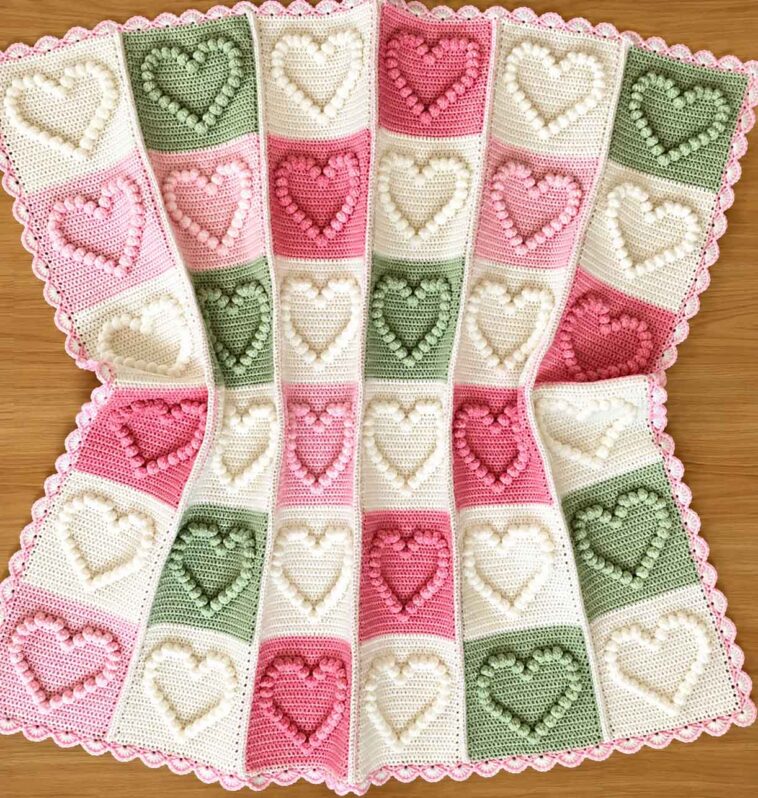
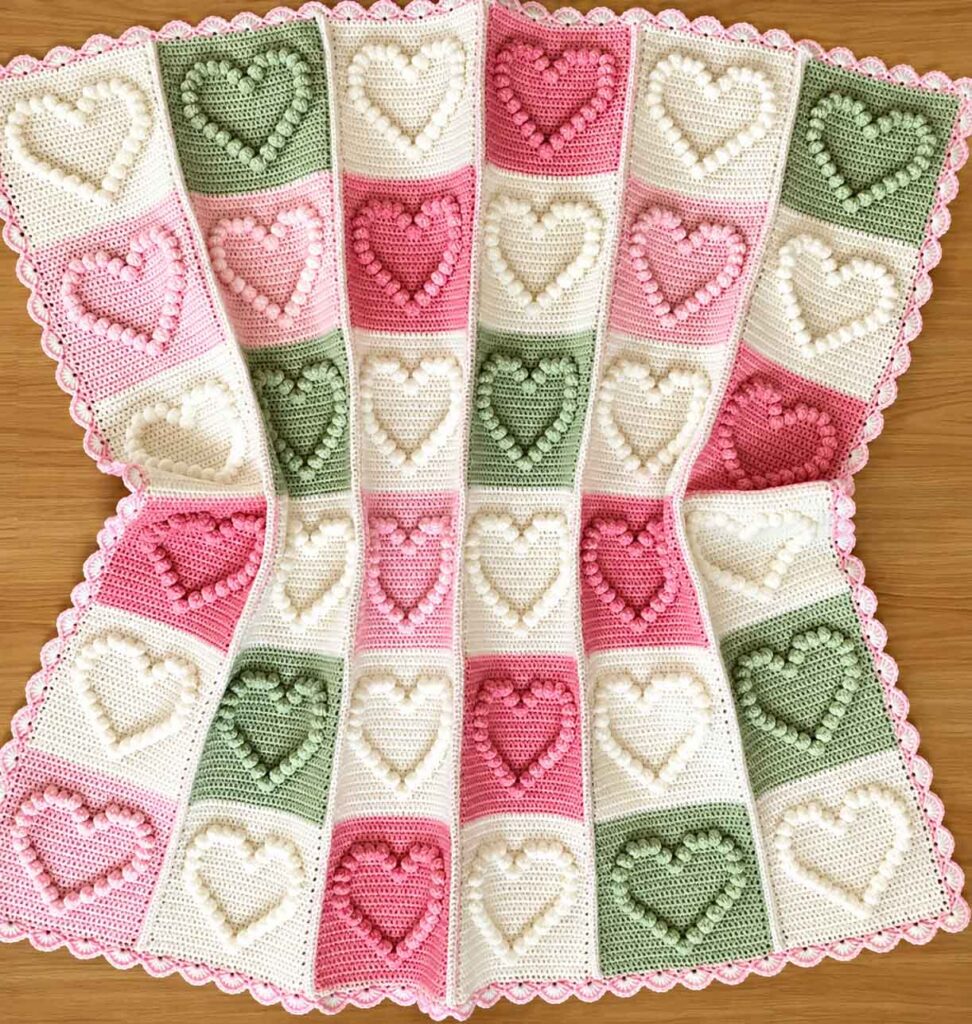
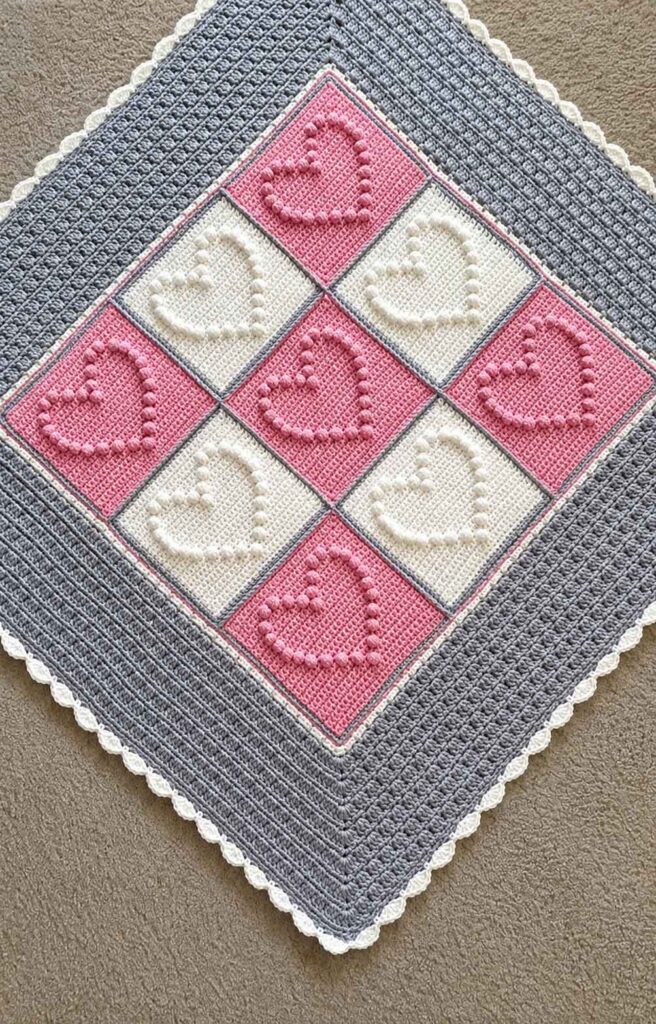
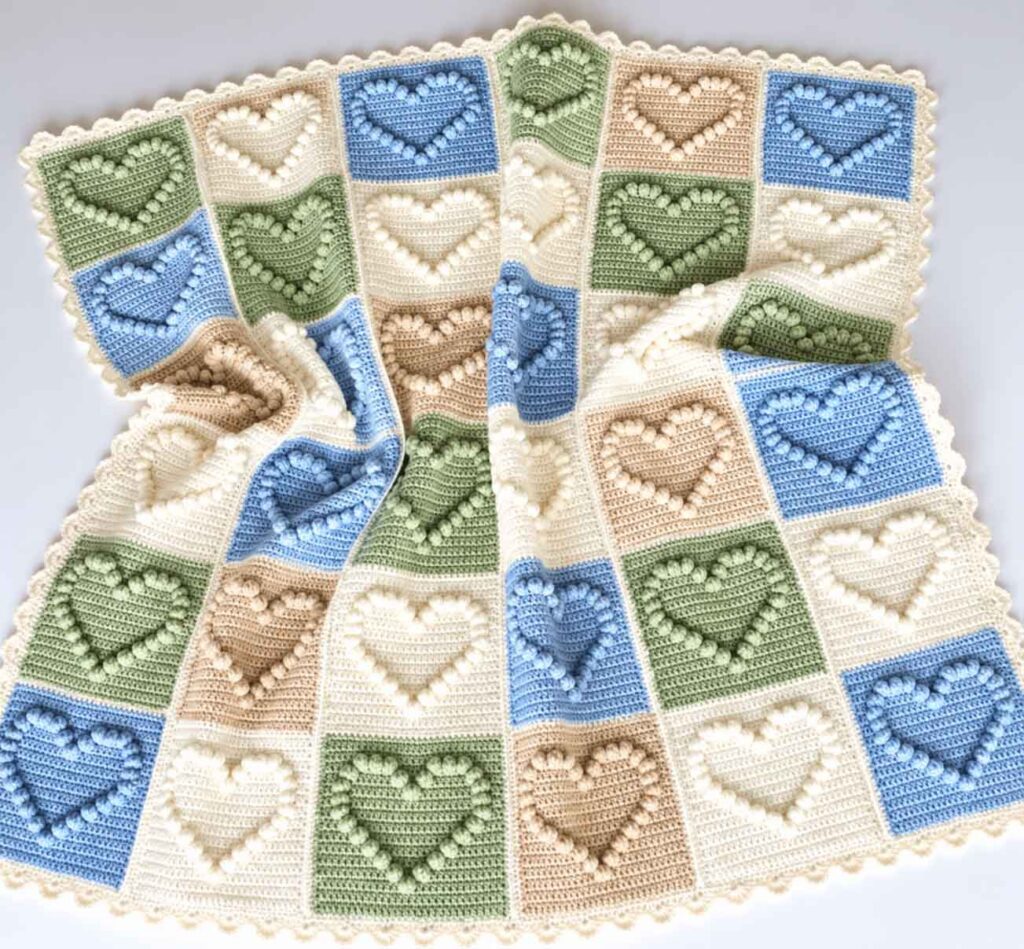
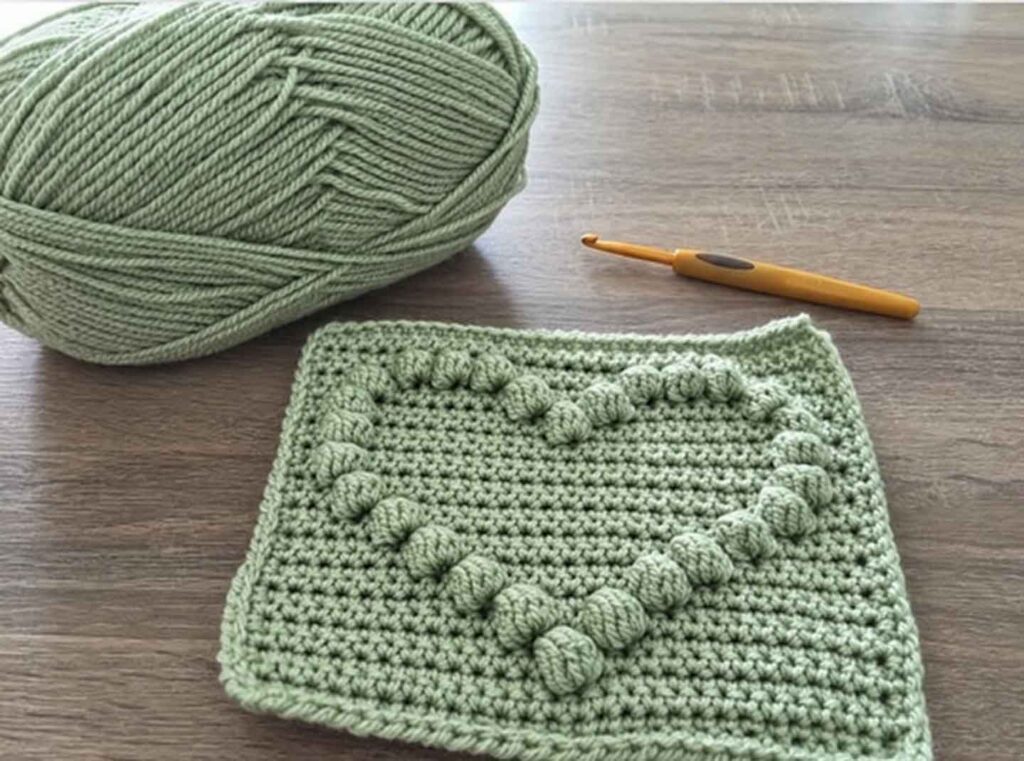
There’s something special about a handmade blanket covered in little hearts. Whether you’re making a cozy baby blanket, a thoughtful gift for someone you love, or a decorative piece for a child’s bedroom, the Crochet Heart Bobble Stitch is a lovely pattern to keep in your collection.
This design combines simple single crochet stitches with raised bobbles to create a heart motif that stands out beautifully against the background. The textured stitches give each heart a soft, three-dimensional appearance, making the finished fabric interesting to look at and lovely to touch.
If you enjoy crochet projects that look detailed without requiring complicated techniques, this pattern is worth trying. Once you understand how to work the bobble stitches and follow the chart, the design becomes much easier to manage.
What Makes the Crochet Heart Bobble Stitch Special?
The best part of this pattern is the texture. Unlike a flat heart design, bobble stitches create little raised bumps that make the hearts pop out from the fabric. The contrast between the smooth single crochet stitches and the textured bobbles gives the finished piece its distinctive look.
You can make the hearts stand out with a contrasting yarn color or keep the entire project in one shade for a subtle, textured finish.
For a baby blanket, soft colors such as cream, dusty pink, sage green, pale blue, and lavender are lovely choices. If you prefer something brighter, try mustard yellow, coral, turquoise, or a cheerful rainbow palette. There are no strict rules when it comes to color selection, so choose shades that suit your style or the person who will receive the blanket.
Although this stitch is especially popular for baby blankets, it can also be used for cushions, lap blankets, children’s accessories, and other small crochet projects. You can even experiment with different chart designs once you’re comfortable with the technique.
Is the Heart Bobble Stitch Suitable for Beginners?
Yes! If you already know how to make a single crochet stitch and are ready to learn something new, this is a good project to practice.
The bobble stitch may feel a little unfamiliar at first, but it becomes easier after you’ve made a few. The key is to keep your tension reasonably consistent and count your stitches carefully as you follow the chart.
"use strict";
var adace_load_6ac96b47c724f = function(){
var viewport = $(window).width();
var tabletStart = 601;
var landscapeStart = 801;
var tabletEnd = 961;
var content = '%3Cdiv%20class%3D%22adace_adsense_6ac96b47c7006%22%3E%3Cscript%20async%20src%3D%22%2F%2Fpagead2.googlesyndication.com%2Fpagead%2Fjs%2Fadsbygoogle.js%22%3E%3C%2Fscript%3E%0A%09%09%3Cins%20class%3D%22adsbygoogle%22%0A%09%09style%3D%22display%3Ablock%3B%22%0A%09%09data-ad-client%3D%22ca-pub-2805240993257385%22%0A%09%09data-ad-slot%3D%223220898588%22%0A%09%09data-ad-format%3D%22auto%22%0A%09%09%3E%3C%2Fins%3E%0A%09%09%3Cscript%3E%28adsbygoogle%20%3D%20window.adsbygoogle%20%7C%7C%20%5B%5D%29.push%28%7B%7D%29%3B%3C%2Fscript%3E%3C%2Fdiv%3E';
var unpack = true;
if(viewport=tabletStart && viewport=landscapeStart && viewport=tabletStart && viewport=tabletEnd){
if ($wrapper.hasClass('.adace-hide-on-desktop')){
$wrapper.remove();
}
}
if(unpack) {
$self.replaceWith(decodeURIComponent(content));
}
}
if($wrapper.css('visibility') === 'visible' ) {
adace_load_6ac96b47c724f();
} else {
//fire when visible.
var refreshIntervalId = setInterval(function(){
if($wrapper.css('visibility') === 'visible' ) {
adace_load_6ac96b47c724f();
clearInterval(refreshIntervalId);
}
}, 999);
}
})(jQuery);
Before starting the full project, try making a few practice bobbles with leftover yarn. This gives you a chance to get comfortable with the technique without worrying about mistakes in your finished piece.
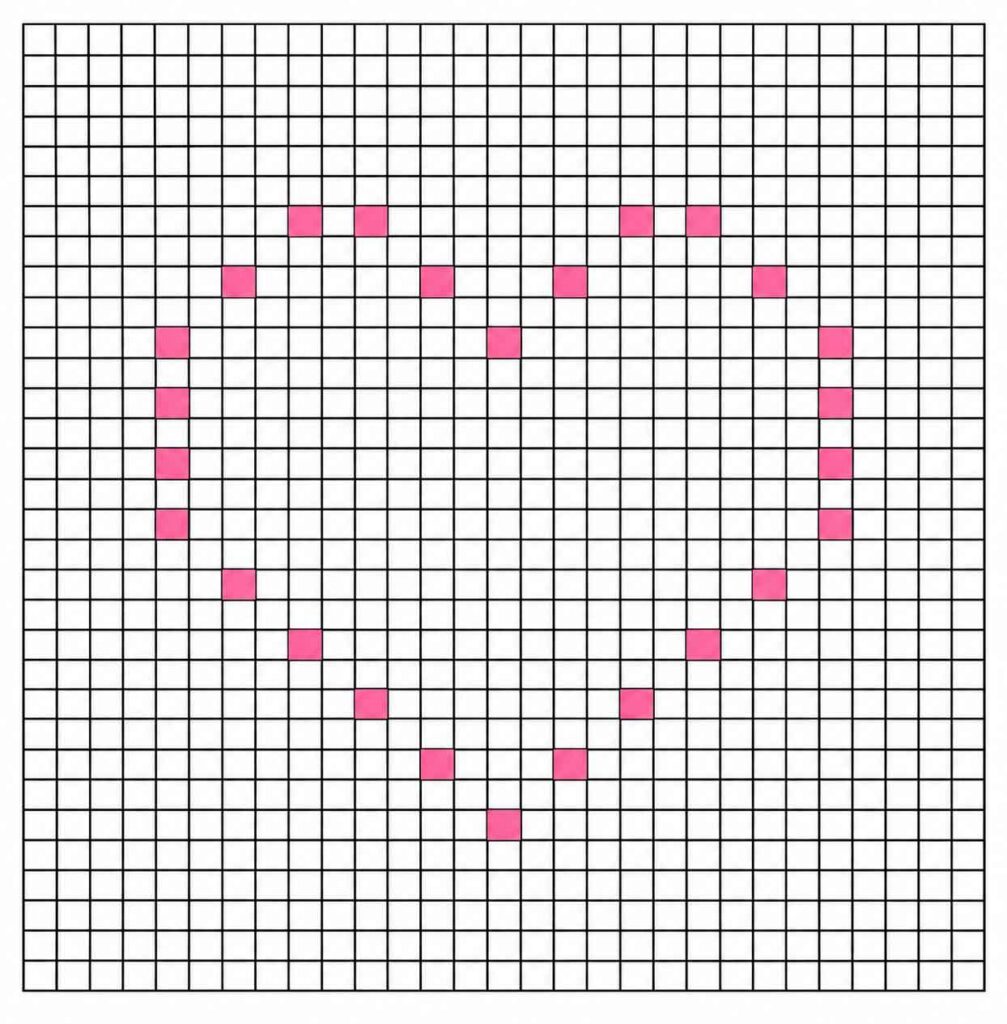
A stitch chart is included to help you see where each heart belongs. You can also follow the video tutorial mentioned below for a visual demonstration of the stitch and pattern.
Materials You’ll Need
Gather these supplies before you begin:
Worsted-weight yarn: Choose one or more colors, depending on your preferred design.
Crochet hook: An H/8 (5.00 mm) hook is a useful starting point, although you should follow the yarn label and check your gauge.
Scissors: For cutting the yarn.
Yarn needle: For weaving in the ends.
Heart bobble stitch chart: Use the chart to follow the placement of the bobbles and single crochet stitches.
If you’re making a baby blanket, choose a soft yarn suitable for the intended use and follow the care instructions on its label.
Stitches Used
This pattern uses two main stitches.
Single crochet (sc): Insert your hook into the indicated stitch, yarn over, and pull up a loop. Yarn over again and pull through both loops on the hook.
Bobble stitch: Work four incomplete double crochet stitches into the same stitch, leaving the final loop of each stitch on the hook. You should have five loops on your hook. Yarn over and pull through all five loops to complete the bobble.
The bobble stitch creates the raised texture used to form the hearts.
Before You Begin: Understanding the Chart
A little preparation makes the pattern much easier to follow.
Each square on the chart represents one stitch.
Work a bobble stitch in every colored square.
Work a single crochet in every white square.
Right-handed crocheters should begin at the bottom-right corner of the chart.
Left-handed crocheters should begin at the bottom-left corner.
Follow the chart row by row, checking each square as you work. Pay particular attention to the direction of each row so that the heart motif appears in the correct position.
Important: The chart determines the placement of the bobbles. Keep your stitch count consistent throughout the project, including the stitches between the raised sections.
Crochet Heart Bobble Stitch Instructions
The original pattern begins with a chain of 30 stitches and produces 29 stitches across.
Foundation Chain
Chain 30.
Row 1
Make 1 single crochet in the second chain from your hook. Continue working 1 single crochet in each remaining chain across.
You should have 29 stitches.
Rows 2–31
Chain 1 and turn your work.
Follow the heart bobble chart across the row. Work a bobble stitch in each colored square and a single crochet in each white square.
Keep the same total stitch count of 29 stitches per row. Check your work as you go, especially where the bobbles create the heart shapes.
Continue repeating the chart instructions until you have completed Row 31.
Row 32
Chain 1 and turn your work.
Work 1 single crochet in each stitch across the row.
You should have 29 stitches.
Crochet Heart Bobble Stitch
Fasten off and weave in any loose ends if you are making a separate sample panel. If you’re incorporating the motif into a larger blanket, follow your overall project instructions for joining or continuing the fabric.
Pattern note: The 30-chain foundation and 29-stitch width are based on the supplied instructions. Before making a full-size blanket, check the complete chart to confirm the intended row sequence and finished dimensions.
Tips for Getting Neat, Defined Bobbles
A few small adjustments can make a noticeable difference in the finished fabric.
Keep your tension consistent. If some bobbles are much tighter than others, the hearts may look uneven. Try to work each bobble with a similar amount of tension.
Practice before starting the main project. Make a small swatch to see how the bobbles look with your chosen yarn and hook.
Check your stitch count regularly. Bobble stitches can make it harder to see the top of each stitch. Counting at the end of every row helps prevent accidental increases or decreases.
Make the bobbles stand out. When the pattern allows for it, gently push the finished bobbles toward the same side of the fabric so the raised texture looks more consistent.
Choose colors thoughtfully. Contrasting colors can make the hearts easier to see, while a single-color design gives the blanket a more understated appearance.
How to Use the Crochet Heart Bobble Pattern
Once you’ve mastered the basic technique, there are several ways to enjoy this design.
A baby blanket is an obvious favorite because the hearts create a sweet, decorative finish. You could also use the motif for a child’s throw, a cushion cover, or a small handmade gift.
For a larger blanket, you may need to repeat the heart motif across a wider foundation or combine several panels. Check the chart and your gauge before deciding how much yarn to purchase.
If you want to experiment with color, try alternating rows or placing the hearts against different background shades. Just remember that changing the chart or stitch count may affect the finished size and appearance.
Free Crochet Heart Bobble Chart and PDF Pattern
If you prefer working from a printed pattern, look for the original Heart Bobble chart and written instructions through the linked pattern resource on Ravelry.
Having the chart beside you while crocheting makes it easier to track each row and see how the heart shapes develop. You can mark completed rows with a pencil or use a row counter to keep your place.
Before printing, make sure you have the complete chart, since the individual squares indicate exactly where to place each bobble stitch.
Crochet Heart Bobble Stitch Video Tutorial
If written instructions aren’t quite enough, a video demonstration can be especially helpful when learning the bobble stitch.
The tutorial by Crochet with Joanna is the video resource identified for this pattern. Follow along with the demonstration to see how the stitches are formed and how to work through the design.
You may find it helpful to pause the video after each section and practice the movements with a small amount of yarn before continuing with your project.
Frequently Asked Questions
Is the crochet heart bobble stitch beginner-friendly?
Yes, provided you are comfortable with single crochet and willing to practice the bobble stitch. Working from a chart may take a little patience at first, but the repeated stitches become easier with practice.
What yarn works best for a heart bobble blanket?
Worsted-weight yarn is specified in the original instructions. Choose a yarn with a clear stitch definition so the raised bobbles are easy to see.
Can I make the blanket in one color?
Absolutely. A single-color blanket highlights the texture of the bobbles, while two or more colors can make the heart shapes more noticeable.
Can I make the project larger?
Yes, but you’ll need to adjust the foundation width and follow an appropriately expanded or repeated chart. Simply adding chains to the original foundation may change the alignment of the heart motif.
Why don’t my bobbles look raised?
Check that you’re completing the bobble as instructed, leaving five loops on your hook before pulling the yarn through all of them. Consistent tension and yarn with good stitch definition can also help.
Final Thoughts
The Crochet Heart Bobble Stitch is a charming way to add texture and personality to a handmade project. Its little raised hearts look beautiful in both soft, neutral shades and brighter color combinations, making it easy to adapt the design to your own taste.
Take your time with the first few rows, keep the chart close at hand, and don’t worry if your bobbles need a little practice. Once you get into the rhythm, watching the hearts appear across the fabric is part of the fun.
If you try this pattern, I’d love to hear how your project turns out. Which colors would you choose for your blanket? Share your ideas and crochet tips in the comments, and happy crocheting!
 soofha