
 soofha
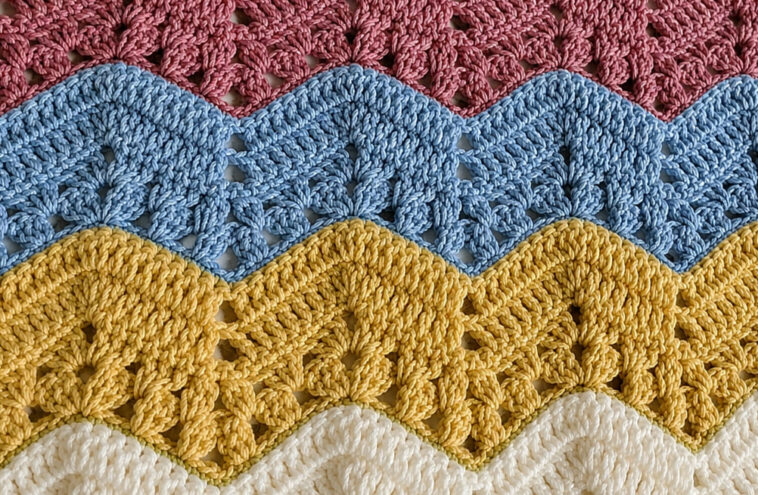
The Zigzag Stitch is a beautiful crochet texture that combines graceful waves, openwork, and raised stitch details into a repeating design. In the sample shown, the stitch creates soft zigzag rows that look especially striking when worked in contrasting colors.
This pattern is a wonderful choice for blankets, throws, scarves, baby blankets, cushions, shawls, and decorative crochet panels. The combination of solid stitches and open spaces gives the fabric plenty of visual interest without making the finished piece feel too heavy.
What Makes the Zigzag Stitch Special?
The Zigzag Stitch gets its name from the gently pointed waves that travel across the fabric. Instead of forming a simple straight stripe, each color section rises and falls in a repeating rhythm.
The sample features four complementary shades:
- Dusty rose
- Soft blue
- Golden mustard
- Cream or ivory
Using a new color for each section makes the zigzag structure especially easy to see, but this stitch also looks lovely when worked in a single color.
Materials
For a blanket or similar project, you will need:
- Worsted-weight or aran-weight yarn
- Crochet hook appropriate for your yarn
- Yarn needle
- Scissors
- Stitch markers, if desired
For a softer baby blanket, choose a washable acrylic or cotton-blend yarn. For a warmer throw, wool-blend or acrylic yarn works beautifully.
Crochet Abbreviations
US crochet terminology:
- ch – chain
- sl st – slip stitch
- sc – single crochet
- hdc – half double crochet
- dc – double crochet
- st/sts – stitch/stitches
- sk – skip
- rep – repeat
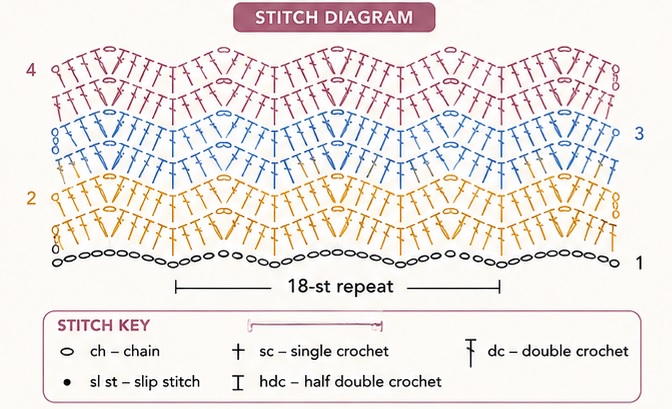
Zigzag Stitch Pattern
This stitch is worked in repeating wave sections. Because the exact stitch count can vary depending on the version of the Zigzag Stitch being used, begin with a foundation chain that is a multiple of the stitch repeat plus the required turning chains.
A practical way to test the stitch is to make a small swatch before starting your blanket.
Foundation Row
Chain your desired number of stitches.
Work across the foundation chain using the stitch combination selected for your project, keeping the stitch groups consistent across the row.
At the end of the row, turn.
Row 1 – Establish the Wave
Chain the appropriate turning chain.
Work the first group of stitches into the beginning stitches. Continue across the row, following the repeating sequence of taller stitches, decreases, increases, and/or open spaces that create the rising and falling movement.
As you work, pay particular attention to the highest and lowest points of each wave. These points determine the characteristic zigzag shape.
Repeat the established sequence across the row.
Turn.
Row 2 – Build the Texture
Chain the turning chain.
Work the stitches into the corresponding spaces and stitches from the previous row.
At the peaks, continue building the height of the wave. At the valleys, work the decrease or reduced stitch section that brings the fabric back down.
Continue across the row.
Turn.
Row 3 and Following Rows
Repeat the established zigzag sequence.
The important part of this stitch is maintaining the same number of stitches in every repeat. If the stitch count changes accidentally, the waves can become uneven or gradually drift out of alignment.
Continue until the fabric reaches your desired length.
Creating the Colorful Zigzag Effect
One of the most attractive features of the pictured design is the use of contrasting horizontal color bands.
A similar palette can be created with:
- Cream – for the foundation section
- Mustard yellow – for a warm, cheerful middle section
- Dusty blue – for a calm contrast
- Dusty rose – for the upper section
You can change colors after completing a complete wave section. This creates clean horizontal color boundaries while allowing the zigzag texture to remain the main focus.
For a softer appearance, try:
- Blush pink + cream + sage + beige
- Dusty blue + ivory + pale yellow + mauve
- Lavender + white + sage green + soft peach
For a modern neutral blanket, use cream, taupe, beige, gray, and oatmeal.
How to Change Colors
When you reach the final stitch of the old color, begin the stitch as usual but stop before completing the final yarn over.
Attach the new color and use it to complete the stitch.
Chain the required turning chain with the new color and continue working the next row.
For a neat finish, avoid carrying unused colors loosely along the edge when working wide color bands. Instead, weave in the yarn tails securely after the project is finished.
Making a Zigzag Blanket
The Zigzag Stitch is particularly well suited to blankets because the repeating waves create a strong visual rhythm.
Before beginning, decide:
- Blanket width
- Blanket length
- Yarn weight
- Hook size
- Number of colors
- Size of each color section
Make a small swatch first. This allows you to check both your gauge and the appearance of the zigzag pattern.
Once you are happy with the swatch, calculate your foundation chain according to the stitch repeat.
Beginner Tip
Do not worry if the first few rows look slightly confusing. Many textured zigzag patterns become much easier to recognize once several rows have been completed.
After a few repeats, you should clearly see the peaks and valleys forming across the fabric.
Tips for Perfect Zigzags
1. Count Your Stitches
Counting is especially important with wave patterns. Missing one stitch can cause the next peak or valley to move out of position.
2. Mark the Peaks
If you are learning the stitch, place stitch markers at the important turning points of the repeat. This makes it much easier to recognize where each wave begins and ends.
3. Keep Your Tension Consistent
Try to maintain the same tension throughout the project. If some rows are worked much tighter than others, the zigzag can become uneven.
4. Don’t Pull the Open Spaces Too Tightly
The decorative spaces in the pattern help emphasize the wave design. Keep your tension relaxed enough for the openings to remain visible.
5. Block the Finished Piece
Blocking can make a dramatic difference with a textured crochet blanket. Lightly blocking the finished project helps straighten the edges and allows the waves to settle into a more uniform shape.
Project Ideas
Once you learn the Zigzag Stitch, you can use it for much more than blankets.
Zigzag Baby Blanket
Use pastel colors such as cream, dusty blue, blush, sage, and pale yellow. The textured waves create a beautiful handmade baby gift.
Crochet Throw
Use three or four coordinated colors and make wider stripes. This works particularly well as a cozy living-room throw.
Scarf
Choose a soft yarn and repeat the pattern across a narrower foundation chain. A striped zigzag scarf can be worn on either side and has plenty of visual texture.
Cushion Cover
A zigzag front panel can turn a simple cushion into a decorative accent. Try matching the colors to your home décor.
Shawl
The open sections of the stitch can create an airy fabric suitable for a lightweight shawl or wrap.
Troubleshooting
My Zigzags Are Not Straight
Check your stitch count first. A missed increase or decrease can cause the wave to shift.
The Fabric Is Curling
Some curling is normal while working textured crochet. Blocking often helps. You can also experiment with a slightly larger hook if your tension is very tight.
My Waves Look Too Shallow
Your tension or stitch height may be affecting the design. Try making a swatch with a slightly different hook size and compare the results.
My Blanket Is Getting Wider or Narrower
This usually means stitches are being added or lost at the edges or within the repeat. Count every repeat periodically and check the first and last stitches of each row.
Zigzag Stitch Color Ideas
For a look similar to the photographed sample, try this sequence:
Row section 1: Ivory
Row section 2: Golden mustard
Row section 3: Dusty blue
Row section 4: Dusty rose
For a vintage-inspired version:
Cream → Terracotta → Sage → Mustard
For a coastal version:
White → Sand → Sky Blue → Seafoam
For a romantic version:
Ivory → Blush → Mauve → Dusty Rose
For a modern version:
Cream → Charcoal → Taupe → Rust
Finishing the Project
When your Zigzag Stitch project reaches the desired length, finish the final row according to the pattern repeat.
Cut the yarn, leaving a tail long enough to weave in securely.
Use a yarn needle to weave the tail through several stitches on the wrong side of the fabric. Change direction and weave through the stitches again before trimming the excess yarn.
Repeat for all remaining yarn ends.
For a blanket, you can finish with a simple border of single crochet, half double crochet, or another decorative edging. A narrow border can help frame the waves without competing with the stitch pattern.
Final Thoughts
The Zigzag Stitch is an excellent crochet pattern for anyone who loves textured blankets with a decorative, flowing appearance. Its combination of peaks, valleys, openwork, and raised stitches gives the finished fabric a handcrafted look that works beautifully with both modern and vintage-inspired color palettes.
The photographed combination of dusty rose, blue, mustard, and ivory is particularly effective because each shade highlights a different section of the repeating waves.
Once you understand the repeat, you can easily customize the stitch for blankets, scarves, baby projects, cushions, shawls, and many other crochet creations. Make a small swatch first, keep your stitch count consistent, and experiment with different color combinations until you find your favorite look.
Happy crocheting! 🧶

